Start with a clear theme, not just a famous building name
A Fujian Tulou handwritten newspaper looks much better when it has a strong theme. Instead of only saying where tulou are found, center the page on architectural wisdom in traditional homes. This helps readers understand why tulou are special and gives the newspaper a stronger cultural focus.
You may choose a title such as “Exploring Fujian Tulou,” “Stories Inside a Round Earthen House,” or “Traditional Homes Full of Wisdom.” A short subtitle can connect the page to traditional Chinese architecture and cultural heritage.
Section ideas that are easy to use
What is a tulou
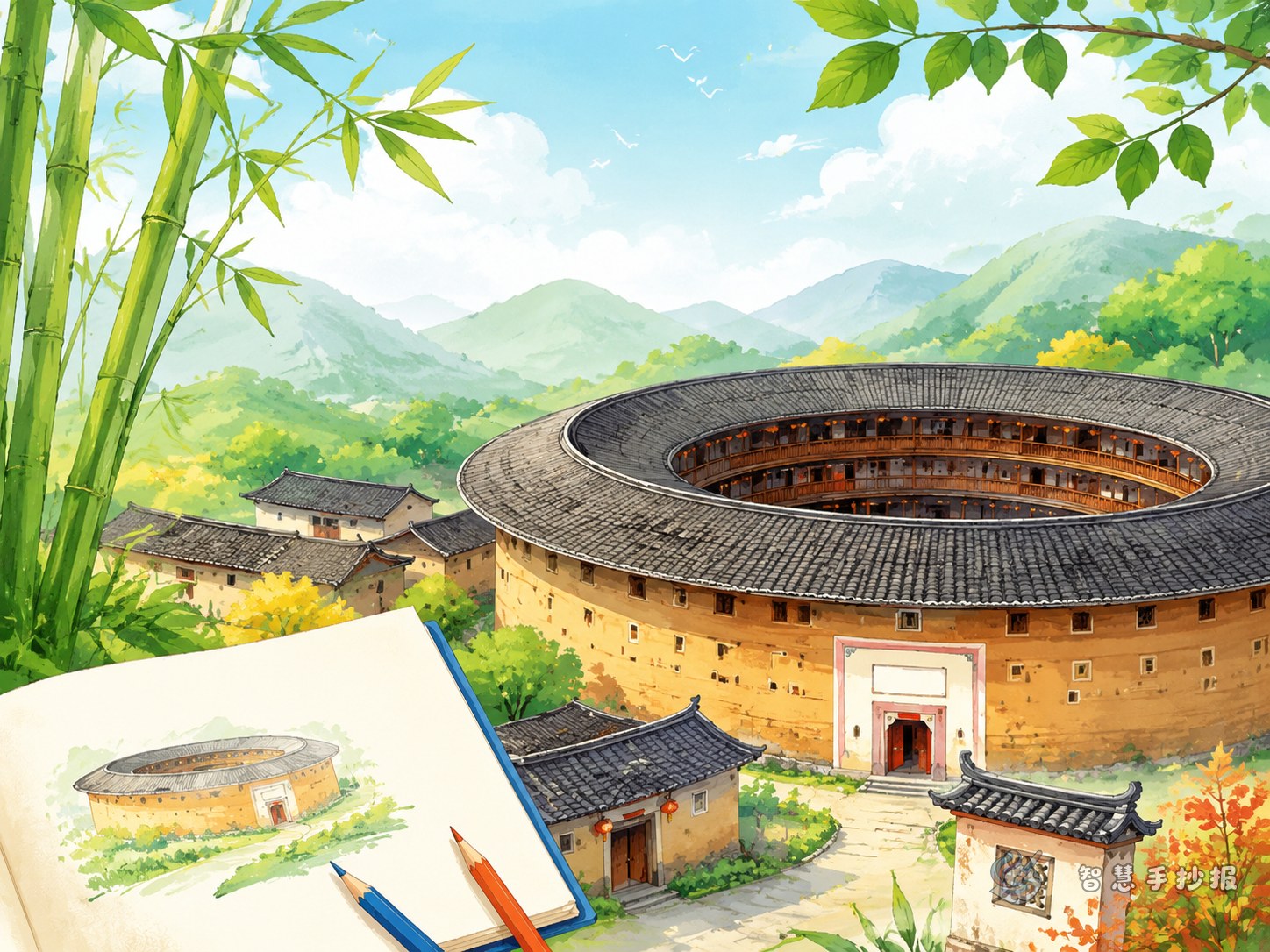
Fujian Tulou is a well-known type of traditional residence. Many are round or square and were built with rammed earth, wood, and stone. The outside walls are thick, and the inside forms a shared courtyard space for many families.
Why tulou are unique
- Thick walls help keep rooms warm in winter and cool in summer
- One building can hold many households
- The inner space supports daily communication and shared life
- The design also offers a level of protection and security
A small Hakka culture section
You can explain that tulou are not just buildings. They also reflect ideas such as family unity, mutual help, and hardworking community life. This gives the handwritten newspaper more meaning.
Short text materials students can copy
For this kind of project, short and clear writing works better than long explanations. These lines can be used directly or adapted.
- Fujian Tulou is a unique example of traditional Chinese residential architecture.
- Its thick rammed-earth walls show the building wisdom of earlier generations.
- The circular form brings many families together in one shared home.
- Tulou reflects a way of life that values nature, safety, and community.
- Protecting traditional buildings means protecting history and cultural memory.
If there is still blank space, add a personal thought such as: “I think Fujian Tulou is like a big cultural umbrella that keeps many family stories inside.”
Try a round page layout instead of a flat one
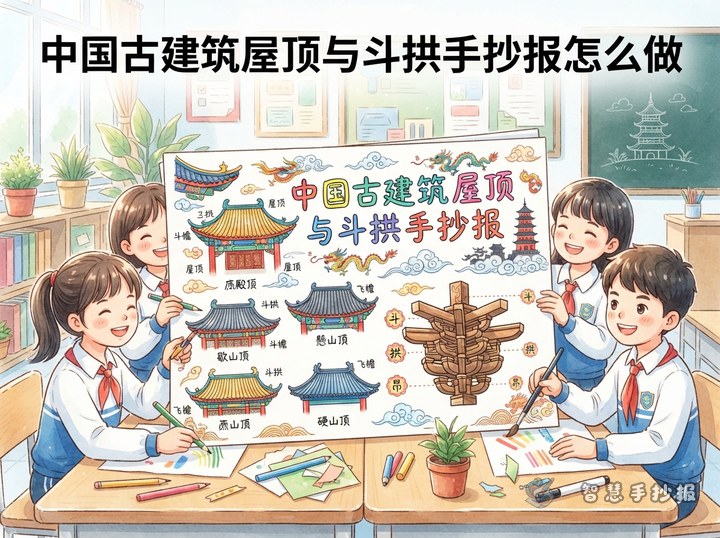
The most recognizable feature of Fujian Tulou is its shape, so the layout can borrow that idea. Put the main title in the center and place four or five sections around it in a circular flow. This feels more connected to the topic than a standard block layout.
- Center: main title with a simple tulou sketch
- Top left: basic introduction
- Top right: architectural features
- Bottom left: Hakka culture
- Bottom right: personal thoughts or protection ideas
Use earthy colors such as clay yellow, brown, brick red, and a little green. Decorations can include roof edges, wooden windows, lanterns, mountains, or brick textures.
Easy drawing ideas that make the page stand out
You do not need to draw a complex building. Focus on a few recognizable elements: the round shape, rows of wooden windows, thick walls, a gate, and distant hills. Even simple drawings can clearly show the theme.
- Draw a round tulou as the main picture
- Add lanterns, bamboo, clouds, or tile patterns in corners
- Give the title a brush-style feeling for a traditional touch
- Highlight words like “rammed earth,” “community,” and “traditional home”
If handwriting and spacing feel difficult, students and parents can first list the sections, then continue improving the page in the Zhihui Handwritten Newspaper WeChat mini program.
End with a meaningful closing thought
The final part does not need to be long. A simple closing idea works well: Fujian Tulou is more than an old building. It shows how traditional architecture carries daily life, family memory, and cultural warmth. That ending helps the whole handwritten newspaper feel complete.