Start with a clear focus: bridges, lanes, and waterside homes
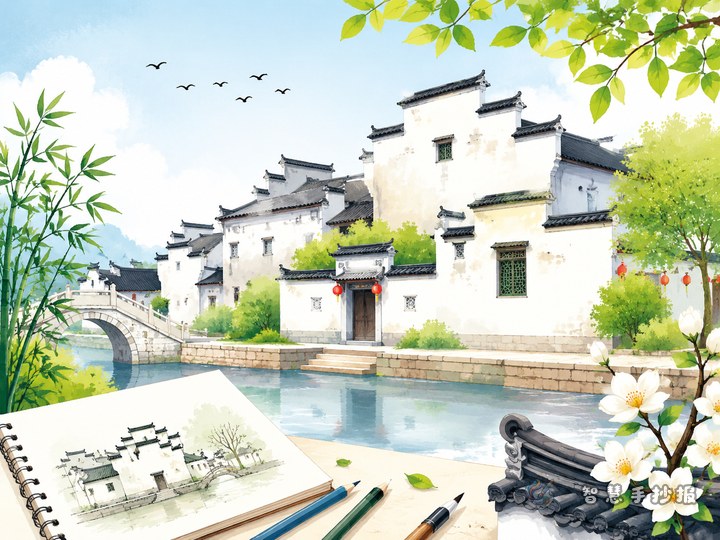
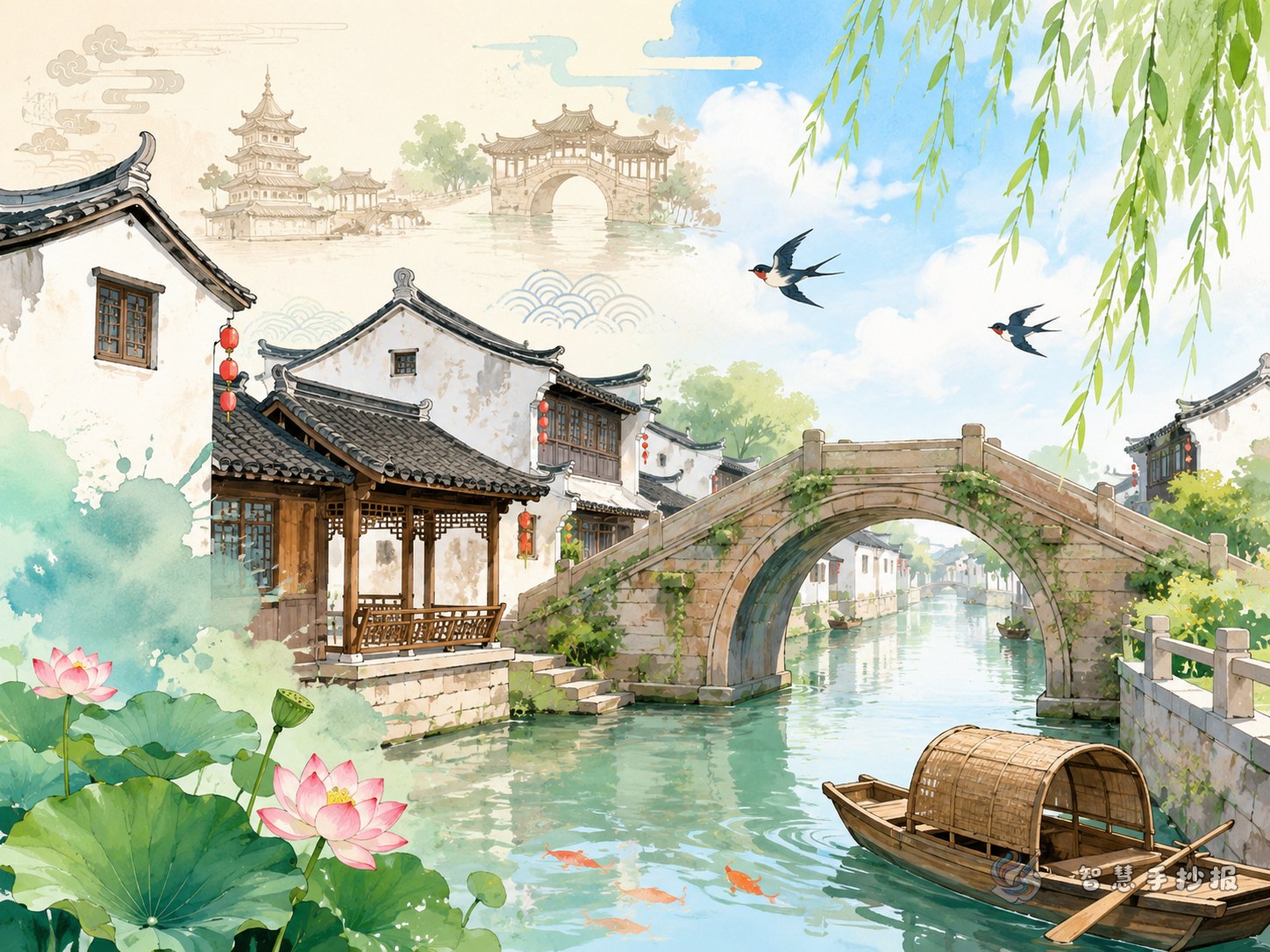
If you want your handwritten newspaper to feel elegant and truly connected to traditional Chinese architecture, an excellent angle is Jiangnan ancient water towns. Instead of covering everything, focus on stone bridges, canals, white walls, dark tiles, old streets, and houses by the water. This makes the page easier to organize and gives it a calm, classic mood.
Your title can be something like “How to Design a Jiangnan Water Town Handwritten Newspaper,” “The Ancient Town in My Eyes,” or “Bridges and Old Streets in a Water Town.” Put the main title at the top and decorate it with small elements such as rooflines, lattice windows, boats, or cloud patterns.
Useful sections to include on the page
- First Impression of the Ancient Town: Write 2 to 3 sentences about canals, connected streets, and the peaceful atmosphere.
- Traditional Architecture Highlights: Introduce white walls, grey tiles, wooden doors and windows, stone bridges, and flagstone paths.
- Life in the Old Town: Mention markets, tea houses, boats, crafts, and shops to make the content feel lively.
- My Favorite Corner: A short personal paragraph works well for students.
- How to Protect Historic Buildings: This adds meaning and shows cultural awareness.
If the page is small, keep three main sections. If you have more space, add a mini box for architecture facts or poetic words about ancient towns.
Ready-to-use writing material
Short introduction
Jiangnan ancient towns are often built along rivers and canals. There are homes by the water, bridges over the streams, and old streets full of quiet beauty. White walls and dark roof tiles create a soft and graceful style.
Architecture description
The buildings in Jiangnan water towns are closely connected to water. Many houses stand beside canals, with wooden windows, dark tiled roofs, and light-colored walls. Stone bridges link lanes and neighborhoods, showing both function and beauty in traditional design.
Personal feeling
Walking through an ancient town feels like stepping into a slower world. The bridges, old houses, and flowing water help us understand the charm of Chinese traditional architecture and the value of preserving history.
Try a flowing layout instead of simple boxes
This theme works very well with a canal-style layout. Draw a curved river across the page and place your text sections on both sides of it. Add small bridges, boats, rooftops, and willow branches to turn the whole page into a scene from an old town painting.
- Top left: title and main illustration
- Top right: first impression of the town
- Middle area: architecture features and town life
- Bottom left: personal reflection
- Bottom right: protection tips
For borders, use wave lines, window patterns, or tile shapes. Do not overcrowd the page. A little empty space makes the design feel more refined.
Colors and drawings that match the theme
Use light blue, soft grey, off-white, and pale green as the main colors, with a small touch of red for accents. This palette suits the gentle mood of Jiangnan and is easy for children to use.
- Good drawing elements: stone bridge, small boat, lantern, eaves, lattice window, willow tree, ripples
- Good border ideas: tile pattern, water pattern, square window pattern
- Title color: dark blue or black
- Important notes: highlight with thin red or gold lines
If you want to keep improving the layout or try a cleaner or more playful version, you can continue your design in the Zhihui Shouchaobao WeChat mini program for a more efficient finishing process.
A strong closing sentence for the bottom of the page
You may end with this line: Ancient towns preserve not only old streets and houses, but also the warmth of Chinese culture. By learning about traditional architecture, we learn to protect our cultural home.
This kind of ending fits well at the bottom and gives the whole handwritten newspaper a complete, thoughtful tone.