Getting the Legend Straight: Four Key Moments
Many students reduce this topic to 'eating sweet candy.' The legend actually follows a clear order, and writing it in sequence gives you a complete page.
- The Kitchen God lives by the stove: he is said to stay with one family all year, watching what they do.
- He reports in heaven: on the 23rd or 24th day of the twelfth lunar month, he returns to tell the Jade Emperor about the year.
- Families send him off with sweets: they offer tanggua, water, and beans, hoping for sweet words and a mouth too sticky for complaints.
- He comes back at New Year: hence the saying 'report good things in heaven, keep peace on earth,' and he is welcomed home at New Year's Eve.
Three Blocks of Text You Can Copy Right Away
A short retelling
It is said that the Kitchen God lives beside every family's stove, quietly noting their good and bad deeds. On the 23rd day of the twelfth lunar month he returns to heaven to describe the past year to the Jade Emperor. To keep his words kind, families cook sweet, sticky tanggua and place it by the stove, hoping he will 'report good things in heaven and keep peace on earth.' After seeing him off, everyone cleans the house and prepares for the festival, then welcomes him back on New Year's Eve.
Fun facts about tanggua and the offerings
Tanggua is usually made from malt sugar, crisp and sweet in cold weather, and famously sticky. Some places also offer water and beans, said to be food for the Kitchen God's horse so that he travels smoothly. This small detail adds a warm, everyday touch to your page.
Folk sayings to copy
'On the 23rd, sweets for the Kitchen God; on the 24th, sweep the house; on the 25th, grind the tofu.' Write these as slim vertical strips along the edge of your page, useful as both text and decoration.
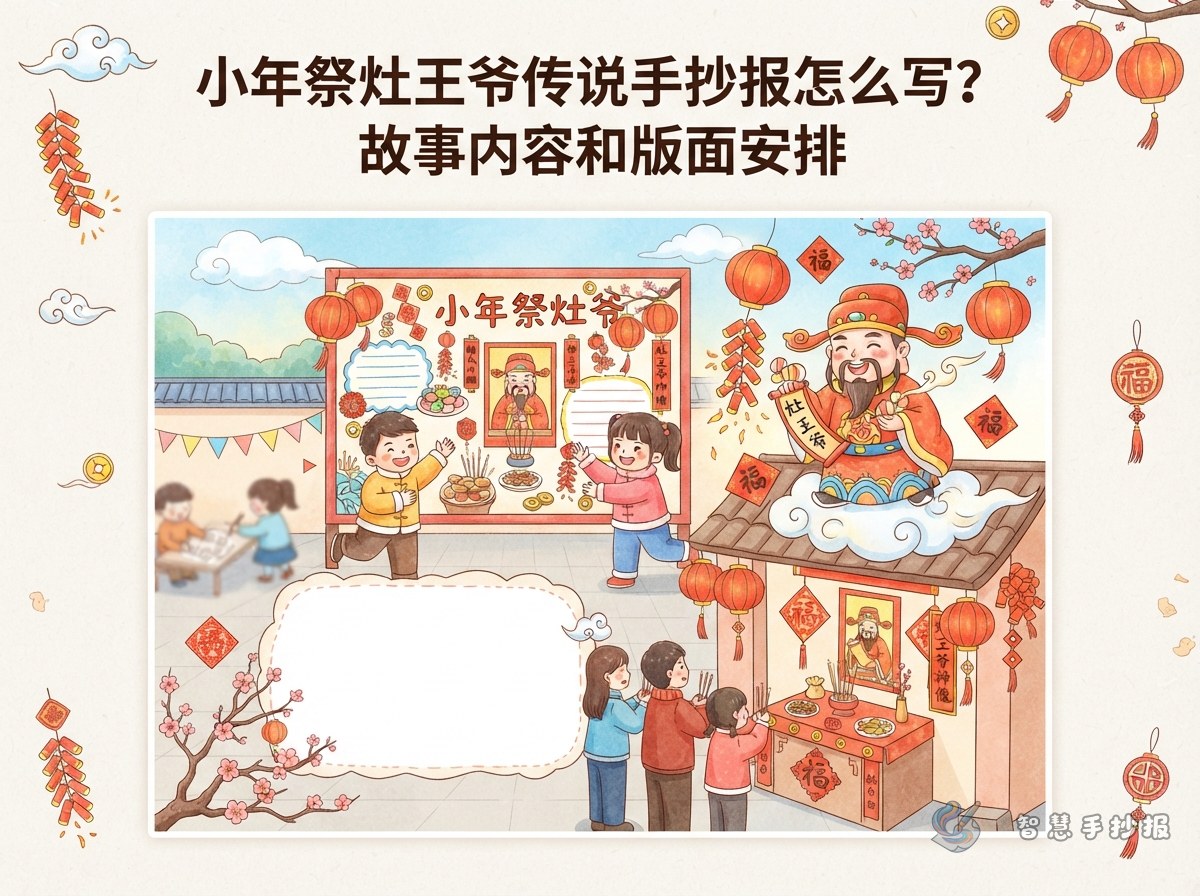
Layout Idea: Stove Below, Heavenly Court Above
This story already has a built-in picture: the stove on the ground and heaven in the clouds. A vertical page can use that height difference naturally.
- Bottom third: draw a simple stove with a plate of round tanggua and a small couplet beside it.
- Middle: two or three curling smoke lines or cloud bands link top and bottom; place your shortened story text here.
- Top third: sketch a few clouds and a gate for the heavenly court, with the saying 'report good things in heaven, keep peace on earth' beside it.
- Side space: put tanggua facts on one side and the vertical folk sayings on the other, so the page stays balanced.
Small Details That Make the Page Worth a Second Look
- Colors: use red, orange, and warm gold on a creamy background for a festive but clean look.
- Title: write something like 'The Legend of the Kitchen God' in thick strokes and outline it in gold.
- Borders: repeat tanggua shapes, lanterns, tiny stoves, or cloud patterns instead of plain straight lines.
- Text boxes: use lined space for the story and small boxes for facts, so readers can tell main text from side notes.
Mistakes to Avoid
First, do not turn the topic into a fire-worship page or simply 'eating candy at New Year'; keep the full arc of going to heaven and being welcomed back. Second, do not give only one date without mentioning regional differences. Third, keep the story section short enough to leave room for the title and decorations. If you are unsure about layout or wording, open the 'Smart Handwritten Newspaper' mini program in WeChat, pick a traditional festival template, and finish your text and borders there before drawing them on paper.