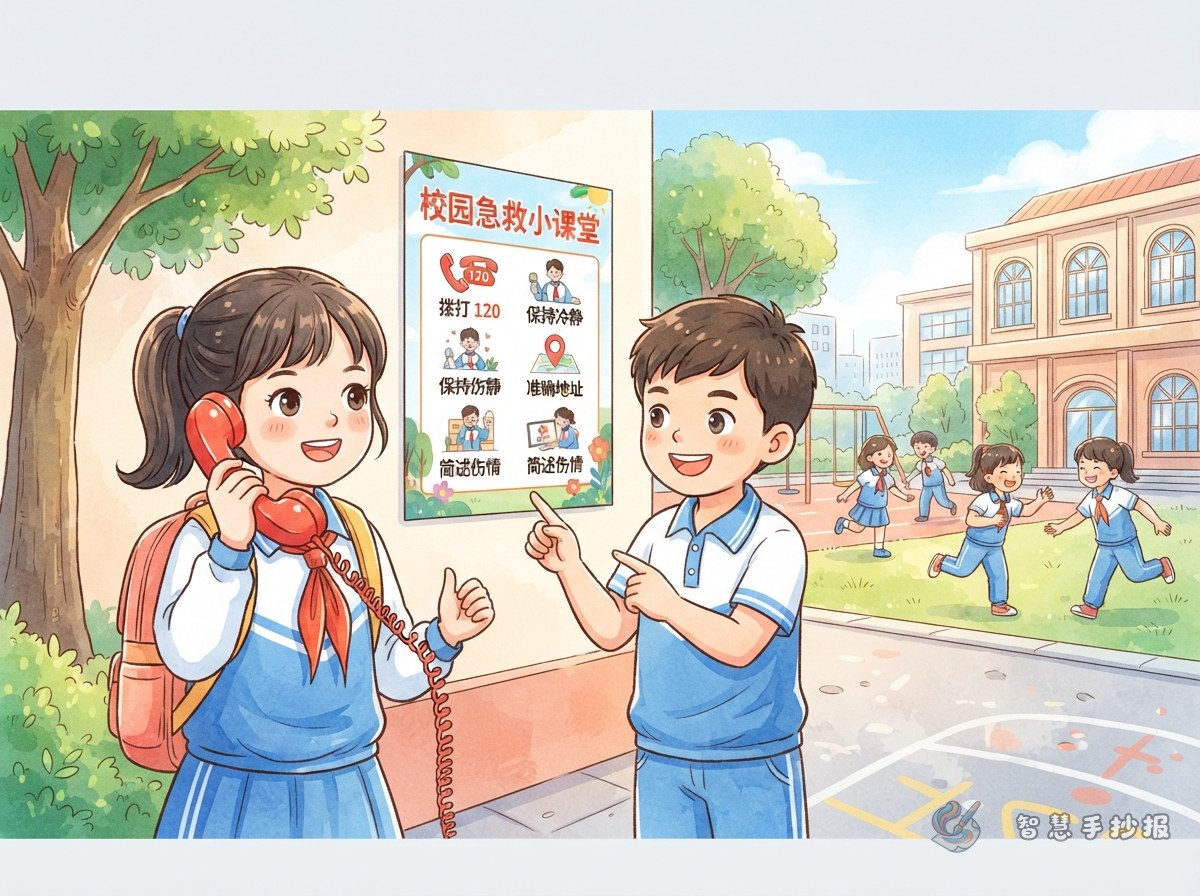
Why a phone call deserves its own poster
When something goes wrong at school, many students run to find a teacher but cannot explain who is hurt or where it happened. Knowing how to make a clear call for help matters as much as knowing how to bandage a cut. A poster built around that single skill gives you plenty of specific details to write and draw.
Which number should you dial?
Do not fill the whole page with one giant number. Use three small cards in different colours. One card is for medical emergencies such as bleeding, fainting or serious burns. Another is for fires or chemical spills, where students should call the fire number and shout for help at the same time. A third covers violence or deliberate harm. Write one short example under each card so readers can tell them apart quickly.
The five things to say, in order
- Location first: the full school name, the building, the floor and a nearby landmark, such as the climbing bars east of the playground.
- What happened: a fall, a burn, a sudden fainting, and how many people are involved.
- How the person is doing: awake or not, breathing normally or not, bleeding or not, and whether someone is already with them.
- A contact number: a phone that will actually be answered, plus who will meet the ambulance at the gate.
- Do not hang up too soon: wait until the operator says the call can end, because they may give instructions on the line.
What to do while you wait
- Send one student to the school gate and keep the entrance clear.
- Ask onlookers to step back so the injured student has space and fresh air.
- Do not move someone who may have a fracture or is unconscious, and do not give food or water.
- Collect the student's bag and jacket and hand them to a teacher.
- Keep the phone free so the ambulance crew can call back.
Layout idea: turn the call into a timeline
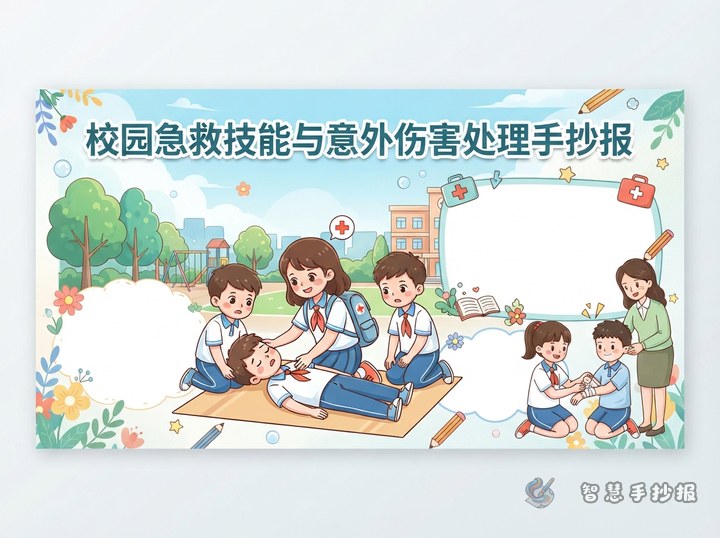
Draw a line that runs from the top left corner down to the bottom right, and place the steps along it: phone icon, giving the location, describing what happened, waiting and meeting the ambulance, handing over to the medical team. Put two smaller boxes beside the line, one for the three number cards and one comparing what you should and should not do while waiting. Use bold lettering for the title and small boxes for body text so the page does not look crowded.
Short lines students can copy
- Number in mind, location first; say what happened, do not hang up.
- Where, what, and how to reach me.
- Knowing how to call for help is a real first-aid skill.
If you want extra pictures, borders and small icons, open the WeChat mini program "Wisdom Handwritten Newspaper" and continue with a first-aid themed layout. Print it out and add the text by hand.
Mistakes to avoid on the page
- Writing only a phone number without explaining what to say.
- Treating a quick hang-up as being decisive, when you should wait for confirmation.
- Mixing different emergency numbers together without showing when each one is used.