Why music and clothing make a strong exchange theme
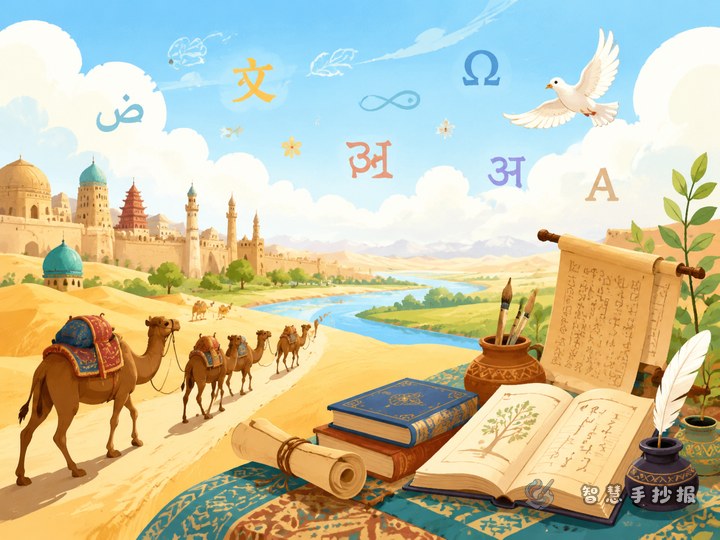
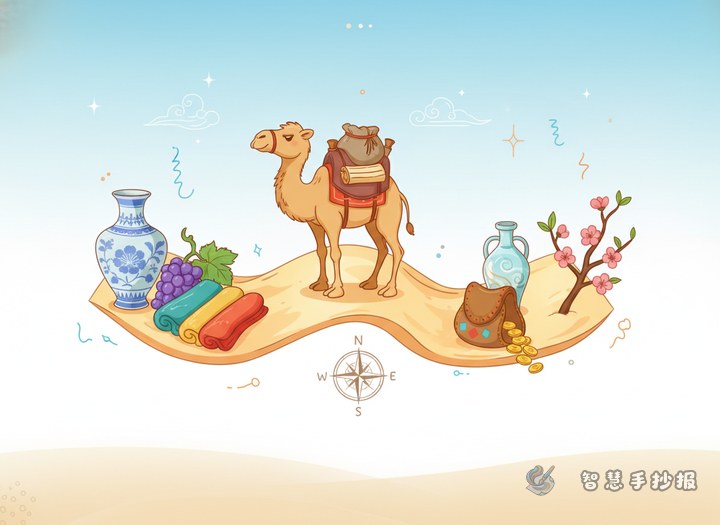
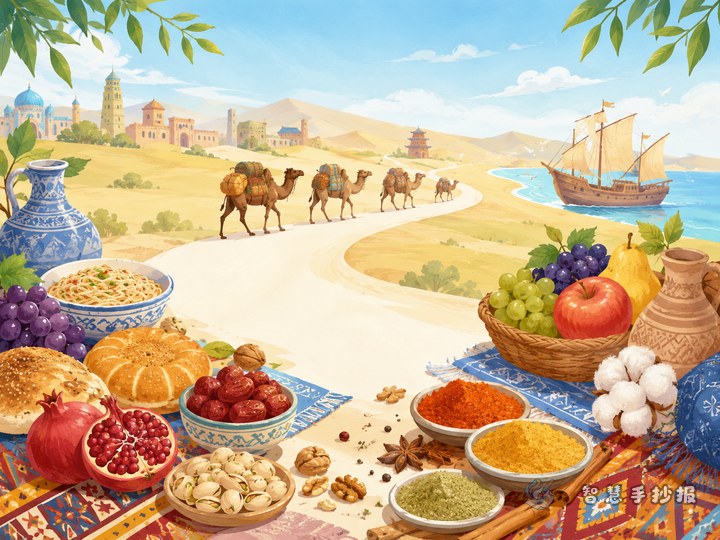
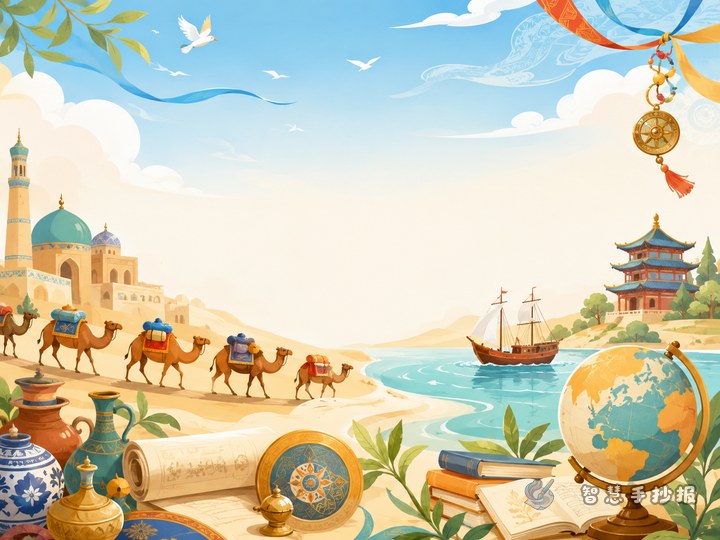
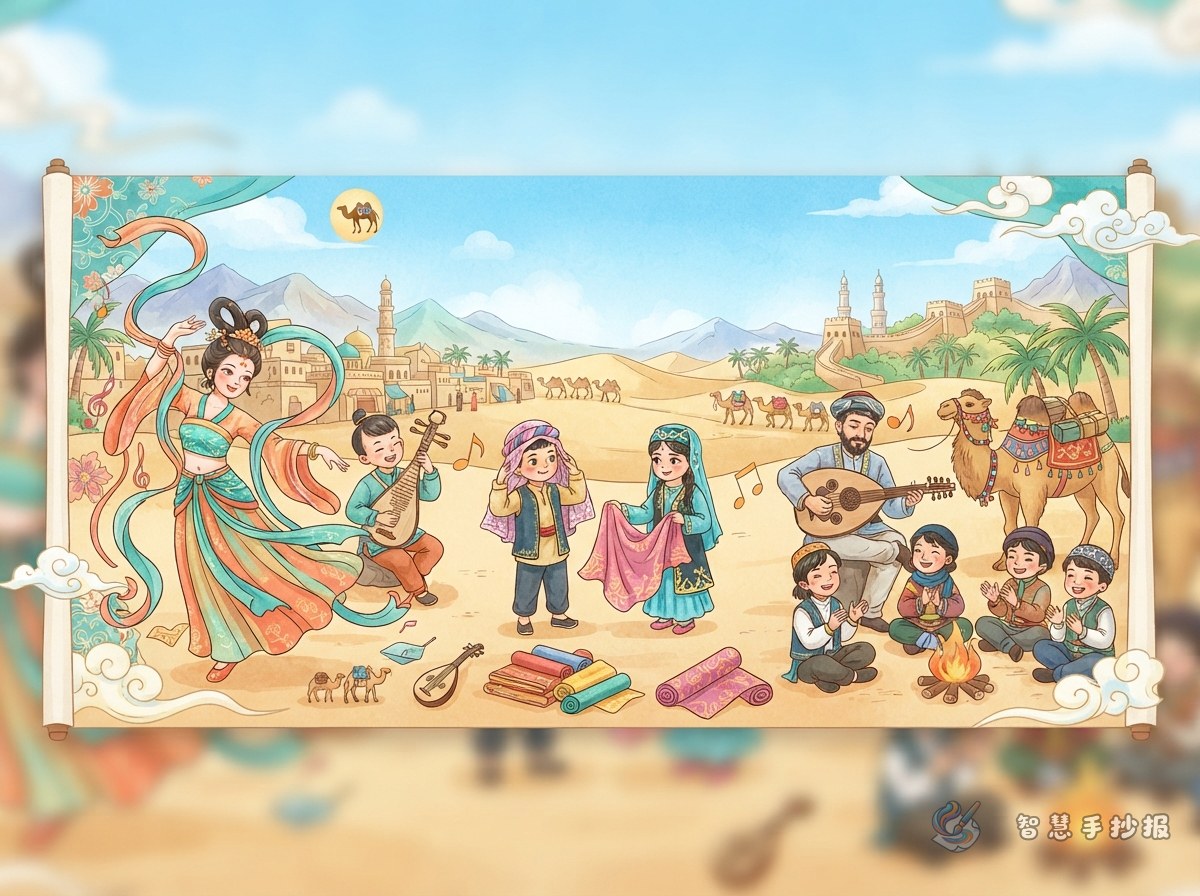
When people think of the Silk Road, they usually picture silk, porcelain and camel bells. Music, dance and clothing also moved along the same routes. An instrument arrived from the west, a way of dressing was adopted in the east, and a pattern appeared on cloth in two distant places. These changes are visible and drawable, which makes them perfect for a handmade poster.
The best part of this theme is its strong visual quality. You do not need long explanations. Simply show what came in, what went out, and how both sides influenced each other.
Material you can write about
Music and dance
- Dances that came from the western regions, such as fast spinning dances.
- Common instruments: the pipa, the harp, small drums and the sideways flute.
- Long ribbons and swirling sleeves painted on cave murals give you easy lines to copy.
- Music from the east and the west borrowed from each other and produced new tunes and playing styles.
Clothing and textiles
- Narrow-sleeved jackets and tall boots, practical for riding.
- Light, brightly coloured silk that traveled far beyond its home region.
- Patterns such as linked pearls and grape vines that appeared on cloth in many places.
- Round-collar robes and draped shawls that were borrowed across regions.
- Dyeing and embroidery skills that made colours and patterns richer over time.
Link every column with one winding trade route
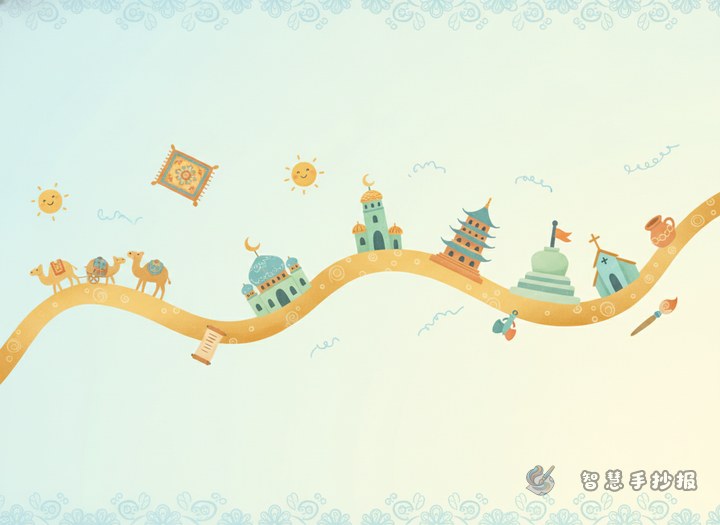
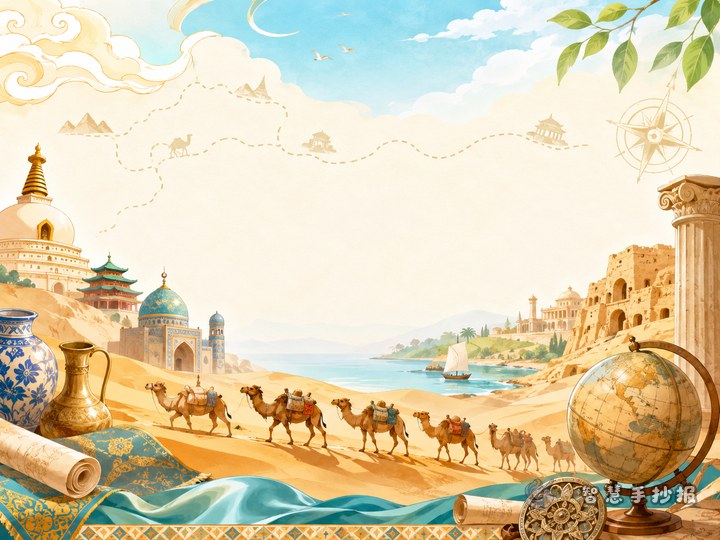
Do not cut the page into four equal boxes right away. Draw a curved route from the lower left to the upper right, or a wide ribbon, and treat it as the backbone of the page. Every column can hang along it.
- Place the main title in the upper left with the largest lettering.
- Draw camels, traders and bells along the route to connect the sections.
- Put the music column on one side and the clothing column on the other so they face each other.
- Keep a small space in the lower right for a closing note about what exchange means to you.
This layout creates a clear reading path, so the finished page feels organised rather than scattered.
Writing titles and text blocks neatly
- Use a paired phrase for the main title, such as "Music travels far, robes meet from all sides".
- Keep each text block to three or five sentences. State the point first, then add one example.
- Use the same font size for headings at the same level, and underline them or box them in colour.
- Leave white space between blocks instead of pushing text against the border.
- Finish the drawings before writing the main text so your hand does not smudge fresh colour.
Before you start drawing
Sketch the outline lightly in pencil first, marking the title, the route and each column. Write the text next, then add colour. For the music section, focus on ribbons and instrument silhouettes. For the clothing section, focus on robe shapes and pattern blocks. The soft lines and the firm shapes together give the page more depth.
If you want help arranging columns and judging how much text fits, open the WeChat mini program Smart Handwritten Newspaper, choose a Silk Road exchange template, replace the sample text with your own material, and check the overall effect before copying it onto paper.