Focus on visible cultural exchange
If you want this poster to feel specific and meaningful, center it on religious and artistic exchange along the Silk Road. This angle works well because it offers both historical content and easy visual elements, such as cave murals, flying apsaras, lotus motifs, domed buildings, and musical performances. A title like “Religious Art Encounters on the Silk Road” or “Cultural Exchange Seen in Murals and Patterns” makes the topic clear and engaging.
Four strong sections for the poster
1. A short route introduction
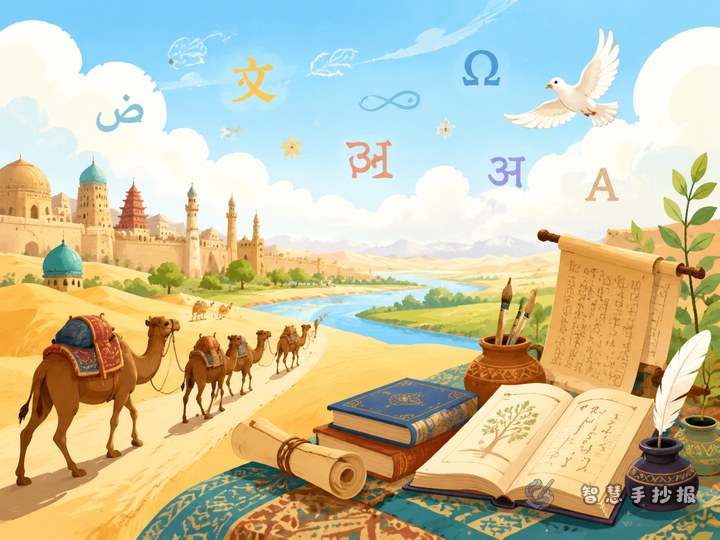
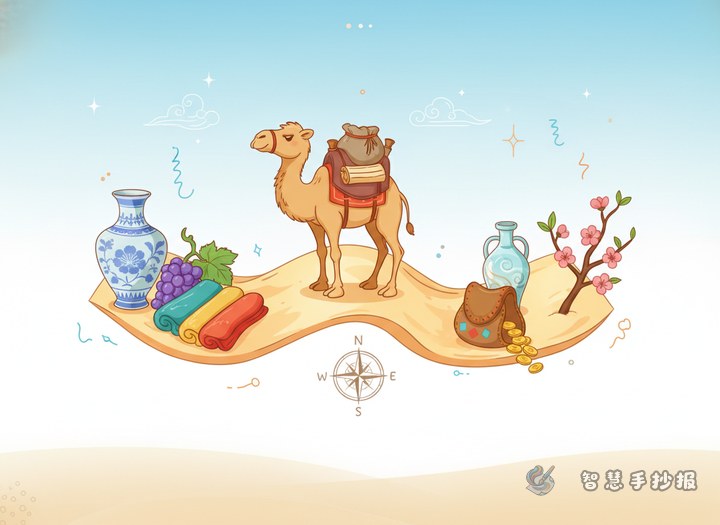
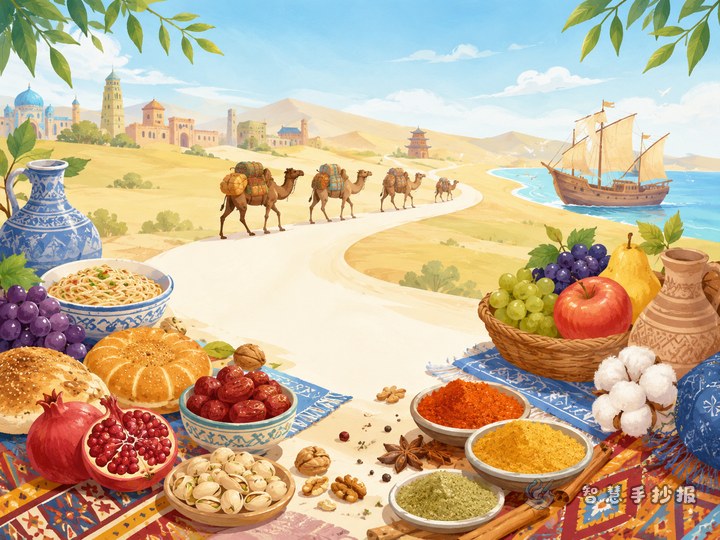
You can explain that ancient trade routes did more than carry silk and goods. They also spread ideas, beliefs, and art styles. As people traveled, artistic traditions moved across regions and blended with local culture.
2. Caves and murals
Write that many caves and murals along the Silk Road preserved images of clothing, instruments, architecture, and people. These artworks show how different regions influenced one another and created new artistic forms.
3. Architecture and decorative patterns
You can mention lotus designs, scrolling vines, geometric shapes, and other patterns that appeared in buildings, fabrics, and objects. As these motifs traveled, they were adapted by different cultures and gained new features.
4. Music, dance, and daily life
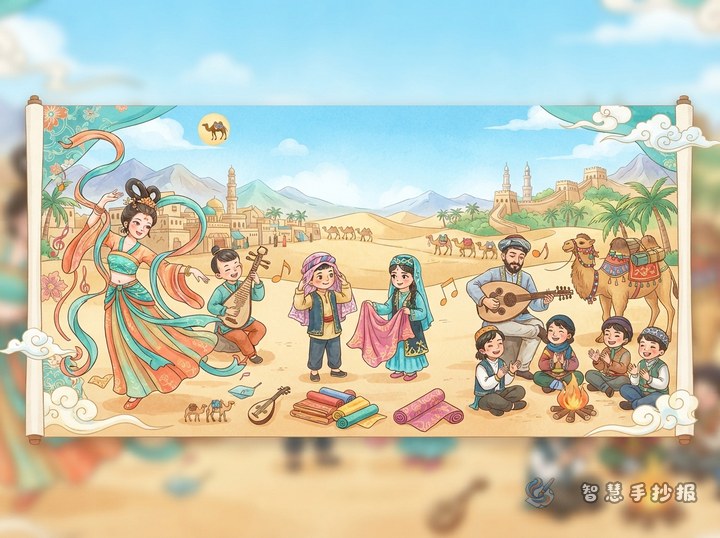
Artistic exchange was not limited to religious places. Music, dance, costumes, and festival decorations also spread along the Silk Road, showing how cultures met in everyday life.
Short sentences students can copy
- The Silk Road connected not only trade, but also ideas and art.
- Cultural exchange helped art grow richer and more diverse.
- Murals, buildings, and patterns are important clues to ancient exchange.
- When art travels, it changes, and those changes show cultural contact.
- Exchange does not mean replacement; it means learning, blending, and creating.
How to arrange the layout
A practical design is a large title in the center with themed sections around it. Put the main title in the middle, and place sections such as murals, architecture, patterns, and music around it. At the bottom, add a short reflection like “What I learned about cultural exchange.”
For colors, try earthy yellow, dark red, green, and deep blue to create a historical Silk Road feeling. Keep each paragraph short so younger students can copy and read easily.
Drawing ideas that match the theme
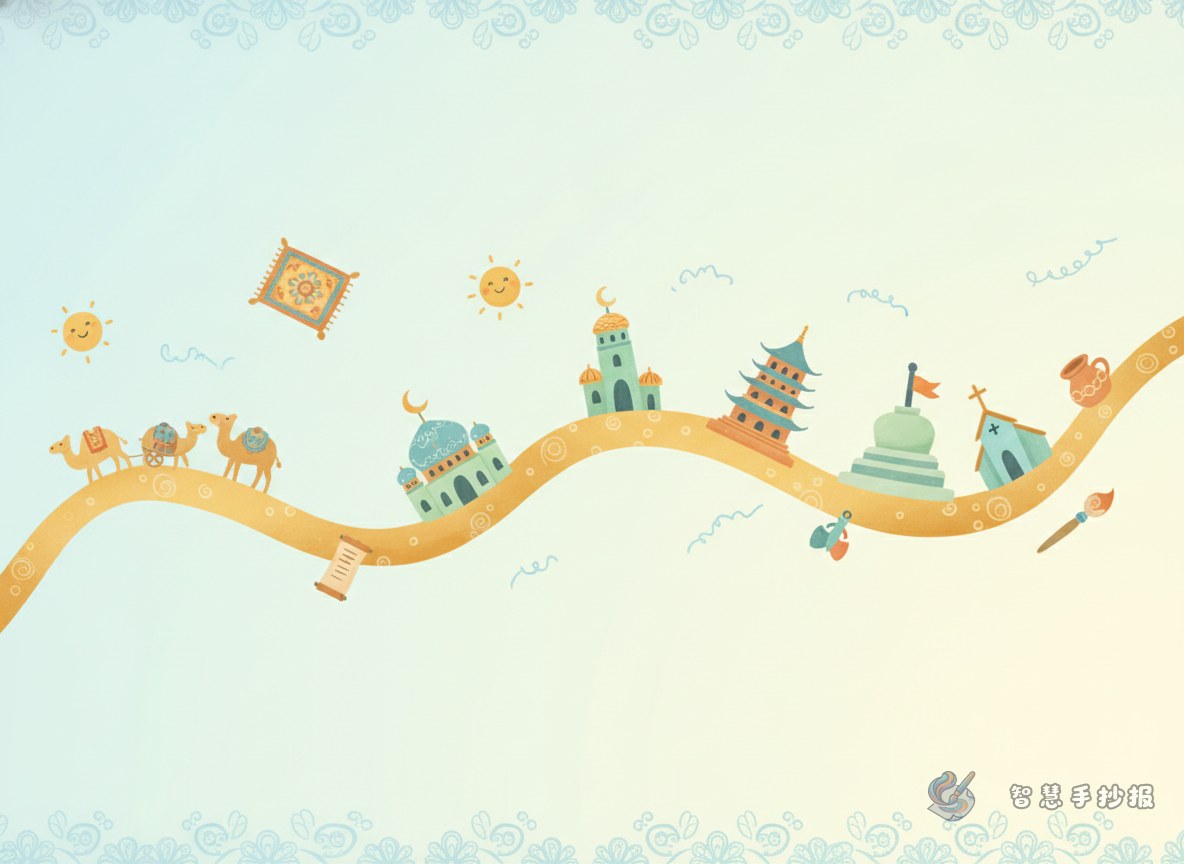
- A winding route line to represent the Silk Road.
- A cave outline or mural-style border.
- Lotus or vine patterns for decoration.
- Simple drawings of ancient instruments such as pipa or drums.
- Different building silhouettes to show cultural blending.
A better ending for the poster
Instead of ending with a very simple sentence, you can write that religious and artistic exchange on the Silk Road shows how civilizations become more colorful through contact and mutual learning. Making this poster is not only about history, but also about respecting different cultures and appreciating shared beauty. If you want to keep refining your layout and title ideas, you can continue your work in the Zhihui Shouchao Bao WeChat mini program.