Build the page around “visible cultural exchange”
For a Silk Road civilization exchange poster, simply listing routes and place names can make the page feel flat. A better student-friendly angle is to focus on how the Silk Road connected people, goods, and ideas. This gives the poster a clear theme and makes it easier to arrange sections and drawings.
You can use a main title such as “How the Silk Road Connected East and West” or “Civilizations Meeting on the Silk Road.” A short subtitle like “From trade to cultural exchange” helps keep the whole poster centered on communication and mutual learning.
Four useful sections for the poster
1. What traveled along the Silk Road
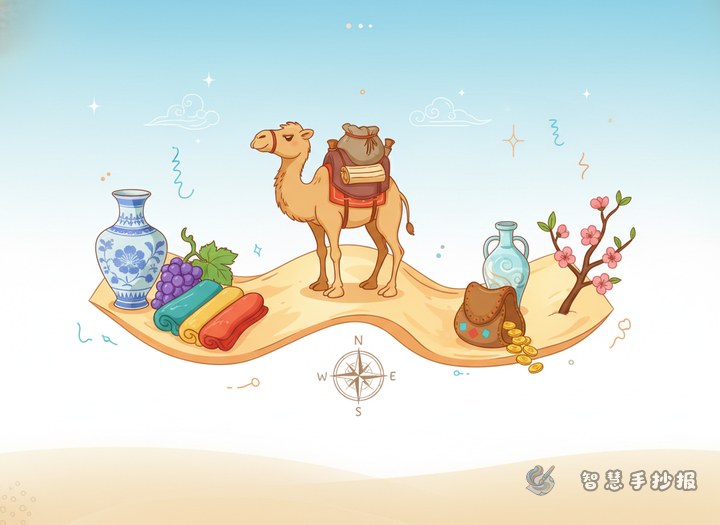
- Silk, tea, and porcelain were carried to distant regions
- Spices, gemstones, and grapes were introduced into China
- Caravans created links between different places
2. More than trade: cultural learning
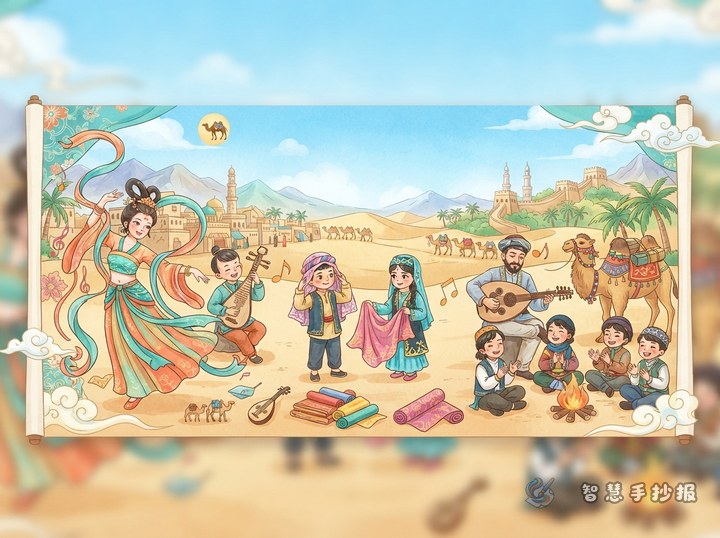
- Music, dance, and clothing styles influenced each other
- Painting, architecture, and decorative patterns showed exchange
- Ideas, customs, and daily life also spread across regions
3. Important people on the route
- Merchants who carried goods over long distances
- Envoys who helped communication between regions
- Craftsmen and scholars who shared skills and knowledge
4. What we can learn today
- Respect different cultures
- Stay open to communication
- Value cooperation and peace
Ready-to-use writing material
The Silk Road was not only a road for trade, but also a bridge between civilizations. Ancient caravans crossed mountains and deserts, bringing silk, porcelain, and tea to distant lands, while also carrying back new products, art, and knowledge.
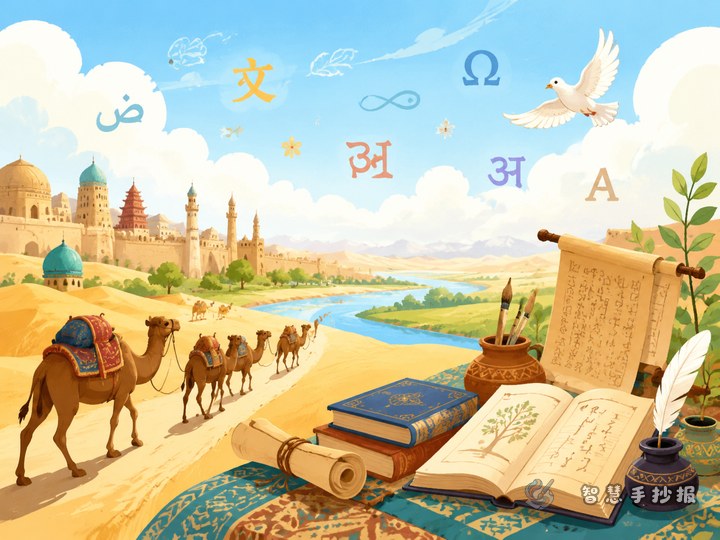
Along the Silk Road, people with different languages, clothing, and customs met one another. They exchanged goods, but they also shared music, dance, painting, and techniques. Because of these contacts, both Eastern and Western civilizations became richer and more colorful.
When we learn about the Silk Road today, we should not only remember the route on a map. We should also understand that civilizations become more vibrant through exchange and grow through mutual learning. Friendship, respect, and cooperation are still meaningful today.
A layout that tells a story
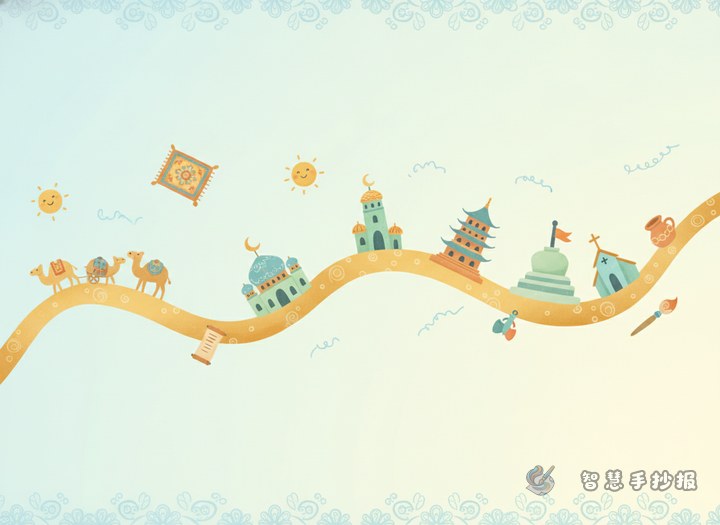
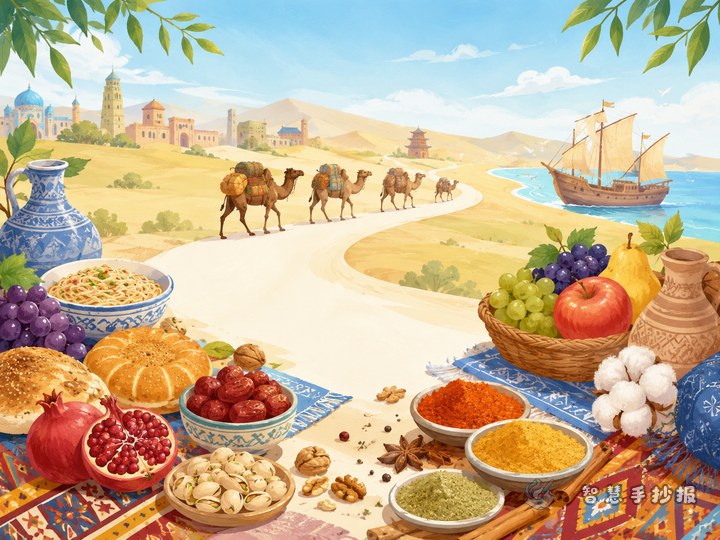
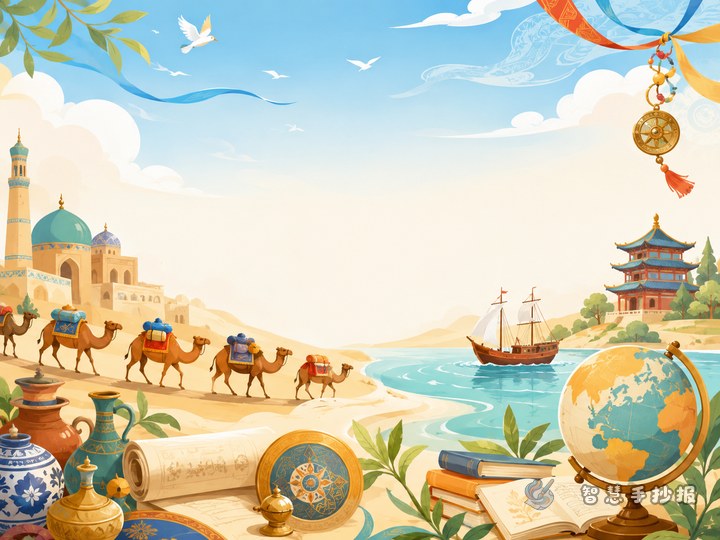
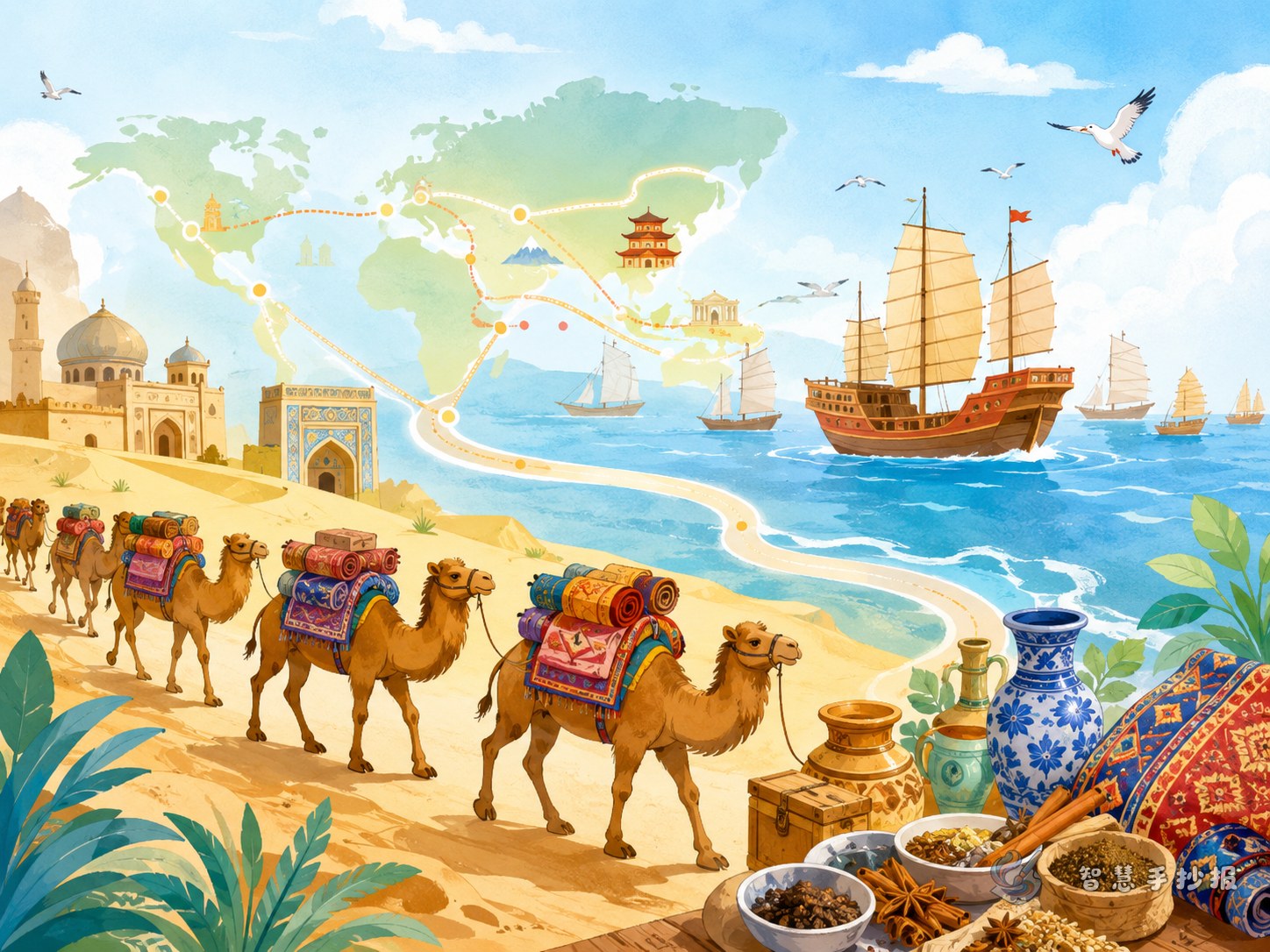
A strong layout is “one main scene in the center with sections around it.” In the middle, draw a winding Silk Road with desert land, camel caravans, towns, and mountains. Place “trade exchange” and “cultural exchange” on the sides, and add a small “what I learned” section at the bottom.
Good color choices include sandy yellow, blue, brown, and green. Sandy yellow fits desert scenes, blue works for the sky and borders, brown highlights camels and old cities, and green can be used for grapes and plants. Borders can use scroll shapes, patterns, or map-like lines to strengthen the theme.
Small details that make the poster better
- Useful icons: camel, silk ribbon, porcelain, post station, old city gate, grape vine
- A simple quote: Civilizations shine through exchange and grow through mutual learning
- Do not overcrowd the page; highlight key ideas with bold subheadings
- Keep each section short so it is easy for children to copy and read
If you already have the topic but want to improve the layout, title style, or section arrangement, you can continue exploring ideas in the Zhihui Shouchaobao WeChat mini program.