Start With a Shadow, Not a Complicated Star Chart
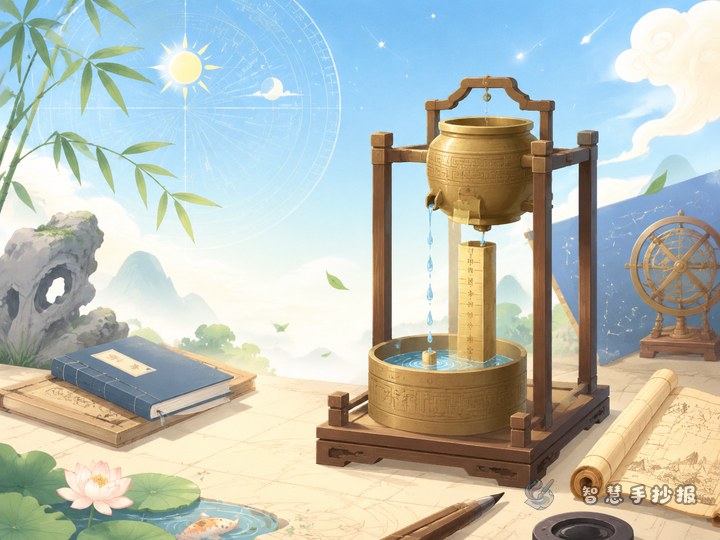
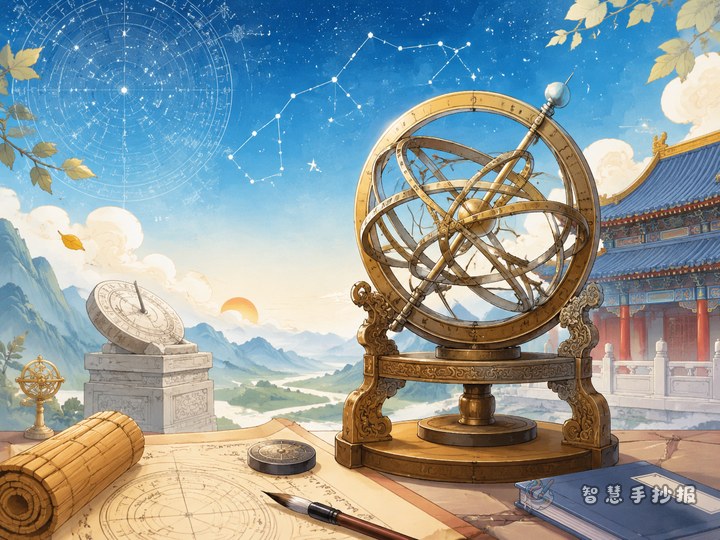
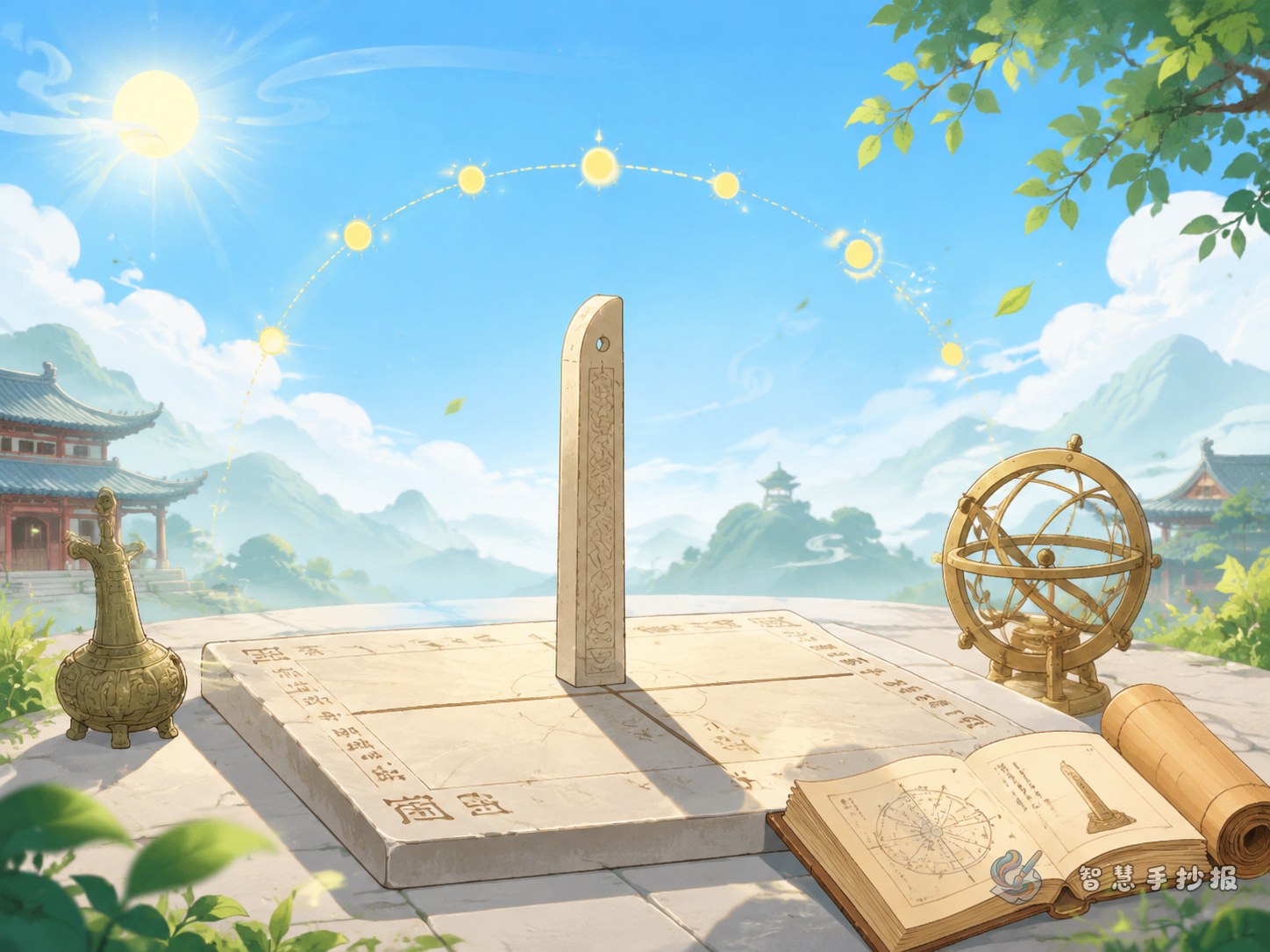
This handwritten newspaper can begin with something students can see in daily life: a sun shadow. In ancient China, people used a vertical pole and a horizontal measuring scale to observe the shadow cast by the sun. This instrument is often called a gnomon.
A suitable title could be “How Shadows Helped Ancient People Read the Seasons” or “The Gnomon and the Secrets of the Ancient Calendar.” These titles sound natural and make the topic easier to understand.
Four Small Discoveries for the Main Text
Discovery 1: Shadows Move During the Day
In the morning, a shadow is long and points in one direction. Around noon, it becomes shorter. In the evening, it grows longer again. This helped ancient people notice the passing of time.
Discovery 2: Shadows Change Across the Year
At the same place and at the same time of day, the shadow is not always the same length. It is usually shorter in summer and longer in winter. Long-term observation helped people understand seasonal patterns.
Discovery 3: Solstices Were Important Markers
Ancient observers found that the longest and shortest noon shadows were linked with key seasonal points, especially the winter solstice and summer solstice. These observations supported calendar-making.
Discovery 4: Calendars Connected the Sky and Life
Calendars were not only records on paper. They guided farming, festivals, travel, and daily routines. Turning sky observations into useful dates was an important part of ancient Chinese wisdom.
Ready-to-Use Writing Materials
- Gnomon fact: A gnomon is an ancient astronomical tool used to measure the length of the sun’s shadow.
- Season clue: The noon shadow changes with the seasons. A shorter shadow often appears in summer, while a longer shadow appears in winter.
- Calendar use: Ancient calendars helped people plan farming activities and understand the rhythm of the year.
- My observation: On a sunny day, students can record the shadow direction and length in the morning, at noon, and in the afternoon.
Make the Shadow the Visual Thread
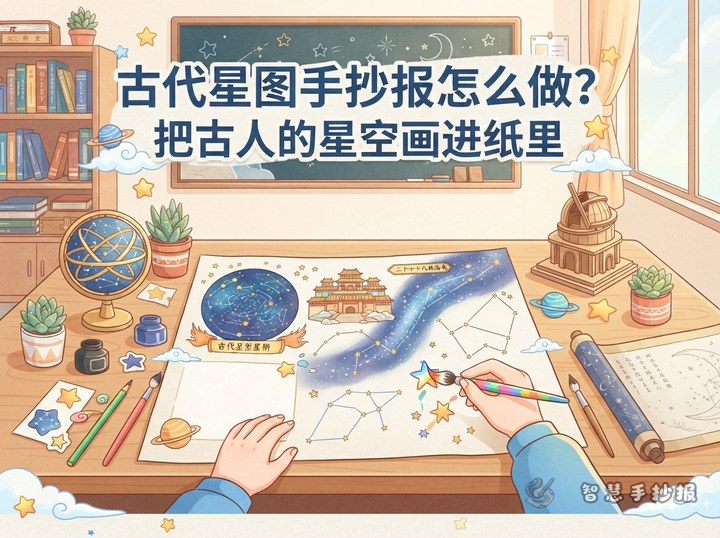
Place a large gnomon drawing in the center of the page. Draw the sun shining from one side and a clear shadow falling on a measuring line. Put “What Is a Gnomon” on the left, “How Shadows Change” on the right, and “Calendars and Daily Life” near the bottom.
Use light blue, warm yellow, orange, and brown to create a bright but historical feeling. Bamboo-slip borders, cloud patterns, star dots, and small seasonal icons can make the page attractive without making it crowded.
Add a Small Observation Corner
A special corner called “My Sun Shadow Record” can make the handwritten newspaper more interactive. Include a small table with time, shadow direction, shadow length, and my finding. This turns the topic from simple reading into a hands-on learning activity.
To continue designing the page, choosing title styles, or arranging the columns, users can open the Zhihui Handwritten Newspaper WeChat mini program and search for ideas related to gnomons, sun shadows, and ancient calendars.