Start with a clear and useful angle
For this type of poster, it is better to choose a practical angle instead of using only a broad title like eye protection. Good options include How Students Can Prevent Myopia, Daily Eye Care Habits, or Proper Reading Posture and Vision Care. A more specific topic makes the page easier to organize.
A simple four-part content plan
- Causes: reading too close, poor lighting, too much screen time, and incorrect posture.
- Good habits: proper sitting posture, regular breaks, eye exercises, and outdoor activity.
- Reminders: do not read while walking or lying down, and avoid using eyes in lighting that is too dim or too bright.
- Action section: add a daily eye-care checklist to make the poster more interactive.
Short text materials students can use
Useful lines include: Protect your eyes from an early age; Keep proper posture when reading and writing; Rest your eyes after study time; Spend time outdoors and look at the distance; Reduce screen time and care for your vision.
You can also add a short explanation: Our eyes help us learn about the world. Good eye-care habits make study and life more comfortable. Preventing myopia is not about one day of effort, but about doing small things well every day.
Try a layout beyond the usual three columns
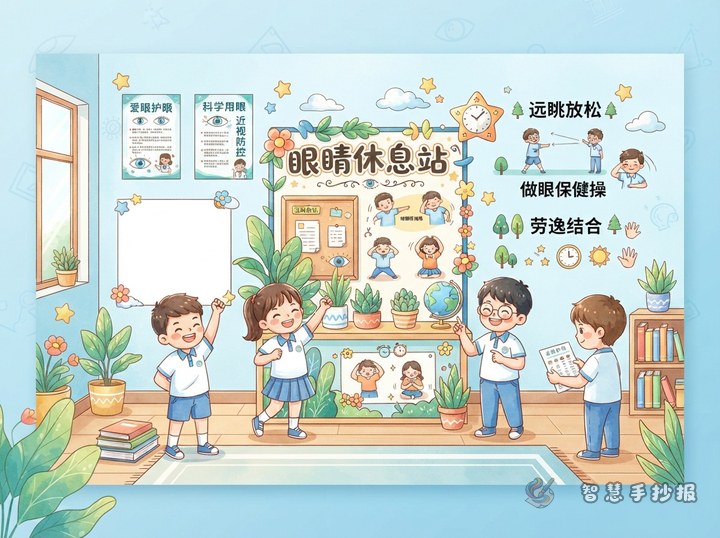
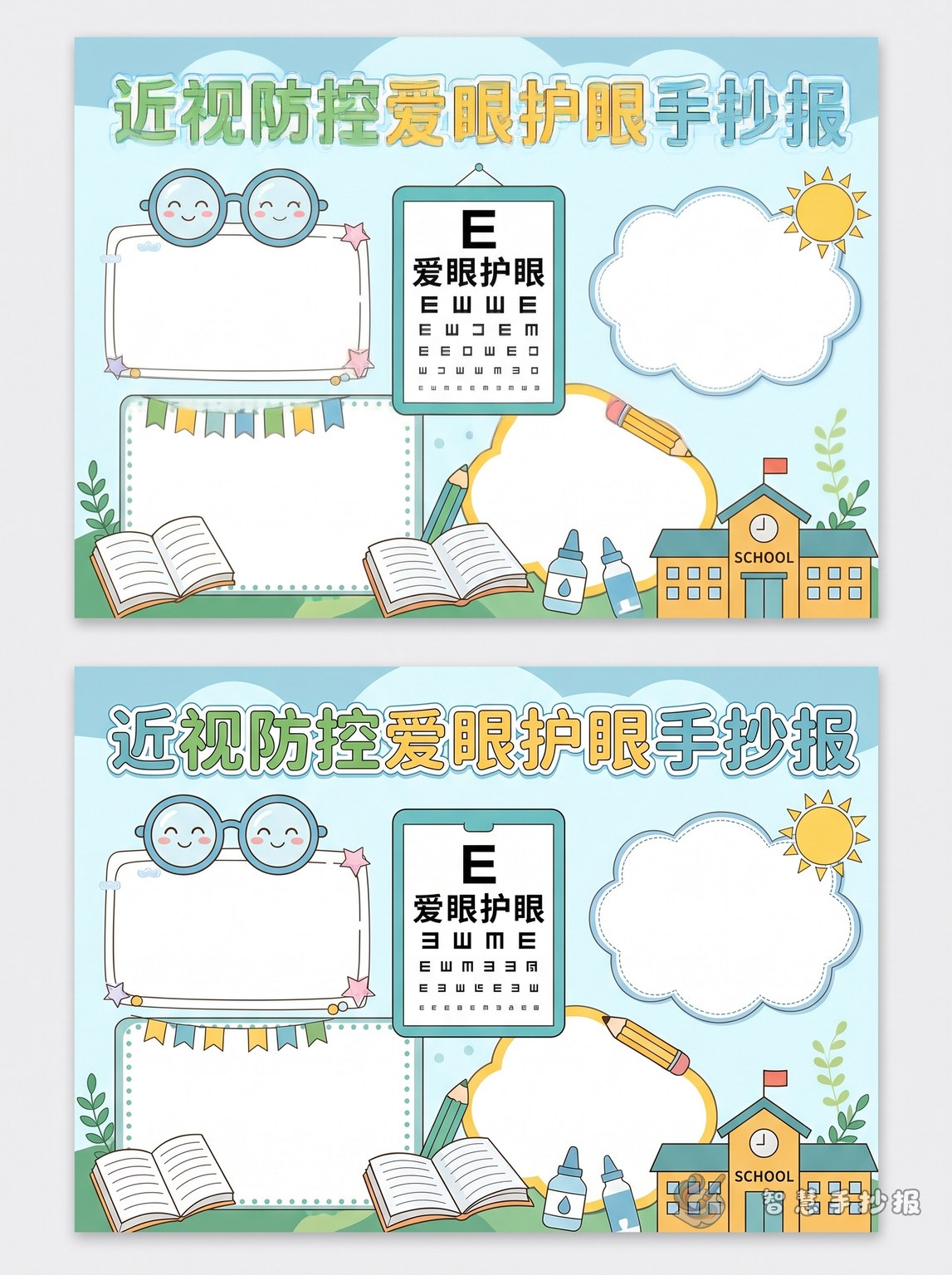
Place the main title at the top center and decorate the border with suns, eyes, leaves, clouds, books, or school items. In the center, set a strong title area. On the left and right, compare bad habits and good habits. At the bottom, add a daily eye-care checklist.
If you want the page to feel more lively, use circles, speech bubbles, checklist boxes, and tip cards instead of long blocks of text. Green, blue, and yellow work well for a bright and clean style.
Easy finishing tips for students
- Make the main title larger than the body text.
- Keep each paragraph short so the page does not look crowded.
- Highlight key ideas such as eye care habits, myopia prevention, and proper posture.
- Choose simple drawings like eyes, desks, lamps, playgrounds, and trees.
- Check spelling and neatness before adding final decorations.
If you want to continue adjusting the layout, try new title styles, or add more eye-care sections, you can also use the Smart Handwritten Newspaper WeChat mini program to keep improving your poster.