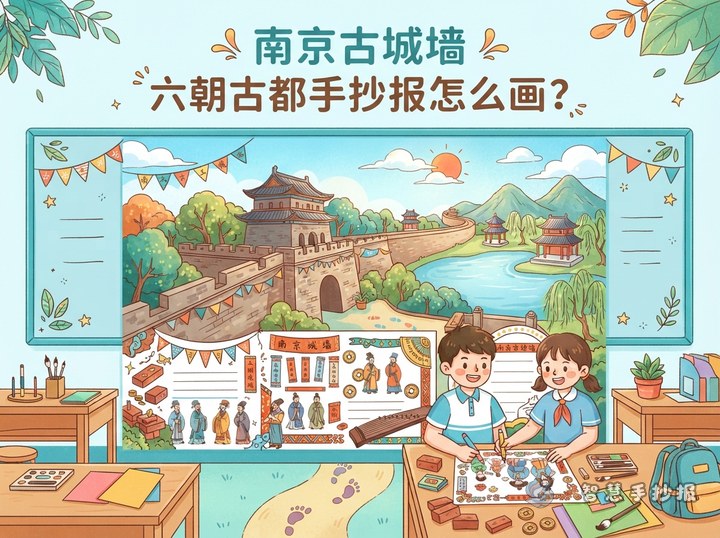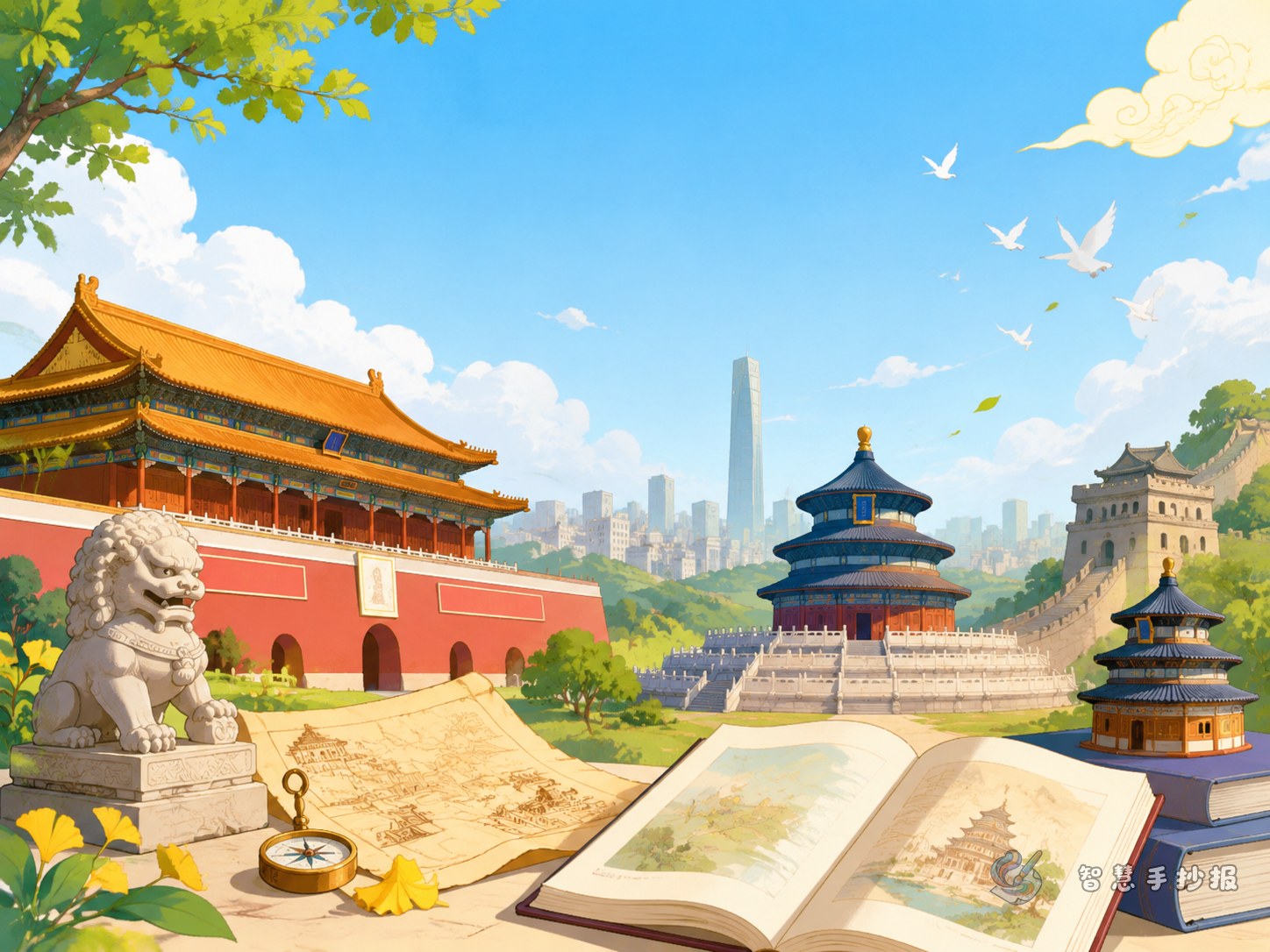
Start with the main question of the page
If your topic is about why Beijing is often called an ancient capital, the handwritten newspaper should do more than introduce a city. It should help readers understand why Beijing mattered, what gave it the character of a capital, and how urban civilization appeared in everyday spaces.
A short opening sentence can say that Beijing is one of China’s famous ancient capitals, known for its long political importance, planned city form, and lasting cultural influence.
Four useful sections for the newspaper
1. City profile
- City name: Beijing
- Keywords: ancient capital, central axis, palace city, hutongs, cultural heritage
- One-sentence note: Beijing is called an ancient capital because it formed a complete and influential capital-city landscape over time.
2. Why Beijing became an ancient capital
Students can explain that Beijing held an important capital position in history and had a strong geographic and political role. As a capital, it developed not only grand buildings but also clear city planning and ceremonial order.
3. Where urban civilization can be seen
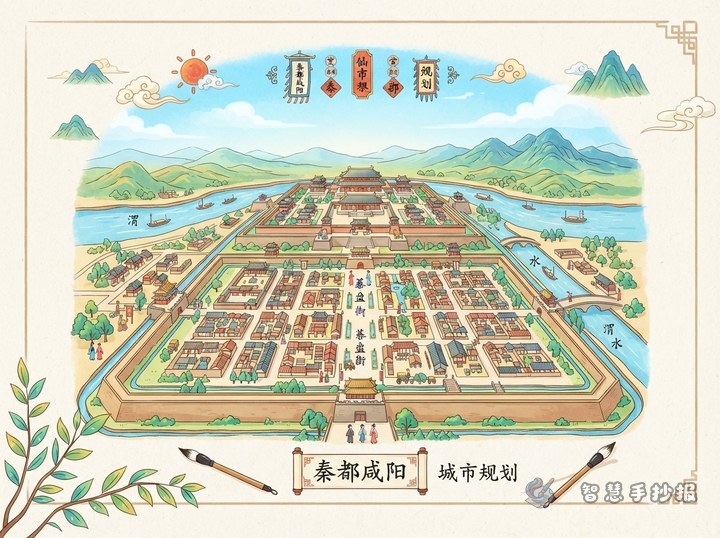
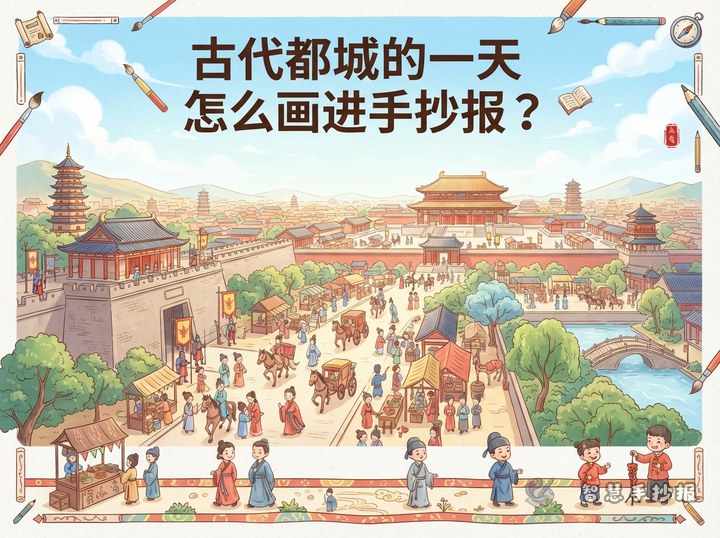
Urban civilization can be shown through the central axis, city gates, streets, markets, and residential spaces. A capital city is not only about palaces. It also includes roads, neighborhoods, and the life of ordinary people.
4. My reflection
Add one or two lines about what you learned, such as how an ancient capital is not just old, but also a result of thoughtful planning, social order, and cultural memory.
Better writing material than a list of attractions
Many students only list famous places such as the Forbidden City or the Temple of Heaven. For this topic, it is more effective to organize material through layers of urban civilization:
- Planning: the orderly layout of the city shows the importance of structure and ritual.
- Architecture: palaces, gates, and ceremonial buildings show the dignity of an ancient capital.
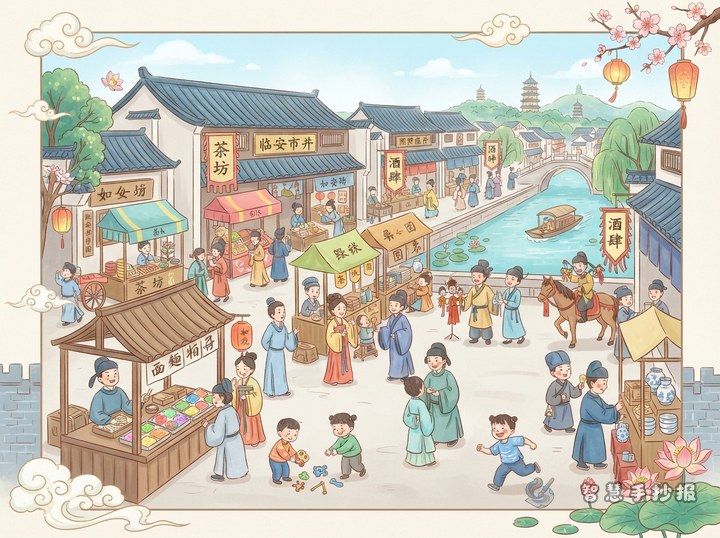
- Daily life: hutongs, courtyards, and markets reveal the living side of the city.
- Culture: festivals, manners, and traditional crafts show how civilization continued over time.
Short lines such as “The central axis links history, order, and identity in Beijing” can work well on the page.
Try a layout inspired by the central axis
This topic works especially well with a vertical design. Use a line down the middle of the page to represent Beijing’s central axis, then arrange content on both sides.
- Top: main title
- Center line: key words like city order, capital design, cultural heritage
- Left side: why Beijing was an important capital
- Right side: hutongs, courtyards, festivals, and market life
- Bottom: a summary or personal thought
Decorations can include simple rooflines, gate shapes, lanterns, or street-grid patterns. Keep some open space so the newspaper stays clean and easy to read.
Short sample paragraphs for students
Sample 1: Beijing is one of China’s famous ancient capitals. As a capital city, it had not only grand palaces but also a carefully planned urban layout. Its central axis, gates, and streets show the wisdom of ancient city design.
Sample 2: A true ancient capital is not only old in age. It also carries layers of civilization. Beijing’s hutongs, courtyard homes, festivals, and traditional customs help us see the warmth of daily life in a historic city.
Sample 3: From this handwritten newspaper, I learned that Beijing is called an ancient capital not only because of its long history, but also because it preserves urban order, architecture, and cultural memory.
Final checklist before finishing
- Did you include both capital-city history and urban civilization?
- Did you explain meaning instead of only naming famous places?
- Do you have an introduction, several sections, and a reflection?
- Are the title and key points easy to read?
- Is the amount of text suitable for a school display?
After the content is ready, you can continue refining the page in the WeChat mini program to improve the title style, section boxes, and color matching.