Begin with a route through the capital
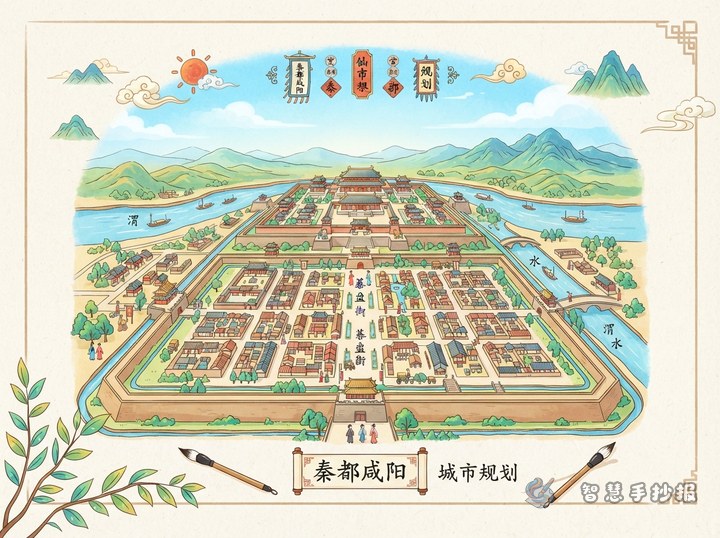
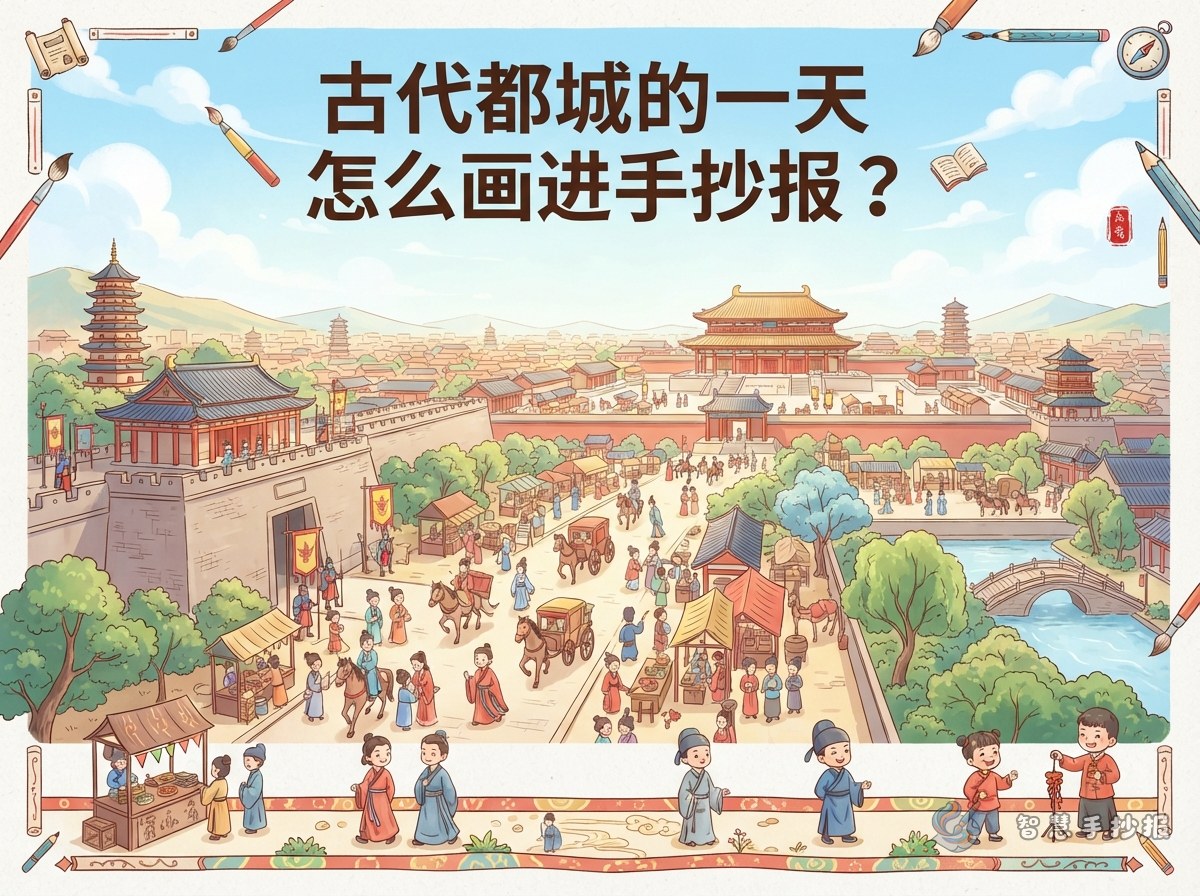
This handwritten newspaper does not need to list dynasties and place names separately. Imagine an ancient capital waking up in the morning: people enter through the city gate, walk along streets, pass homes, offices, bridges, and finally arrive at a busy market. A route gives the page a story and makes the city easier to understand.
Suggested theme sentence: City gates connect distant places, streets carry everyday life, and markets reveal the energy of an ancient city.
Build the page around five city stops
- City gate: Place it in the upper-left corner or at the visual entrance of the page. Draw a tall gate, a gate tower, and people coming and going to show its role in defense and transportation.
- Street: Use a curved or vertical road to connect the sections. Add travelers, carts, and people carrying goods beside it.
- Residential area: Explain briefly that ancient capitals included not only palaces and government offices, but also places where ordinary people lived, worked, and met.
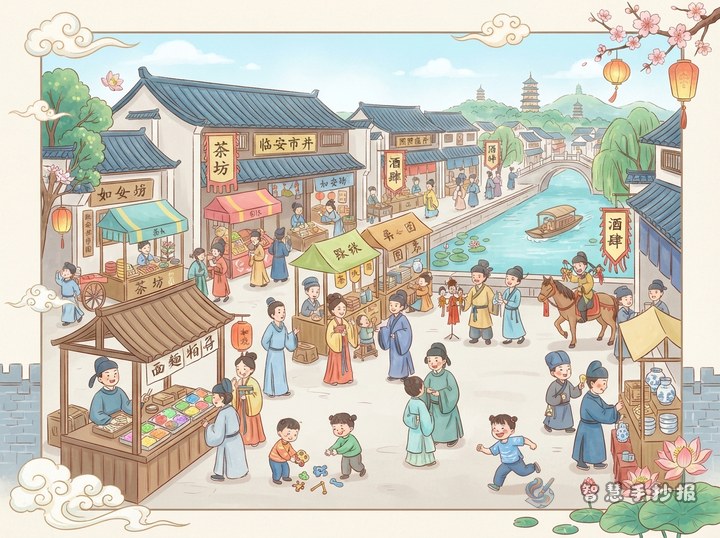
- Market: Make this the visual center. Stalls, goods, signs, and conversations can show trade and daily life.
- Waterway or bridge: Use it at the bottom as a decorative divider. It can represent transportation, water supply, and the connection between the city and its surroundings.
Useful historical ideas to include
Ancient capitals often served several purposes at once: they were political, economic, cultural, and transportation centers. City gates allowed people and goods to enter and leave, broad streets supported city management, markets gave residents places to exchange goods, and bridges and waterways connected different areas. Layouts varied from one dynasty and city to another, so phrases such as “often” and “in some cities” help keep the writing accurate and easy for children to understand.
Short sentences for the page
- An ancient capital was an important center of government, living, and communication.
- From the city gate to the market, one street recorded order and everyday energy.
- Urban civilization appeared not only in grand buildings, but also in transport, trade, and neighborhood life.
- By observing an ancient city, we can see how people planned space, organized life, and developed connections.
Make the layout look like a city map
A horizontal layout works well: place the main title at the top and draw one street across the page. Put the city gate and offices on the left, homes and the market on the right, and finish with a river, bridge, or wall at the bottom. Shape the title like a gate plaque, and design section headings as road signs, shop signs, or small flags. This creates a clear reading path.
Try brick red, ochre, blue-green, and light blue for walls, buildings, streets, and waterways. Figures do not need to be detailed; a few simple actions can show welcoming visitors, traveling, selling, and talking.
Check the draft before coloring
- Is there one clear theme instead of a pile of building names?
- Does the page include city planning, ordinary life, and commercial exchange?
- Are the paragraphs short enough to leave room for drawings?
- Can the viewer see a connection between the gate, street, and market?
- Are the historical statements careful and easy to understand?
Use a pencil to plan the route and sections first, then add text, borders, and color. After finishing the draft, you can enter the WeChat mini program and use 智慧手抄报 to further organize the layout and balance the writing with illustrations.