Why Han Chang'an Works So Well as a Handwritten Newspaper Topic
Han Chang'an was the capital of the Western Han dynasty, located in what is now the Xi'an area. It was both the political centre of its time and the eastern starting point of the Silk Road. That gives the topic two built-in threads: how a capital city was arranged, and where the road led. There is a city to draw and a story to tell, so every column on the page has something to hold.
Plan the Content Around Three Threads: City, Market, Road
The city: walls, gates and palaces
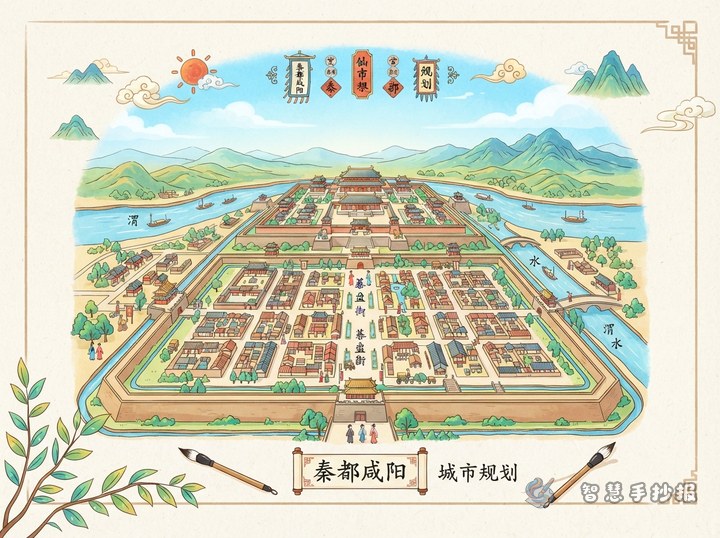
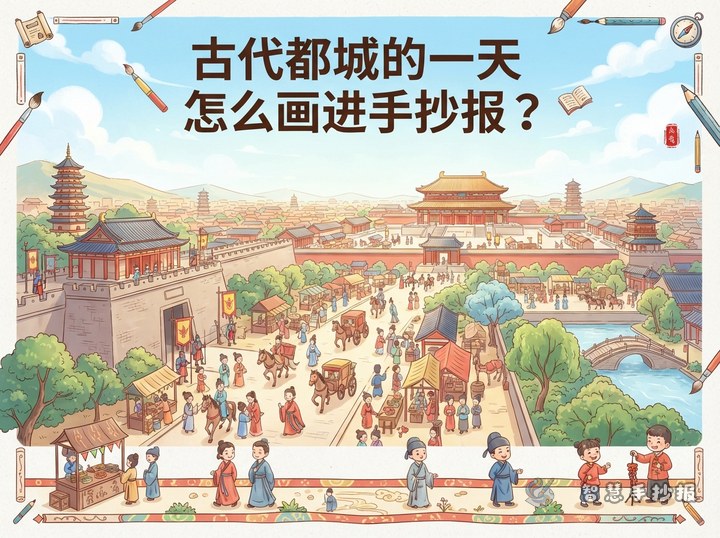
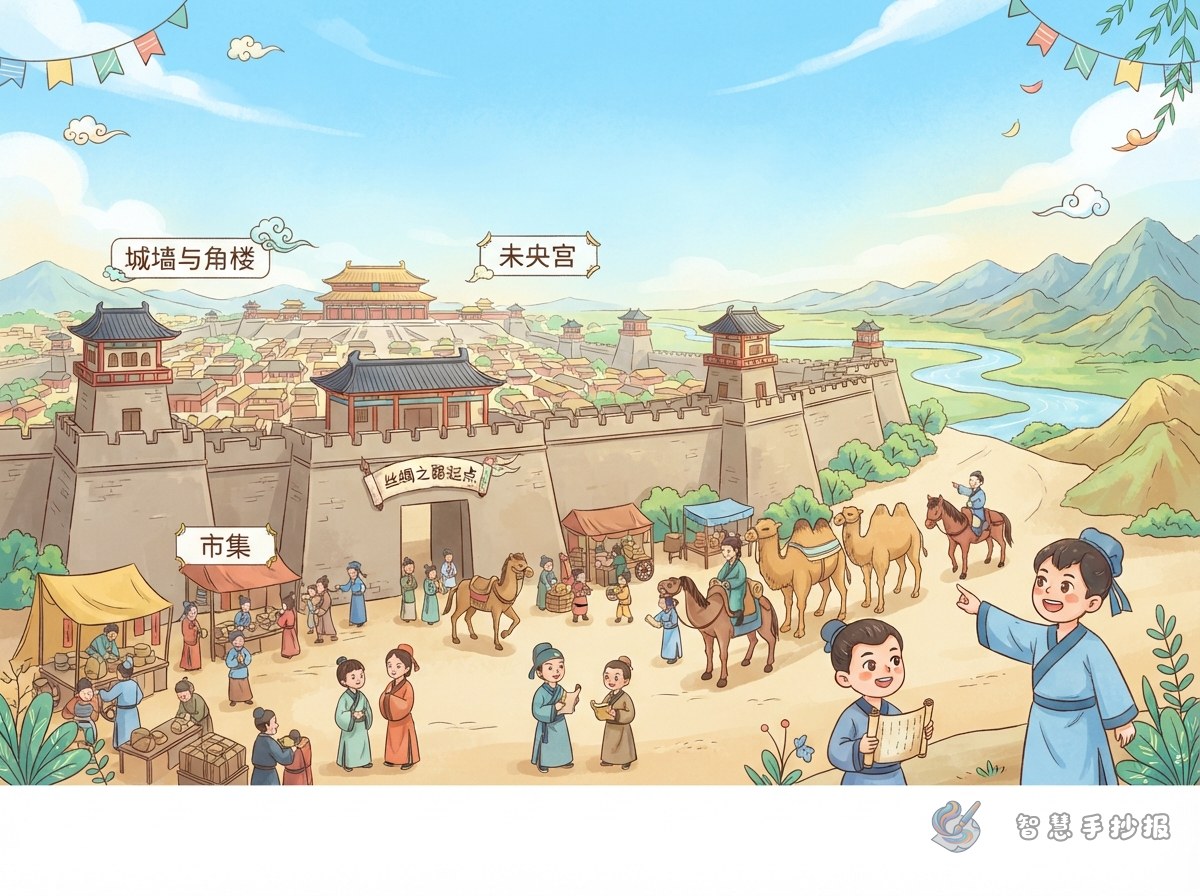
Han Chang'an had city walls and gates, and inside stood palace areas such as Weiyang Palace and Changle Palace. Old texts describe its streets as many and orderly. When you write this part, focus on the idea that a capital was carefully planned, rather than listing names.
The market: East Market and West Market
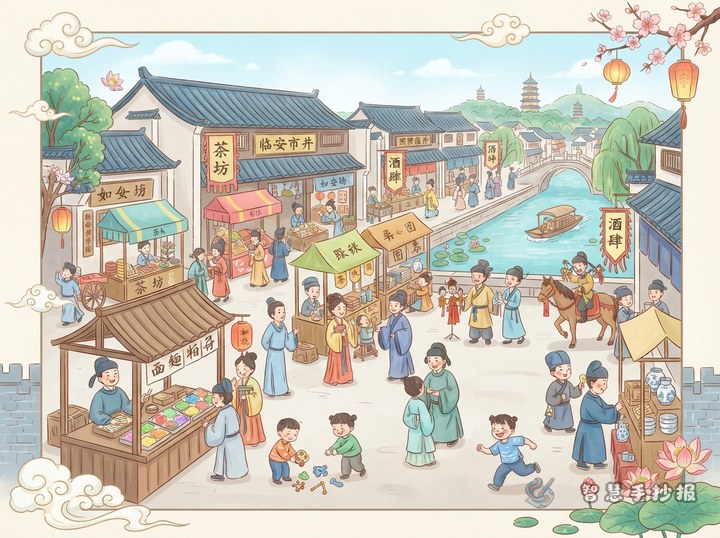
The city had special trading areas, and the East Market and West Market were the busy ones. Draw a few small stalls labelled with cloth, pottery, horses or grain, so readers see at a glance that the city traded.
The road: the Silk Road leaving Chang'an
Zhang Qian's mission to the western regions set out from Chang'an and opened the way for the Silk Road. Draw a camel caravan and add an arrow for the direction, then write one clear line: Chang'an is where the road begins.
A Layout That Keeps You Calm While Drawing
Try a combination of map, timeline and fact box, each in its own space.
- Left column: a simple plan of the walled city, marking the walls, the palaces and the two markets.
- Centre block: a timeline with only three or four points, such as founding the capital, Zhang Qian's journey and Silk Road trade.
- Bottom right: a Silk Road facts box with small icons such as a camel, grapes or flax, each with one short caption.
- Bottom strip: a single closing sentence that ties the page together.
You can shape column borders like city gates, or decorate with simple gate-tower outlines, cloud patterns and camel silhouettes instead of plain rectangles.
Sentences and Words You Can Copy Straight Onto the Page
- Han Chang'an was the capital of the Western Han dynasty, in today's Xi'an area.
- Weiyang Palace was an important palace where the emperor handled state affairs.
- The East Market and West Market were the busiest trading places in the city.
- Zhang Qian set out from Chang'an and travelled toward the western regions.
- One city, joined to a road thousands of miles long.
Useful words: capital, palace, gate, market, envoy, trade route, camel caravan. Pick four or five and put them in a title box or along the border.
Drawing and Colour Tips
- Draw the city in simple top-down style: walls and two palace blocks are enough.
- Keep palaces as straight lines with a roof shape, and skip tiny roof tiles.
- For the caravan, use two or three camel hump silhouettes, slightly staggered.
- Stick to cream, ochre and pale blue, then add a touch of red like a seal.
- Writing matters more than drawing, so leave enough white space and give the title a gate-shaped frame.
Three Reminders Before You Start
Write your outline first, then draw the frames. Keep the word count in each column under control so the text stays readable. Finally, read through the place names, dynasty and people once more to be sure nothing is mixed up.
If you want a tidier layout, open the 智慧手抄报 mini program in WeChat, choose a capital-city template that fits, drop in the text you prepared, then add your own decorations.