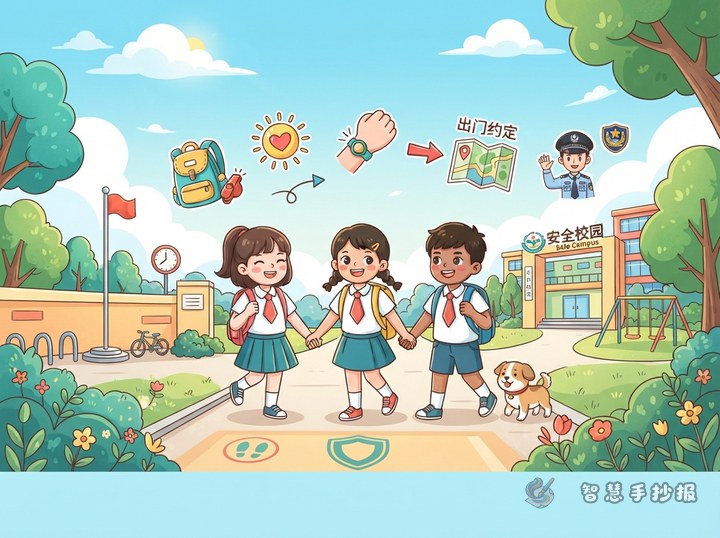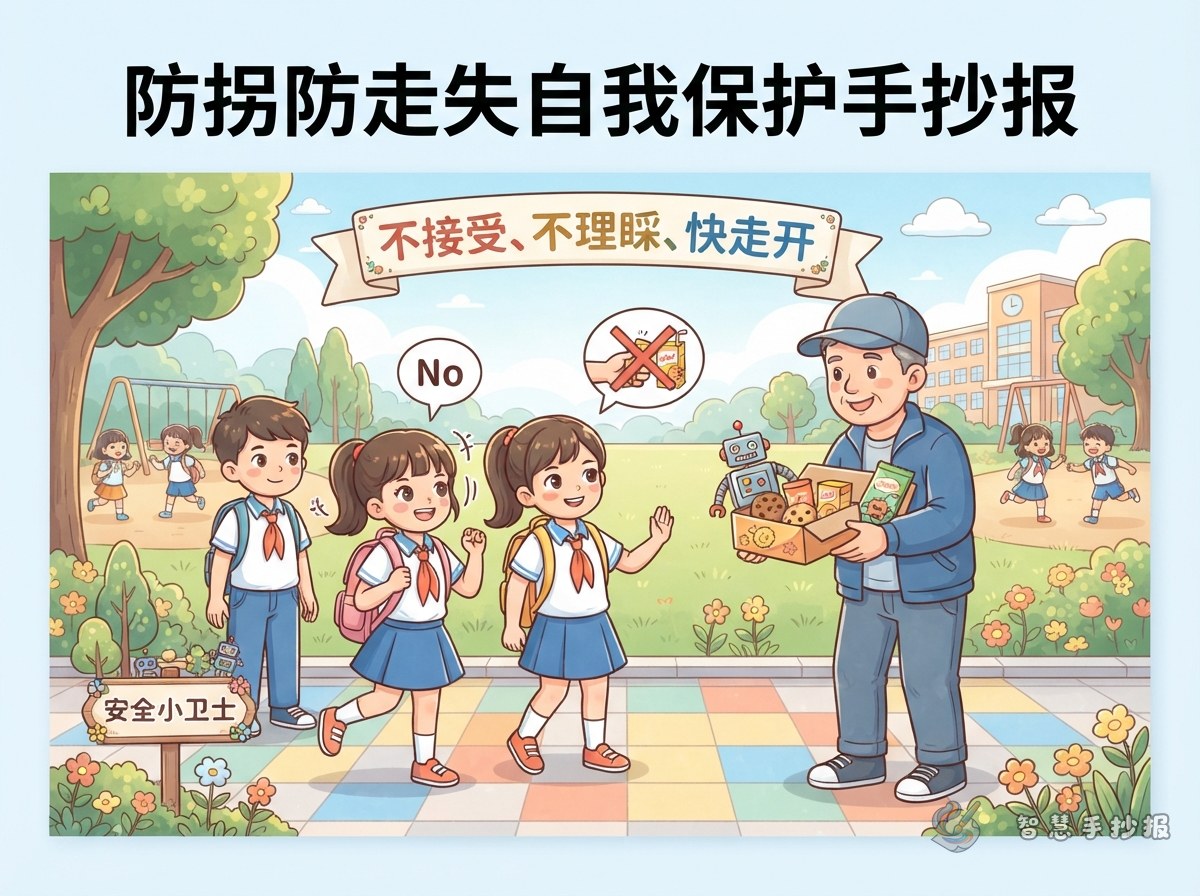
Why This Safety Topic Deserves Its Own Page
Most anti-abduction pages mention “don't take things from strangers” in a single line, and that one line is easy to forget. Giving the topic its own page lets you break it into steps a younger student can actually act out: how to spot the offer, how to refuse it, where to walk afterwards, and who to ask for help.
The whole page can be summed up in one sentence: if someone you don't know offers you something, don't take it — go and ask a grown-up you trust first.
Split the Layout Into Three Bands
Draw three horizontal bands or three columns, each with a short heading. It reads in order and is quick to sketch.
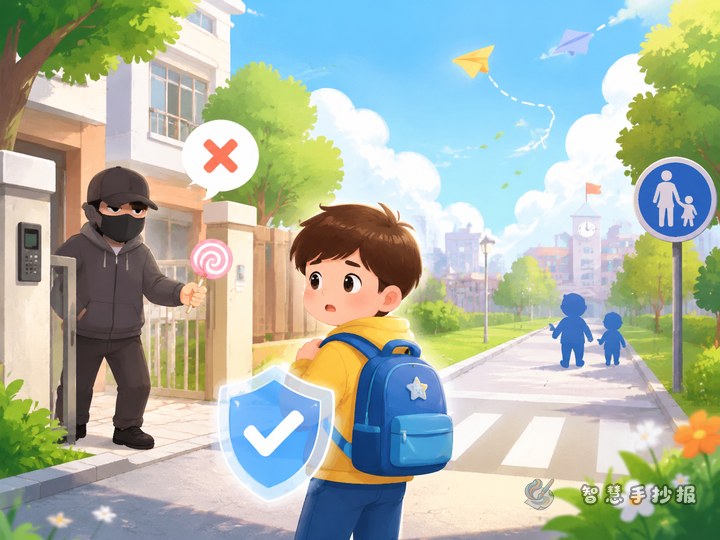
- Band 1 — Spot the offer: list the sweet traps: sweets, drinks, small toys, stickers, a puppy, borrowing a phone for games, plus excuses like “help me find my dog” or “show me the way”.
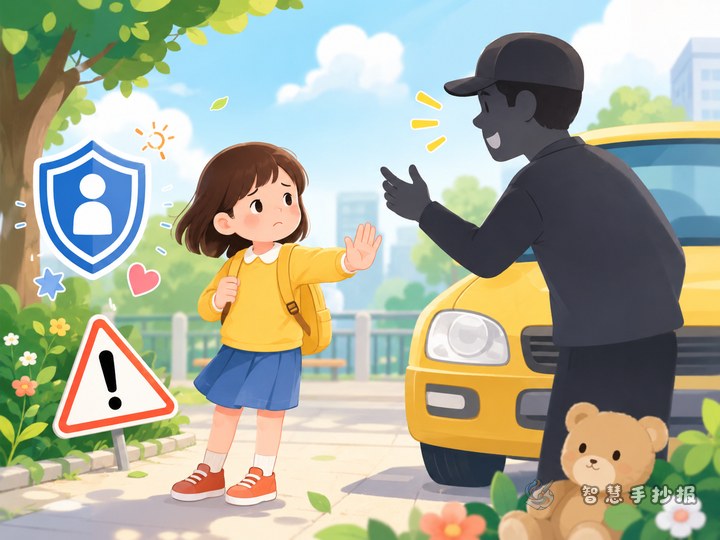
- Band 2 — The refusal: wave your hand and say “no thank you”, step back two paces, never take the item and never walk along, then move towards other people.
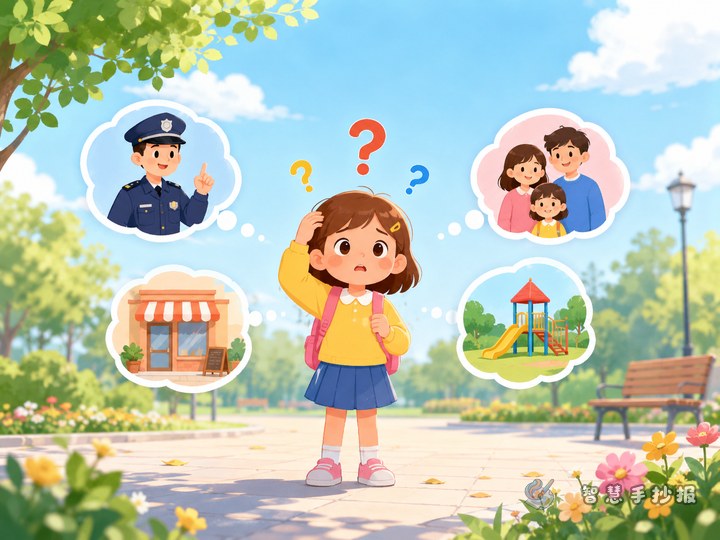
- Band 3 — Getting help: stay where you are and wait for your family, or ask a staff member in uniform, a checkout counter, a security post, or a parent with children to help you make a call.
Join the three bands with arrows or footprints so the page shows one clear route: spot it, refuse it, get help.
Text You Can Copy Straight Onto the Page
Pick the lines that match the space you have left.
- Title ideas: I Don't Take Things From Strangers / Watch Out for Sweet Traps / Don't Take It, Don't Eat It, Don't Follow.
- A four-line chant: A stranger's sweet, I will not take; a stranger's toy, I will not hold; step back two paces, walk away; find a grown-up, then we talk.
- Dialogue lines: “Here, have some candy.” “No thank you, my mum is right over there.”
- A warning strip: if someone says your parents sent them, ask a teacher or a security guard to phone and check.
Copy the chant along the top of the page in the largest letters, and keep the dialogue lines smaller so the layout has a clear order.
Three Common Tricks, Three Matching Panels
Draw three panels of the same size: the stranger's words at the top, your own action on the line below.
- Offering snacks or toys: wave, say no, step back, don't take it, walk towards other people.
- Asking to borrow your phone or for directions: don't walk with them; say “I'll find a grown-up for you” and go to a shop assistant or a guard.
- Saying “your parents asked me to pick you up”: don't go; call your parents first, or ask a teacher or a guard to call for you.
Put the stranger's words in a speech bubble and your own action on the line underneath. It looks like a small comic strip and fills the space neatly.
Colours, Spacing and a Final Check
- Use bright yellow and orange for the main areas, and keep one small red block for the warning rather than the whole sheet.
- Make the chant the largest text, keep the dialogue lines smaller, and outline the main title.
- Leave a finger-width margin around the page so it still looks tidy when it is put up on the wall.
- Check that all three bands are there, that the advice is not just “don't take things”, and that you named at least one person to ask for help.
If you want the lines to sit perfectly straight, open a safety layout in the 智慧手抄报 WeChat mini program, drop your text in, and finish the page with your own drawings in coloured pens.