What to include in a poster about staying safe near your neighborhood and on the way to school
If you want to create a practical anti-abduction and anti-lost safety poster, it helps to focus on places children often pass by alone, such as the neighborhood gate, downstairs area, school entrance, sidewalks, and crossings. This makes the topic realistic and easy for students, parents, and teachers to use in school safety activities.
The key is not to write too much, but to explain clearly what children should notice, what they should refuse, and how they should ask for help. A poster built around everyday situations is easier to understand and remember.
Useful poster sections for primary school students
Section 1: Three things not to do on the way to school
- Do not go with a stranger.
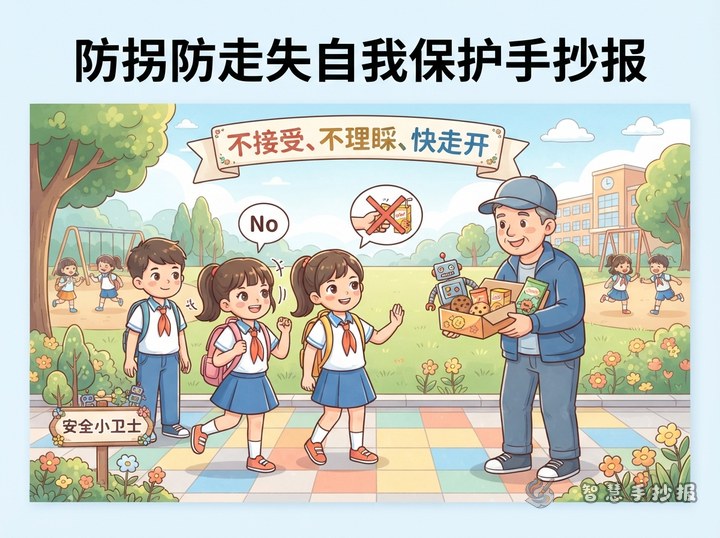
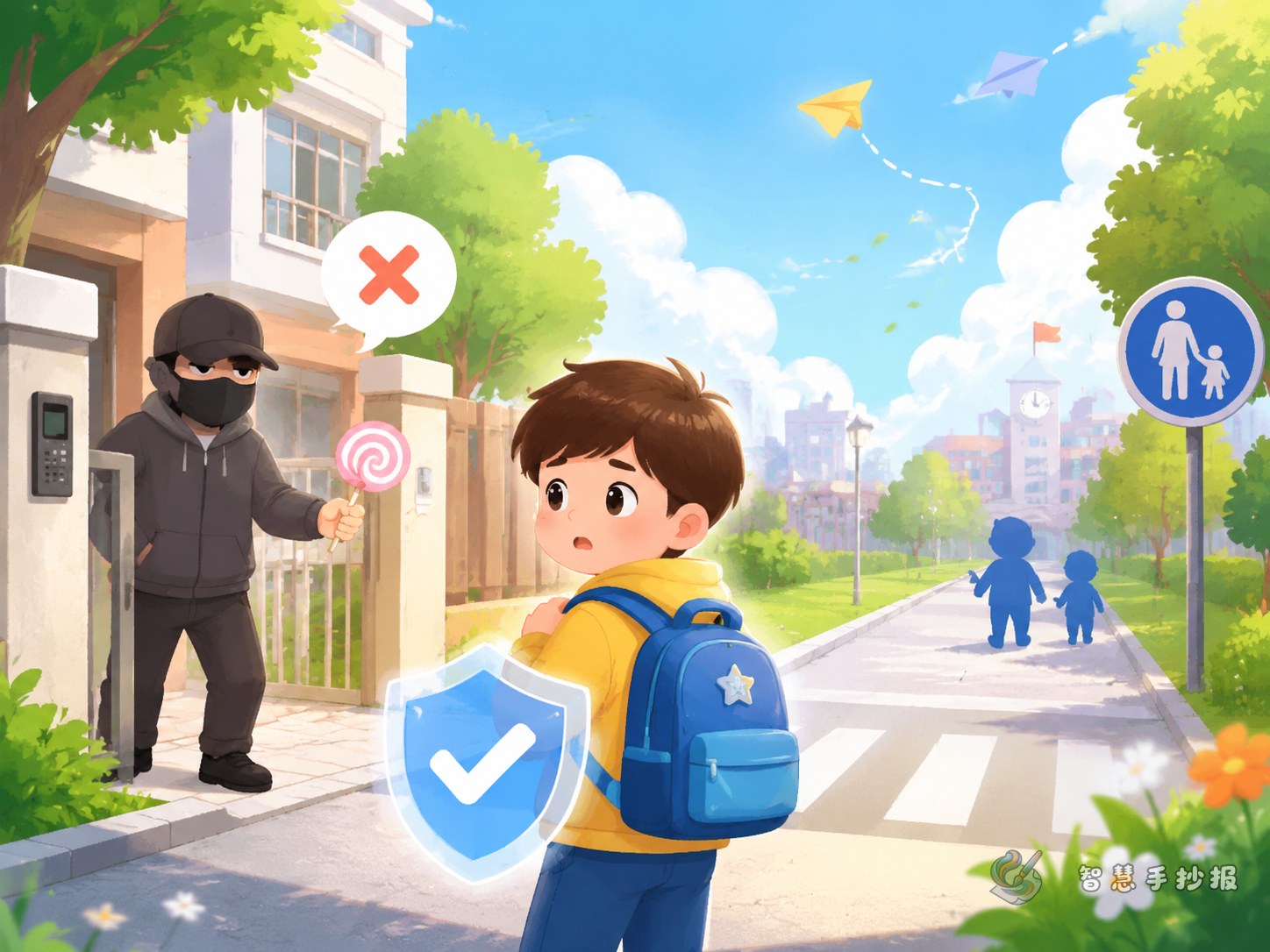
- Do not accept snacks, toys, or gifts from strangers.
- Do not follow people to quiet places out of curiosity.
Section 2: What to do when a stranger talks to you
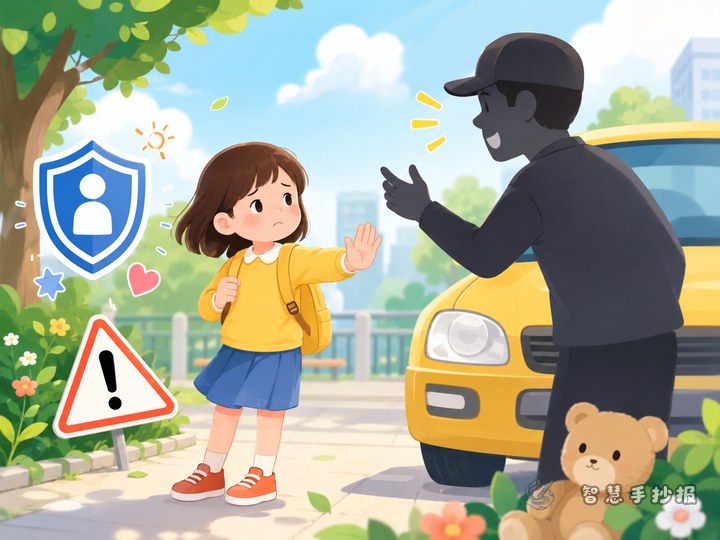
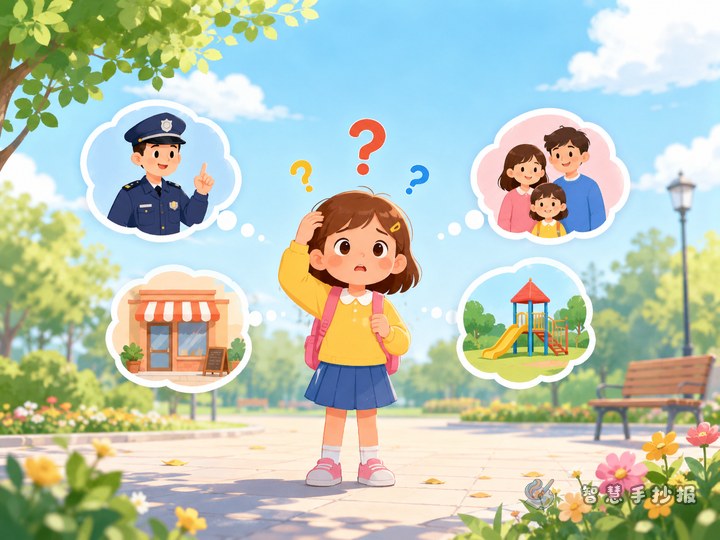
If someone says, “I can take you to school,” “Your parents asked me to pick you up,” or “Come help me with something,” children should keep a safe distance and never trust the person right away. They can say loudly, “I don’t know you,” and move quickly toward a guard, teacher, school staff member, or another trusted adult nearby.
Section 3: Three steps to ask for help
- Move away from the suspicious person and go to a bright, crowded place.
- Find a security guard, police officer, teacher, or another trusted adult.
- Clearly say your name, your parent’s phone number, and what happened.
Short safety lines that fit well on a poster
These lines work well in side boxes, speech bubbles, or highlighted reminder areas:
- Even if a stranger seems friendly, do not trust them easily.
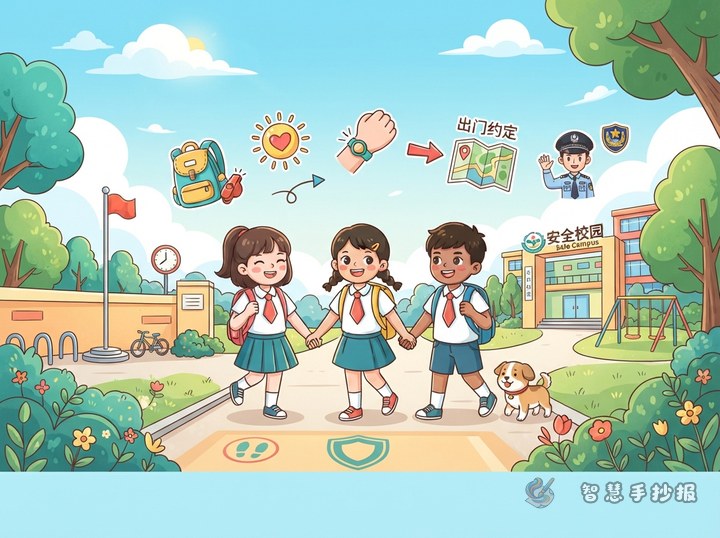
- Before leaving your usual route, tell a parent or teacher first.
- Walk carefully and do not get distracted while walking.
- If you feel unsafe, call for help loudly.
- Remember your home address and parent’s phone number.
- Never get into a stranger’s car.
You can also add one strong summary line: Knowing how to refuse, stay alert, and ask for help is an important way to protect yourself.
Make the poster more practical with real-life situations
Instead of using only slogans, you can organize the poster around simple scenes from daily life. For example, create small sections for “After school,” “At the elevator,” “At the neighborhood gate,” and “When someone asks for directions.” This makes the poster more useful and easier for children to remember.
- After school: Only go with your parent or a person your family already agreed on.
- At the elevator: Do not go to an unfamiliar floor with a stranger.
- At the neighborhood gate: Do not help a stranger carry things to a quiet place.
- When someone asks for directions: Keep distance and point the way instead of going with them.
This situation-based writing style is very suitable for young students because it turns safety advice into simple actions they can understand.
Poster layout ideas that look neat and clear
A good layout for this theme is a large title in the center with several small content blocks around it. Important safety lines can be shown in bold so they stand out. Soft blue, green, and orange are good color choices because they look bright and child-friendly.
You can place the title at the top, put safety reminders on one side, real-life situations on the other side, and a help section at the bottom. If you want to keep improving the wording and layout, you can continue designing your poster in the Zhihui Shouchaobao WeChat mini program.
A strong ending line for the poster
The ending should be short and memorable. For example:
Stay alert, do not run off alone, and do not trust strangers easily. Learn to protect yourself and stay safe every day.
This kind of ending works well at the bottom of the poster and makes the whole theme feel complete.