Turn the topic into a page that makes culture visible
Ancient Chinese clothing is more than fashion. It reflects rituals, aesthetics, daily life, and craftsmanship. For a handwritten newspaper, it helps to narrow the topic to something like “History and Culture in Ancient Clothing” or “Discovering Ancient Clothing in Museums.” A focused theme makes the whole page easier to organize.
You can also give the page a vivid title, such as “Stories Hidden in Traditional Robes” or “Reading History Through Sleeves and Patterns.” Add one short subtitle so readers understand the direction at a glance.
Useful sections that are easy for students to build
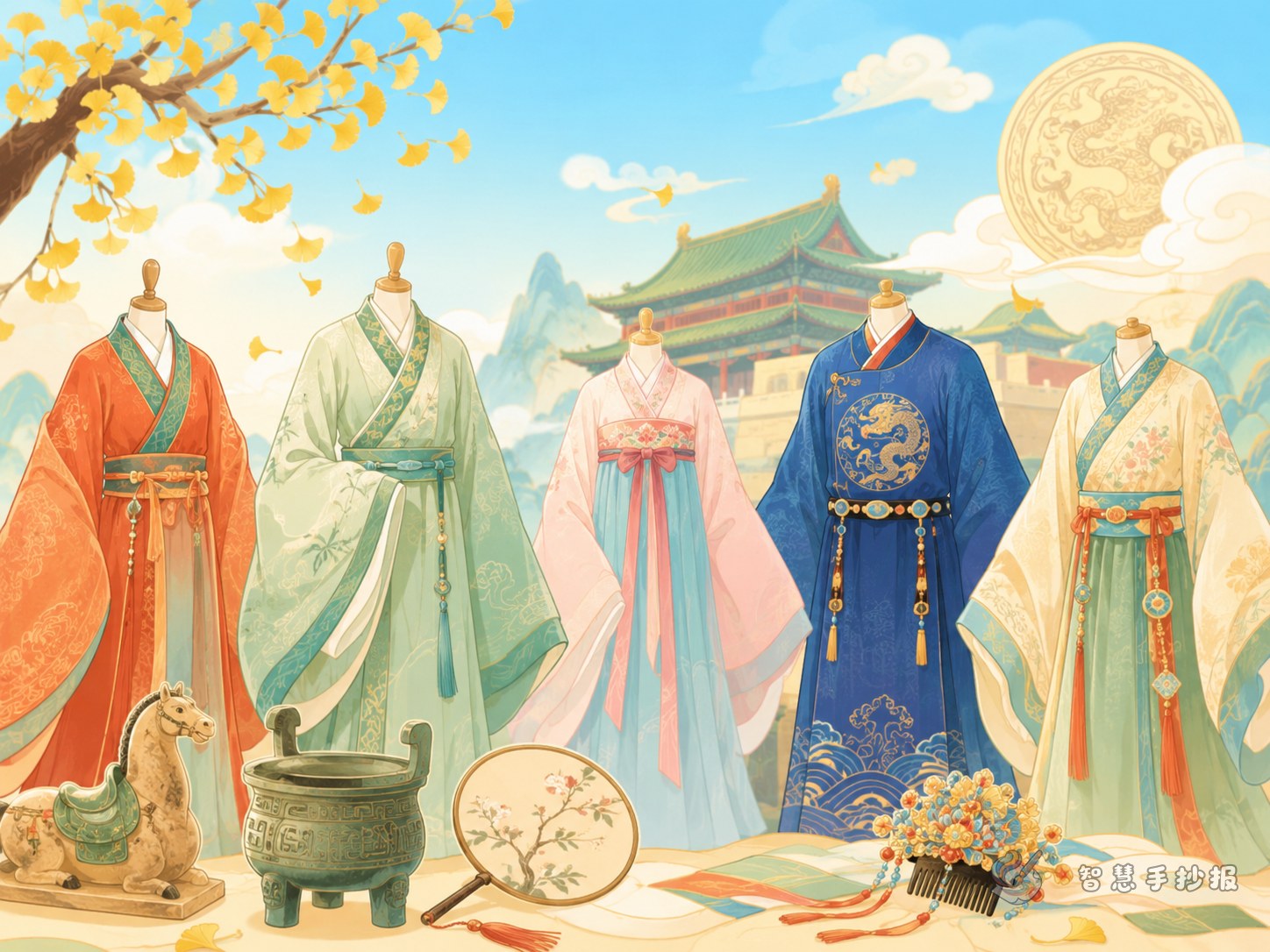
Dynasty clothing timeline
Create a simple time-based section and list two or three key features for each dynasty.
- Han: flowing lines and a graceful, balanced look.
- Tang: brighter colors and a richer, more open style.
- Song: elegant simplicity and refined beauty.
- Ming: clearer clothing systems and structured layering.
Names of traditional garments
Choose a few terms such as robe, ruqun, beizi, or shawl-like accessories. Explain what each item is, what it looks like, and when it was commonly worn.
Patterns and colors with meaning
This section adds cultural depth. You can write about cloud motifs, floral designs, animal patterns, and lucky symbols. You can also explain that colors in ancient clothing often reflected identity, celebration, or aesthetic preference.
Short writing materials you can directly adapt
- Ancient clothing is an important part of history and culture because it shows how people lived and expressed values.
- Museum clothing artifacts reveal not only fabric and craft, but also the wisdom and taste of earlier generations.
- Details such as collars, sleeves, belts, and patterns can tell us a lot about a time period.
- Changes in clothing styles show how society and culture developed over time.
If you want a reflection box, you can write that ancient clothing artifacts helped you feel that history is not far away, because it can be found in small details of real objects.
Design the page like a mini museum guide
This topic works especially well with an exhibition-style layout. Divide the paper into reading zones so it feels like walking through a museum display.
- Put the main title and short introduction at the top.
- Use the left side for a dynasty timeline.
- Place garment names and features in the center.
- Use the right side for pattern meanings or favorite clothing facts.
- Add a short reflection or “What I learned” section at the bottom.
For decoration, try ribbons, floral circles, fan shapes, or simple traditional borders. Soft white, red, green, and light gold can create a classic and unified feeling.
Two simple ways to make the page better
Keep every point short
Each text block should stay within two to four lines. Short notes are much easier to read in a handwritten newspaper than long paragraphs.
Add your own observation
Even without seeing artifacts in person, you can still write personal lines such as “I noticed ancient clothing paid great attention to detail” or “Different dynasties seem to have their own visual identity.” Personal comments make the page feel more lively.
Finish with a natural conclusion
Your final lines can return to the main idea: ancient clothing helps us understand history through artifacts, and it lets us see how Chinese culture has been passed down through fabrics, designs, and craftsmanship.
If you already have the topic but still need help with layout, you can continue organizing your sections and page design in the Zhihui Handwritten Newspaper WeChat mini program.