Choose a clear angle: clouds as weather clues
If you want the handwritten newspaper to be easy to write and interesting to read, center it on the question why clouds do not always look the same. This gives the page a clear focus and fits well with everyday observation. The title area can include blue sky, sunshine, and several kinds of clouds to make the theme obvious at first glance.
A simple opening line could be: Clouds are small messengers in the sky. Their shapes, colors, and thickness often hint at changes in the weather. By watching clouds carefully, we can better understand sunny, cloudy, and rainy days.
Science points students can directly use
1. Why some clouds look like cotton
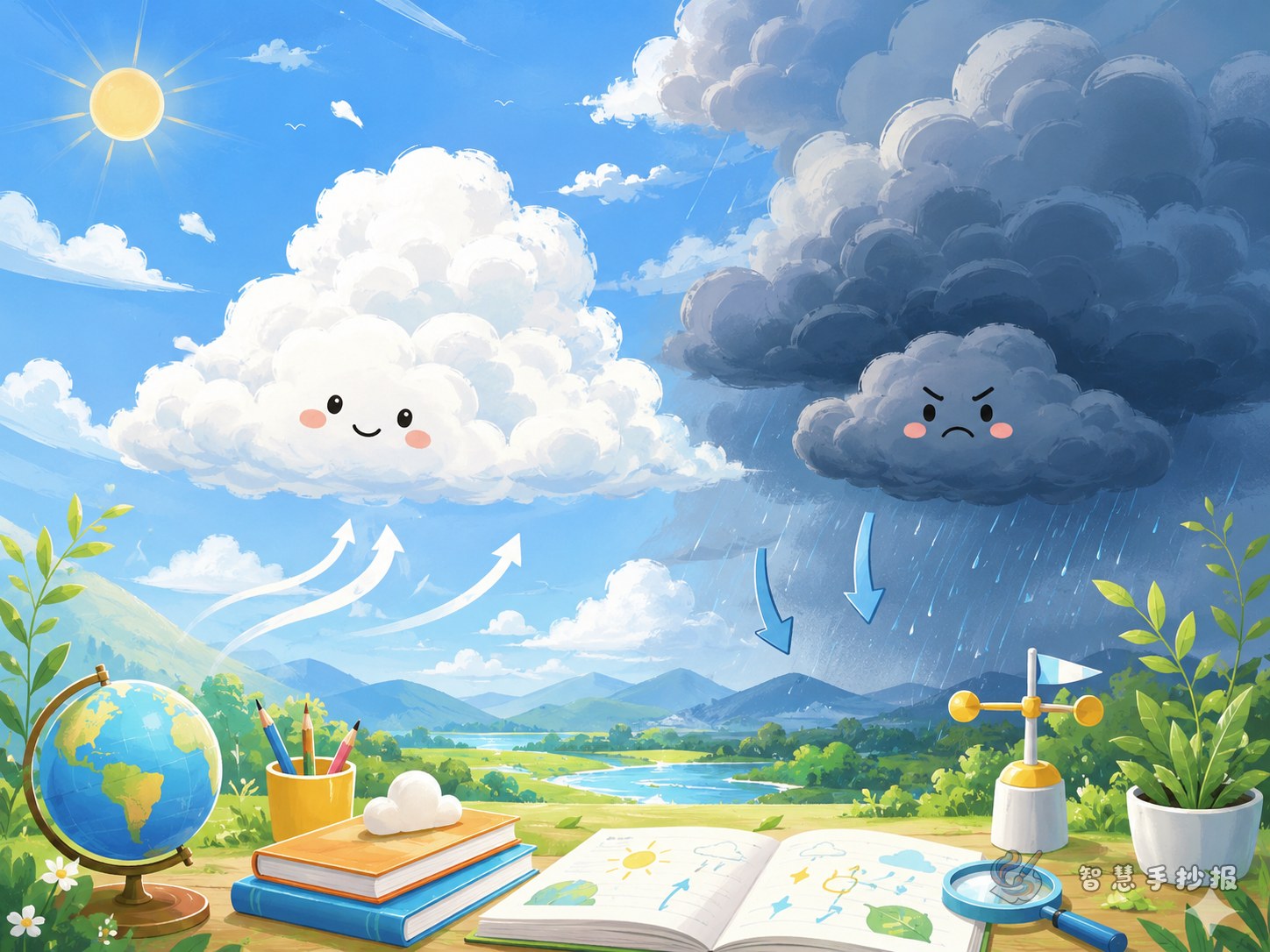
On fair days, clouds often look white, soft, and puffy. These clouds are usually thinner and let more sunlight pass through, so they are often linked with pleasant weather.
2. Why some clouds turn dark
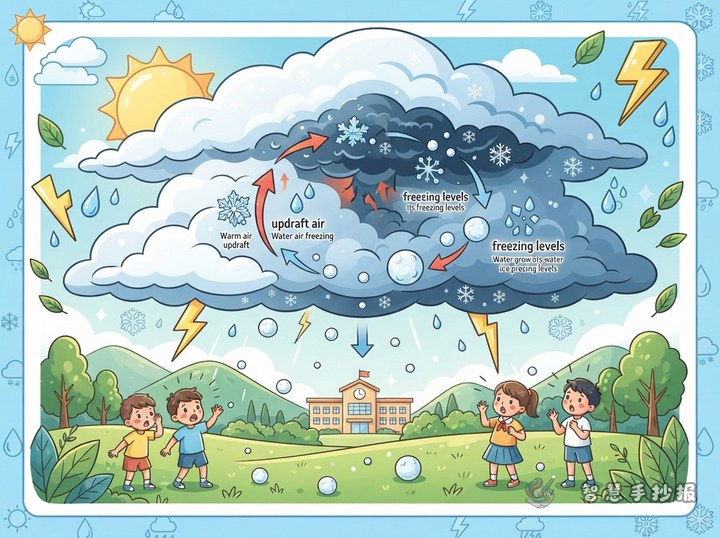
When a cloud becomes thicker and holds more tiny water droplets or ice crystals, less light can pass through it. That is why it may look gray or dark. Dark clouds often appear before rain, wind, or storms.
3. Cloud height matters too
Some clouds float high in the sky, while others sit lower and spread wide. Low, thick clouds can make the sky look dull and overcast, which often signals unstable weather.
4. Watching clouds is helpful, but not perfect
Cloud observation can help us notice weather patterns, but it does not replace a full weather forecast. This is a useful science note to include on the page.
Short lines that fit a student poster
- Clouds are clues in the sky.
- White clouds often mean calm weather.
- Thick dark clouds may bring rain.
- Watching clouds helps us observe nature.
- The sky changes, and clouds tell the story.
If there is extra space, students can add a short observation note such as: This morning the clouds were thin and light, but by afternoon they became thicker and darker. I learned that cloud changes can be connected to weather changes.
How to arrange the layout
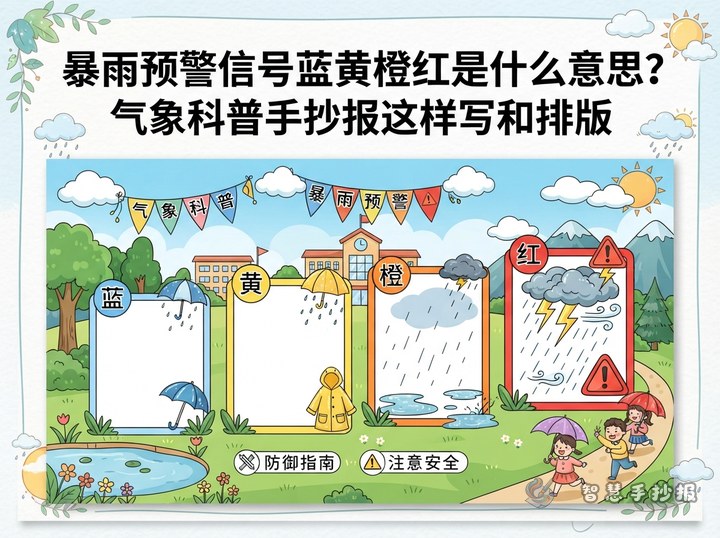
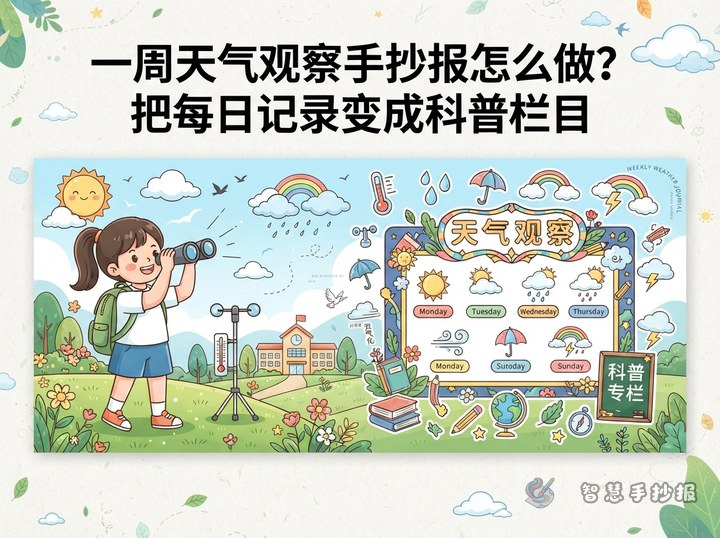
This topic works well with a sky-zone layout. Place the main title in the center, put “types of clouds” on the left, and “clouds and weather” on the right. The bottom part can hold observation notes or a mini Q and A. This structure makes the page easy to follow.
- Top: big title and cloud decorations.
- Left middle: short notes on white clouds, puffy clouds, layered clouds, and dark clouds.
- Right middle: the connection between cloud changes and sunny, cloudy, or rainy weather.
- Bottom: short science lines, weather icons, and simple observations.
Use soft borders, curved frames, or raindrop lines. Keep the page neat rather than overly crowded.
Drawing and color ideas
Blue, white, and light gray are good base colors. Add a little yellow for sunshine and dark gray for storm clouds. White clouds can be shown with blank highlights, while dark clouds can have shaded edges. Small icons such as the sun, raindrops, wind marks, and lightning can make the page more lively.
Try drawing clouds in different forms instead of repeating one shape. Some can be round and fluffy, some long and thin, and some broad and heavy. That variety supports the topic and makes the page visually richer.
A natural ending for the poster
The closing paragraph can return to daily life: Clouds hide many small secrets about the weather. If we look up at the sky and observe their shape, color, and thickness, we can learn a lot about nature. After finishing the draft, students and parents can also continue organizing the design in the Zhihui Shouchaobao WeChat mini program to complete a cleaner and more polished handwritten newspaper.