Build the page around the four seasons
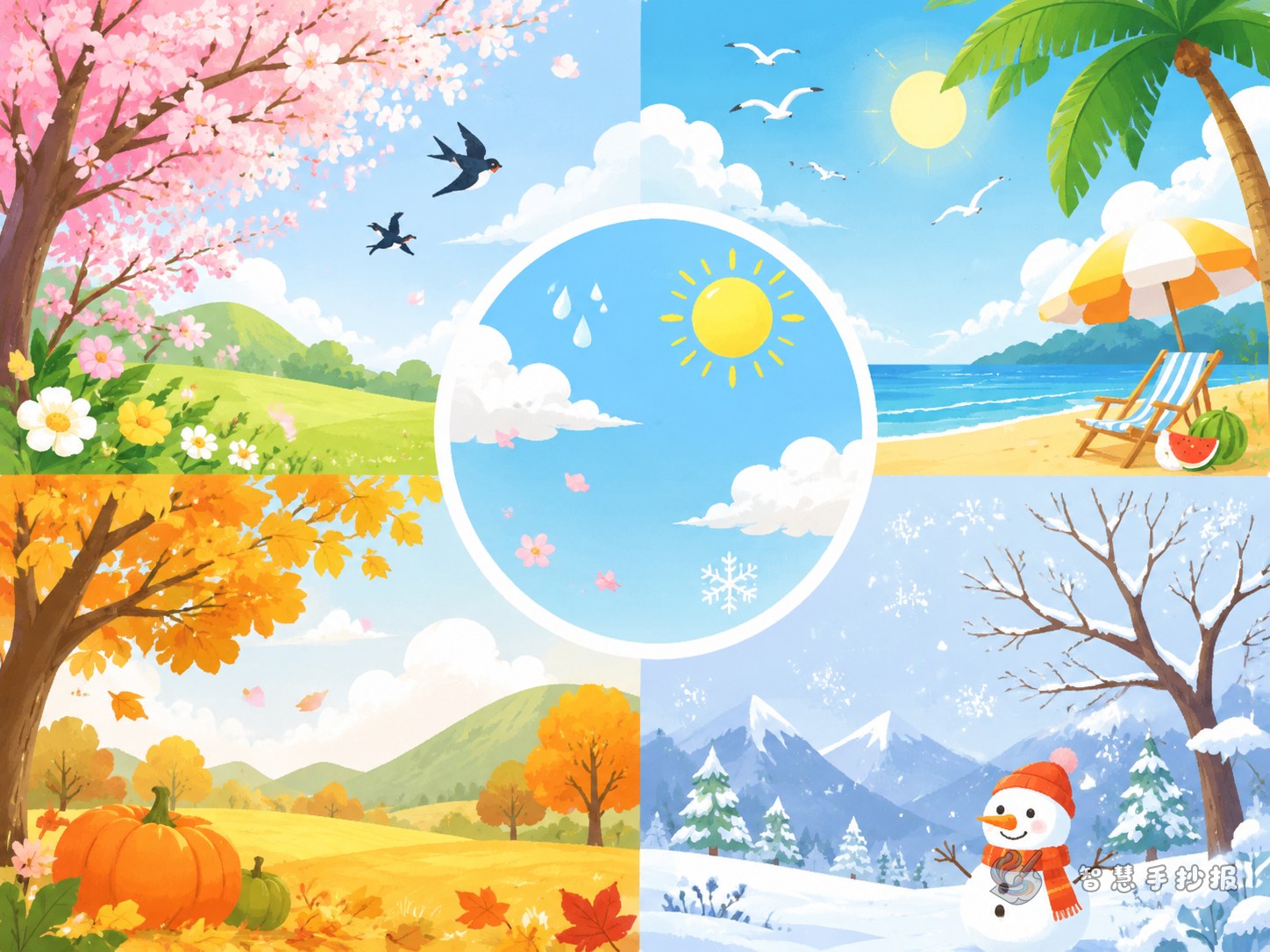
The easiest way to make this topic clear is to divide the page into four parts: spring, summer, autumn, and winter. Each section can show one season’s typical weather and how it affects everyday life. This structure helps young students understand weather change over a year at a glance.
What to write in each season block
Spring
Write about warming temperatures, more wind, and light rain. You can mention that trees begin to grow and people may wear lighter clothes.
Summer
Focus on hot weather, strong sunshine, and frequent rain or thunderstorms. Add a short reminder about drinking water and avoiding long periods under the sun.
Autumn
Describe cooler air, dry weather, and falling leaves. This is also a good section to mention harvest scenes and the feeling of a fresh breeze.
Winter
Include cold temperatures, frost, snow in some areas, and the need for warm clothing. A short safety note about keeping warm works well here.
Useful science points for students
- Weather changes with seasons: Different times of the year bring different temperature and rainfall patterns.
- Weather affects daily life: Clothing, travel, exercise, and farming all change with the weather.
- Observation matters: Looking at the sky, wind, and temperature helps us understand seasonal differences.
Layout ideas that make the topic easy to read
You can choose a four-grid layout, a circle divided into four seasonal parts, or a timeline from spring to winter. Use green for spring, blue for summer, orange or brown for autumn, and light blue or white for winter. Keep the main title large and place it in the center or top area.
Decoration and finishing touches
Add simple icons instead of dense drawings. Flowers, suns, clouds, raindrops, leaves, hats, and snowflakes can make the page lively. Keep margins neat and leave some blank space so the content does not feel crowded. If you want a cleaner finished version, you can continue designing it in the Smart Handwritten Newspaper WeChat mini program.