Start with a focused idea: turn weather forecasting into a story-based poster
If you want a weather science handwritten newspaper that feels fresh and clear, a great topic is How can weather forecasts tell us it will rain in advance? This angle is practical, science-based, and easier to organize than simply listing sunny, cloudy, and rainy days.
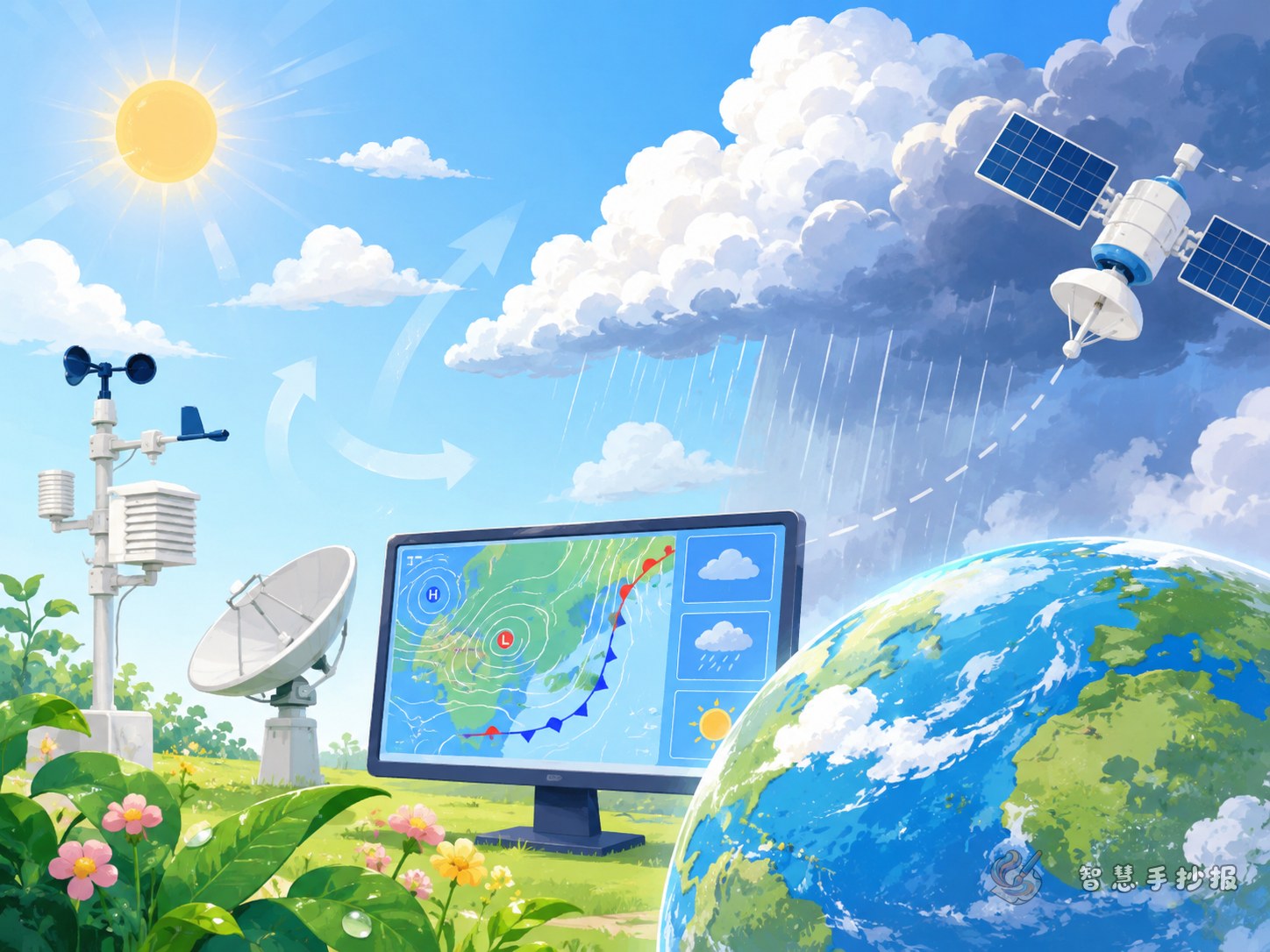
You can build the whole poster around one simple line of thinking: observing the sky, collecting data, studying changes, and then making a forecast. This helps readers understand that a weather forecast is not a guess. It is based on temperature, wind, clouds, humidity, air pressure, and other observations.
Useful sections to include
Section 1: What is a weather forecast?
Write a short explanation: a weather forecast is a scientific judgment about future weather made by studying weather information. Common forecast items include rain or shine, temperature, wind strength, and air conditions.
Section 2: What do people observe?
- Clouds: dark and thick clouds may mean rain is coming.
- Wind: changes in wind direction and speed often signal a change in weather.
- Temperature: warmer or cooler air affects daily life and weather patterns.
- Humidity: moist air can lead to fog, dew, or rain.
- Air pressure: pressure changes are closely related to weather systems.
Section 3: Common weather symbols
Add simple symbols such as the sun, cloud, raindrop, lightning, wind, and snowflake. These make the poster easier to read and more vivid.
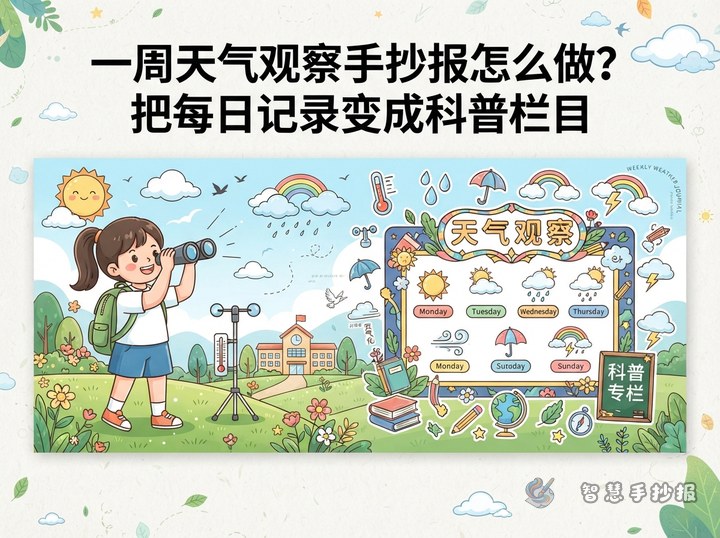
Section 4: My weather observation notes
You can include your own short record, such as “foggy in the morning, sunny at noon, windy in the evening.” This makes the poster more personal and more like a real classroom project.
Ready-to-use writing materials
Text 1: Weather changes every day. Meteorologists observe the sky, collect data, and study patterns to help people prepare for daily life.
Text 2: A weather forecast is not made by guessing. It comes from careful observation and scientific analysis of many weather factors.
Text 3: Learning about weather helps us live more safely. On rainy days we bring umbrellas, during storms we stay cautious, and on windy days we pay attention to safety outdoors.
Text 4: Weather science is all around us. Watching clouds, feeling the wind, and noticing temperature changes are simple ways to understand nature.
Try a flowchart layout instead of a basic two-column design
This topic works especially well with a process-style layout. Put the main title at the top, then draw a central flowchart showing “observe weather,” “record data,” “analyze changes,” and “make a forecast.” This gives the poster a strong science theme.
- Top area: big title with sun and cloud decorations.
- Center: the main forecast process chart.
- Bottom left: weather symbols mini guide.
- Bottom right: observation notes or safety reminders.
For colors, use blue, white, and light yellow to create a bright sky feeling. Do not fill every space with text. A little blank space makes the poster look cleaner.
Small details that make the poster better
- Use a question-style title to make the topic more interesting.
- Keep each paragraph short so it is easy for children to copy and arrange.
- Draw weather icons in a cute cartoon style to make the science content friendlier.
- Add one final sentence with your own thought, such as “Now I know weather forecasts come from science and careful observation.”
- If you want to keep improving the layout or change the title and text, you can continue in the Zhihui Shouchao Bao WeChat mini program.