Start with one clear theme
Instead of putting every fact about ceramics onto one page, choose a single idea first. Good directions include Where the beauty of porcelain comes from, The history inside one ceramic bowl, or Exploring ceramics in a museum. A clear focus makes the whole handwritten newspaper easier to organize.
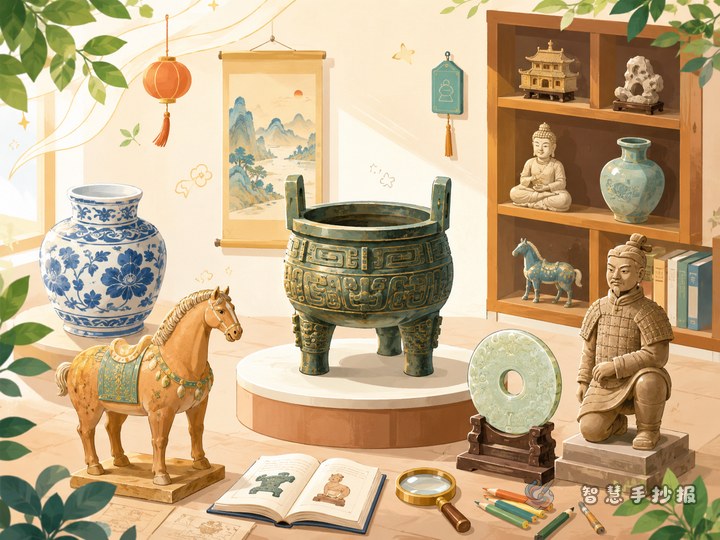
For younger students, a simple main line works best. Think of the page as a mini exhibition: a central title in the middle and several small display sections around it.
Best content blocks for this topic
Porcelain type cards
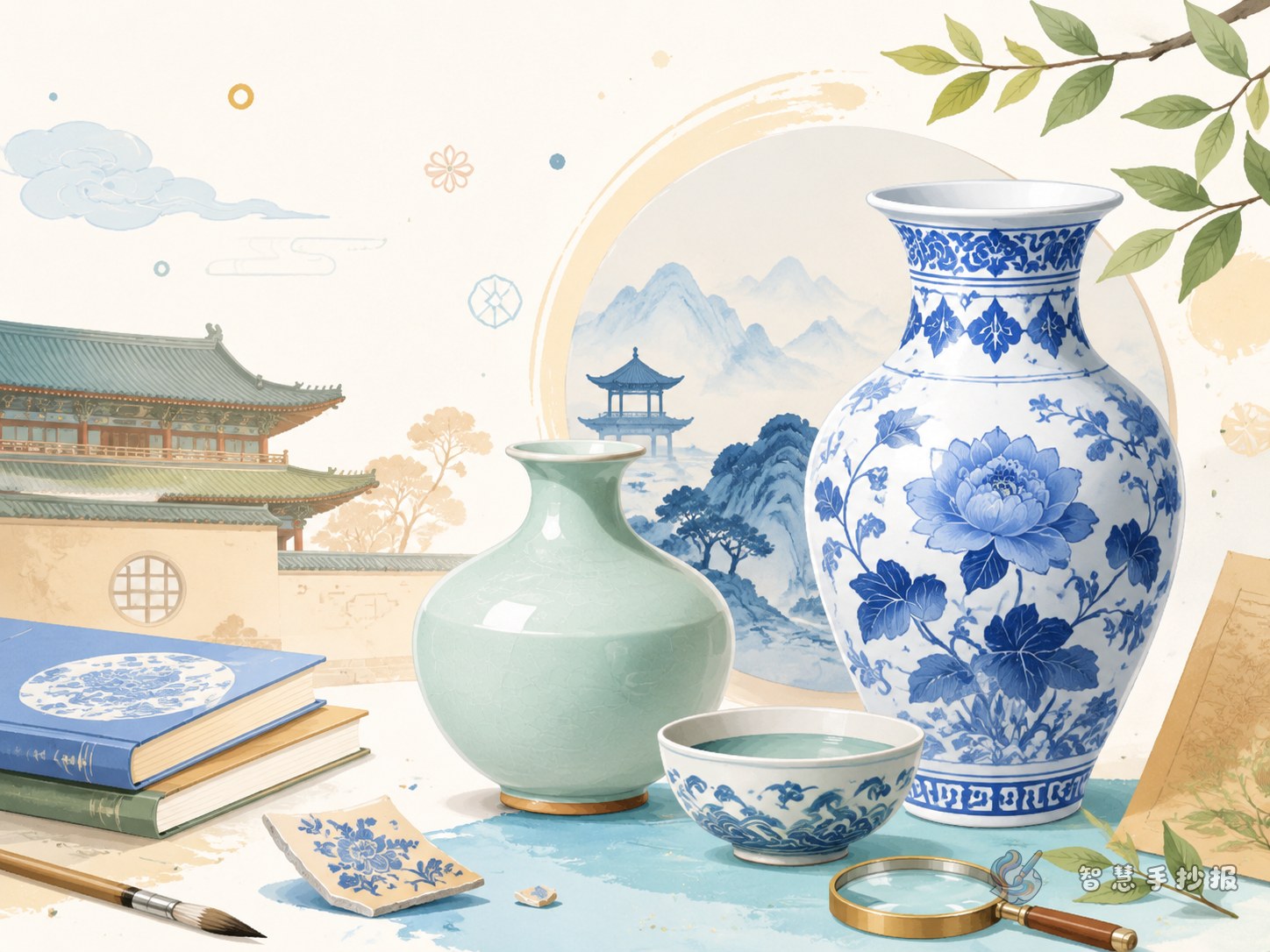
- Blue-and-white porcelain: elegant colors and easy to recognize.
- White porcelain: simple shape and clean appearance.
- Colored porcelain: brighter and more lively to look at.
Shape observation area
Write about common forms such as bowls, plates, vases, and pots. Use one short sentence for each, like “A vase often has a tall body and looks graceful” or “A plate has a wide surface that shows patterns clearly.”
Culture inside the patterns
This can be a strong section on its own. Students may choose lotus designs, cloud patterns, flowers and birds, or mountain-and-water scenes. Do not only say they are beautiful. Add simple meanings such as purity, good wishes, or the taste of ancient people.
From clay to porcelain
- Choosing clay and shaping the body
- Refining the form
- Painting the design
- Adding glaze
- Firing at high temperature
This is a useful section because it is clear, short, and easy to turn into a clean visual sequence.
Ready-to-use writing lines
If the page still feels empty, short sentences work very well:
- Porcelain is not only a daily object but also a witness to history.
- The color, pattern, and shape of a ceramic piece often reflect ancient wisdom and taste.
- Museum ceramics help us see the care and creativity of old craftsmen.
- Even a small bowl or vase can carry the feeling of an entire time period.
You can also add a personal reflection, such as: “When I stood in front of the display case, I felt that the quiet porcelain pieces were telling stories from long ago.”
Arrange the page like a museum guide
This topic works especially well with a center title and surrounding sections layout. Put the main title in the middle, then place sections such as “Types,” “Patterns,” “Making Process,” and “My Favorite Piece” around it. If the page is larger, add a fun facts area or a visit reflection at the bottom.
Decorations can include wave lines, classic borders, round labels, or broken-ceramic shapes. Leave some blank space so the page looks neat and balanced rather than crowded.
Small tricks to make it feel more historical
- Use a title style that feels elegant but stays easy to read.
- Keep the main colors simple: blue, off-white, and light gray are enough.
- Limit each section to a short paragraph so it is easy for students to copy neatly.
- Add a fun idea like “If I could name this ceramic piece” to give the page more personality.
If the topic is ready but the layout still needs polishing, students and parents can continue improving the design in the Smart Handwritten Newspaper WeChat mini program.