Turn the Topic into a Plastic-Free Shoreline Mission
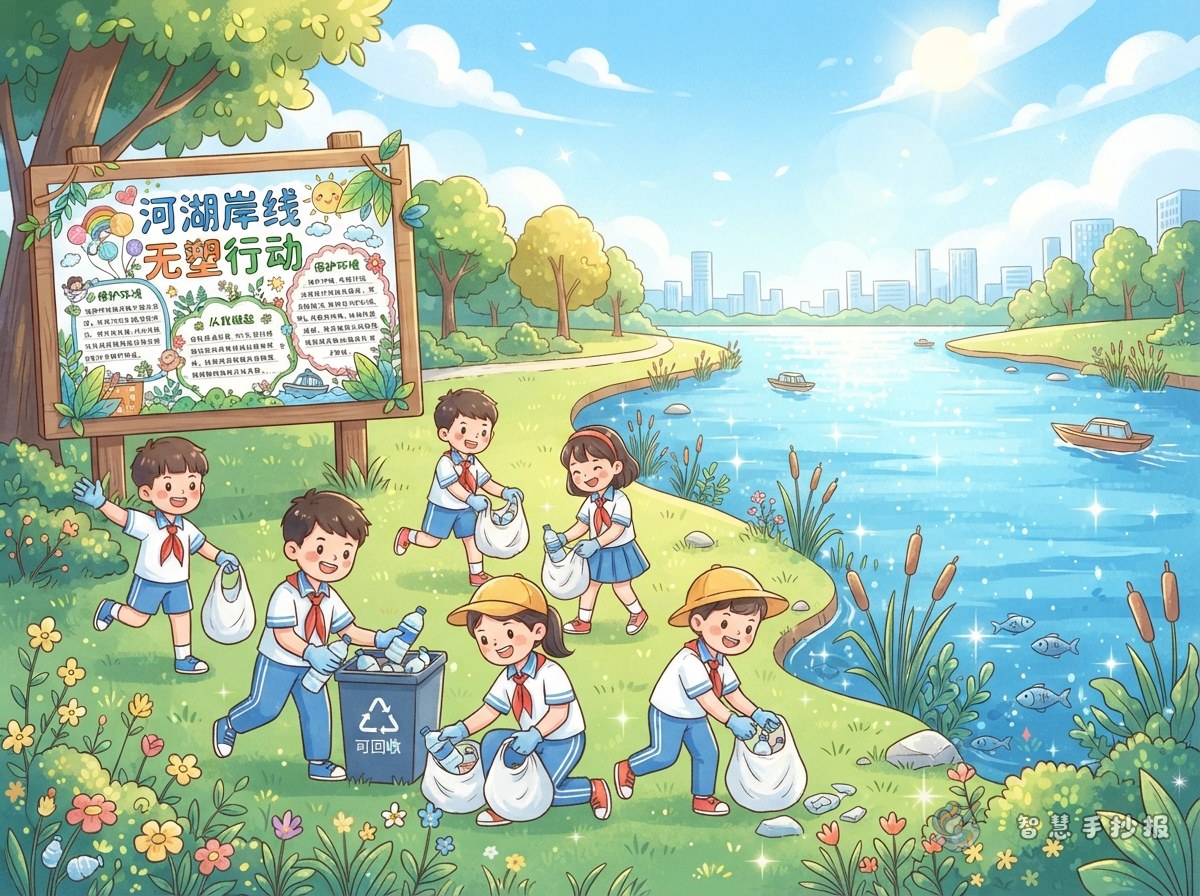
Build the poster around the message Less plastic waste, cleaner shores. Instead of giving a broad environmental introduction, focus on a familiar riverbank, lakeside park, or nearby waterway. Show how bottles, bags, and other litter can spoil aquatic habitats, then present simple ways students can reduce single-use plastic.
Choose Four Action-Focused Sections
How Litter Reaches the Water
Explain that litter may be left behind by visitors or carried by wind and rain. This section can remind readers that waste on land may eventually enter rivers and lakes.
My Plastic-Saving Swaps
- Carry a reusable bottle instead of using disposable cups.
- Bring a cloth bag or another reusable shopping bag.
- Take every piece of litter home after a picnic.
- Never throw waste into water or storm drains.
What Should I Do When I Find Litter?
Small, safe items may be sorted with adult supervision. Children should never enter the water, climb down a steep bank, or handle dangerous objects. Tell a parent, teacher, or site manager when help is needed.
A Seven-Day Challenge
Draw seven small boxes. Color one box whenever you carry a bottle, refuse disposable tableware, or sort waste correctly. This turns the poster into both a pledge and an activity record.
Short Messages for the Poster
- Main message: Keep shores clean and stop plastic from traveling into the water.
- Pledge: When leaving a river or lake, leave nothing behind but footprints.
- Reminder: Protecting water begins with using fewer disposable products.
- Action words: Reuse, reduce, sort, and take it away.
Connect the Layout with One Flowing Shoreline
On a landscape sheet, draw a blue curve from the upper left to the lower right to represent a river. Arrange drop-shaped, leaf-shaped, or recycling-bin-shaped text boxes along both sides. Place the title at the top, show careless behavior on the left, and present a clean shore with an action checklist on the right.
Use blue and green as the main colors, with orange for warnings. Keep paragraphs short and leave enough open space between sections. After drafting the text and layout, students and parents can continue in the Smart Handwritten Poster WeChat Mini Program to adjust templates, section placement, and decorations.