Start with the question behind the picture
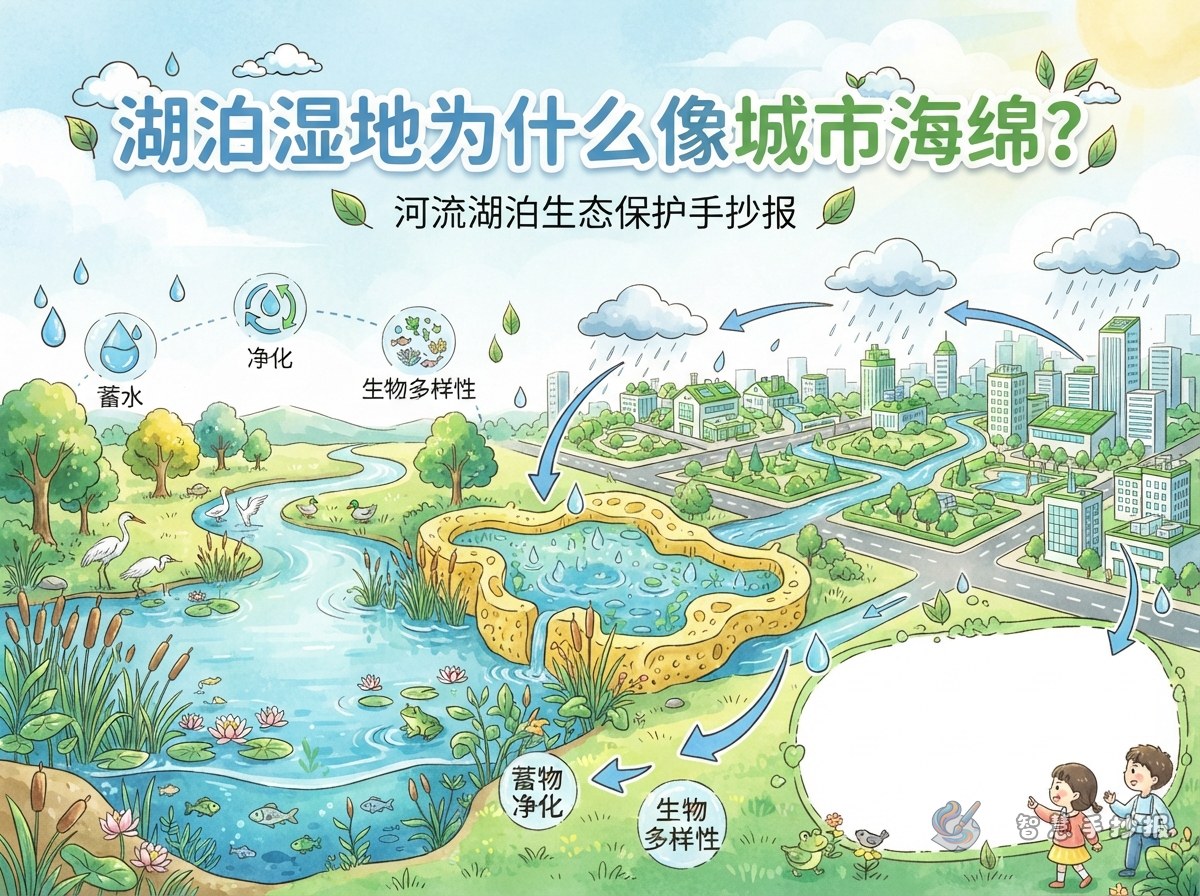
Give the project a clear and memorable question: can a lake wetland act like a sponge for a city when it rains? Build the newspaper around four ideas—holding water, helping water become cleaner, protecting the shore, and providing homes for wildlife. This keeps the work focused on both science and action.
Under the title, add a short introduction: A lake wetland is a natural place for storing water and a shared home for many forms of life. This sentence sets the direction without turning the page into a list of slogans.
Build the center around a water-storing wetland
Draw a curved lake in the middle of the page, then add reeds, a shallow shoreline, floating leaves, and a few birds. Place a rain cloud above it and connect the raindrops to the lake with blue lines. Beneath the water, a simple layer of soil and plant roots can show how water is held gradually.
- Title area: Write the main title above the lake or inside the cloud, using rounded letters inspired by water drops.
- Main image: Make the lake, raindrops, and green shoreline the largest illustration so the sponge idea is easy to understand.
- Open space: Leave a few clean areas to suggest reflections on the water and keep the page from feeling crowded.
Let four ripple panels explain the wetland
Draw four broad ripples from the central lake and turn their ends into small information panels. Keep each panel to two or three short sentences so children can read it quickly.
- Holding rainwater: Shallow water, soil, and plants can slow some runoff and temporarily store part of the rain.
- Helping water become clearer: Plants and soil can trap some sediment, while wetland organisms take part in natural cycles. Protecting water still requires reducing pollution at its source.
- Protecting the shoreline: Vegetation along the shore can help reduce soil loss and discourage careless trampling.
- Providing wildlife space: Reeds, leaves, and shallow water can offer food or shelter for insects, fish, birds, and other small residents.
Turn good habits into raindrop notes
Place several colorful raindrops between the four panels. Each one can carry a practical action, helping the page move naturally from understanding wetlands to caring for them.
- Never throw rubbish into a river or lake, and do not pour dirty water into a drain.
- Stay on marked paths when visiting a wetland, and avoid stepping on shore plants or disturbing birds.
- If you notice litter, ask an adult to help handle it safely.
- Save water at home so less water is wasted before it returns to nature.
A short line at the bottom could say: Give rainwater a place to pause, and give lakes a chance to stay full of life.
Guide the eye with blue and green ripples
Use lake blue, leaf green, and a touch of pale yellow as the main colors. Write headings in dark blue and highlight key words with green or orange. Put the four wetland functions on one side, the personal action list on the other, and connect the lower edge with a repeating ripple pattern.
Keep a clear hierarchy: the main title should be largest, panel headings next, and body text in short lines. Sketch the lake and boxes lightly in pencil before outlining, coloring, and adding words. This makes it easier to prevent crowded sections or text running beyond the border.
Make three quick checks before finishing
- Make sure the title clearly connects lake wetlands with ecological protection.
- Check that every information panel includes both a small illustration and a useful sentence.
- Make sure the actions are realistic for children and that rubbish or dirty water has not been used as decoration.
When the basic plan is ready, you can also arrange the sections and colors in the 智慧手抄报 WeChat mini program, then finish the hand-drawn version to match your paper size.