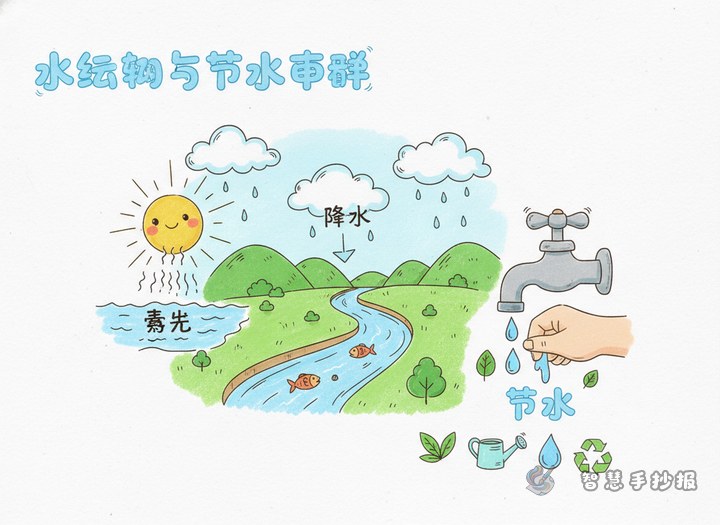
Turn the topic into a real-life question
Instead of using only a general title like “The Water Cycle,” you can make your handwritten newspaper more interesting with a question such as “Where does a drop of water go on campus?” or “Does the water from the sink come back again?” A question-style topic feels closer to real life and gives you a clearer writing direction.
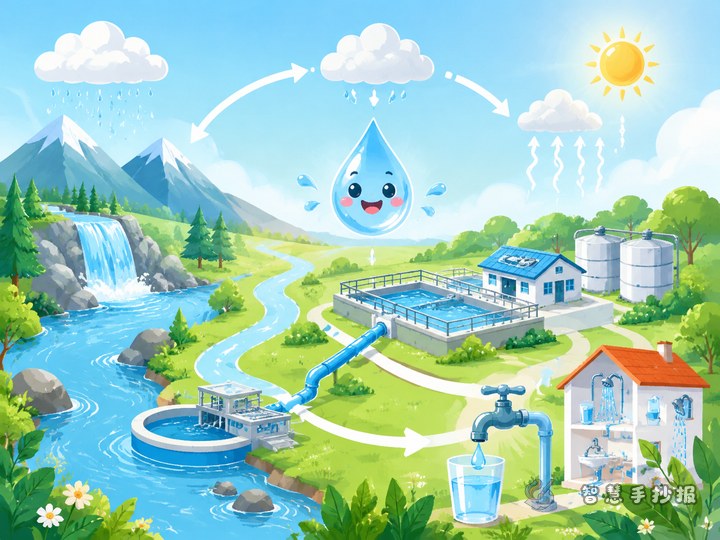
You can build the whole page around the journey of one drop of water: it comes from a tap, is used by students, flows away, returns to nature, rises as vapor, forms clouds, and falls again as rain. This makes the science easy to understand and naturally leads to the idea of saving water.
Simple water cycle notes for students
The science part of a handwritten newspaper should be short and clear. You can explain the water cycle in four simple steps:
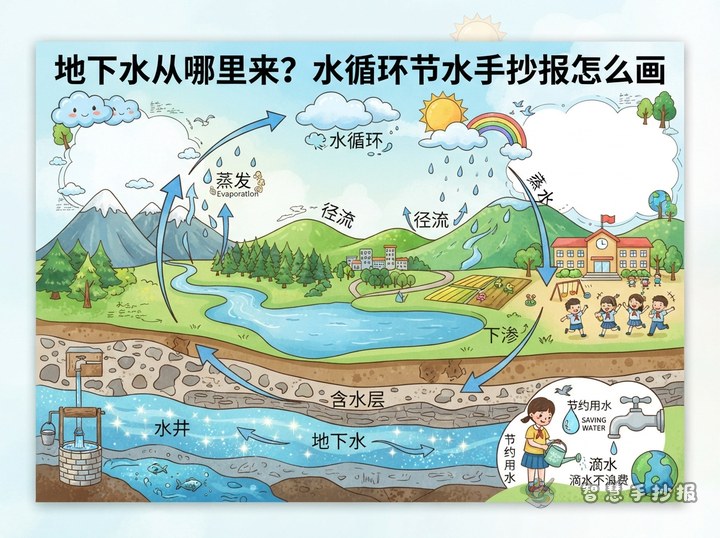
- Evaporation: The sun heats water in rivers, lakes, and seas, and some of it turns into vapor and rises.
- Condensation: In cooler air, the vapor gathers into tiny droplets and forms clouds.
- Precipitation: When the droplets become heavy, they fall as rain, snow, or hail.
- Collection: Water returns to rivers, lakes, soil, and underground, then joins the cycle again.
You can add one short summary line: Water keeps traveling around Earth, so every drop should be valued.
Sections that are easy to use on the page
If you are not sure what to write, you can divide the newspaper into these sections:
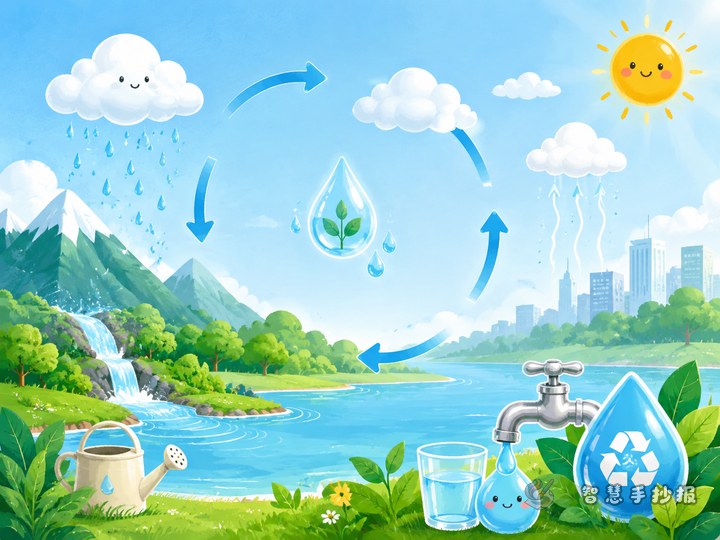
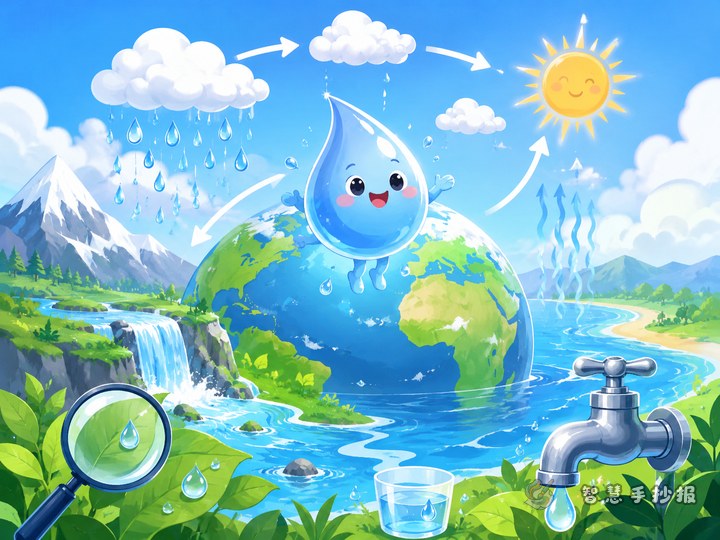
- The journey of a water drop: Draw arrows between the sun, clouds, rain, rivers, and plants.
- Water use around me: Include washing hands, cleaning, drinking, watering flowers, and cooking.
- Ways water is wasted: Such as leaving the tap running or using too much clean water.
- What I can do to save water: Turn off taps, reuse water, and shorten water-use time.
- My water-saving message: Write a short slogan or promise at the end.
These sections make the page complete without being too difficult for elementary school students.
How to make the layout lively and neat
Blue and green are the best main colors for this theme. You can draw a large water drop in the center and place the title inside it. Around the page, decorate with clouds, raindrops, leaves, and wave lines. Use arrows to connect different parts so the whole design feels organized.
If you want the main idea to stand out, use one color for science facts and another for water-saving actions. This helps readers quickly understand both the cycle and the reason to protect water.
Short lines you can copy directly
- Water moves in a cycle, and saving water should become a habit.
- Save one drop today, protect clean water tomorrow.
- A dripping tap is a reminder not to waste resources.
- Water is not endless. It is precious.
- Understanding the water cycle means learning to treasure water.
You can place these lines in borders, near the title, or in the final message area.
A natural ending for the handwritten newspaper
Your ending does not need to be long. Two or three sentences are enough. You can write that this project helped you understand that water is always moving in a cycle, but usable freshwater still needs everyone’s care. Then add that you will start from small actions such as turning off taps and using water wisely.
If you want to keep improving the layout, title style, or section ideas, you can also explore more handwritten newspaper inspiration in the Zhihui Shouchaobao WeChat mini program.