Start with a theme that is easy to present
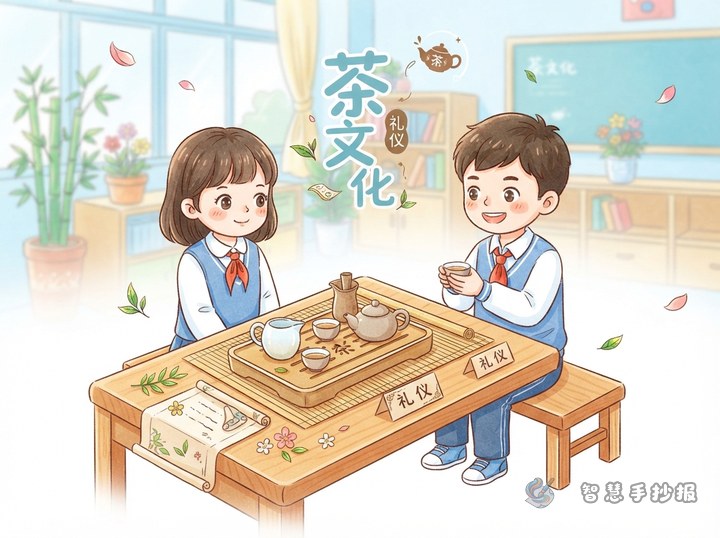
For a tea culture poster, it is best to choose one clear direction instead of trying to cover everything. Good options include the story of tea, basic tea etiquette, types of Chinese tea, or how to welcome guests with tea. A short main title works better on the page, and a subtitle can explain the focus more clearly.
A simple layout that students can finish well
A four-part layout is practical and neat for this topic.
- Top left: brief facts about tea culture, such as where tea comes from and why tea matters in daily life.
- Top right: common tea categories like green tea, black tea, oolong tea, white tea, and dark tea.
- Bottom left: tea-serving manners, including offering tea with both hands and respecting elders first.
- Bottom right: good drinking habits, such as being polite, quiet, and not wasting tea.
You can place the main title in the center inside a teapot or round shape, then decorate the border with tea leaves, cups, and soft steam lines.
Ready-to-use text for the poster
Short paragraph about tea culture
Tea is an important part of traditional Chinese culture. People have long used tea to welcome guests and make friends. A simple cup of tea carries respect, courtesy, and warmth. Learning about tea culture also helps us learn how to treat others politely.
Tea etiquette lines
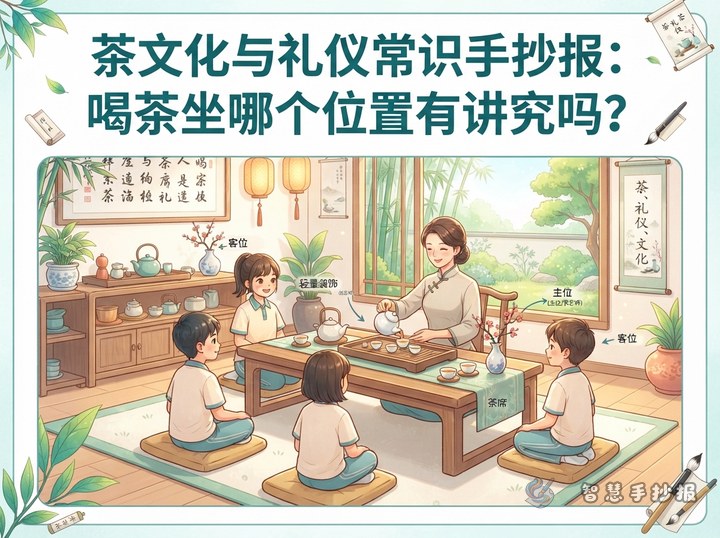
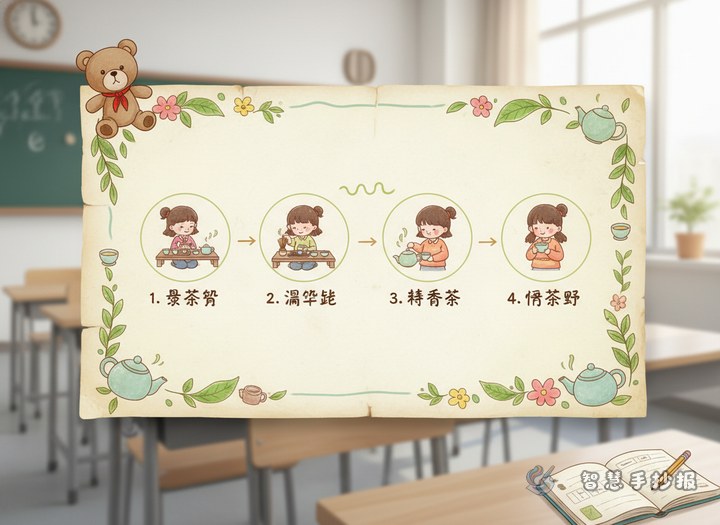
- Offer tea to elders or guests with both hands.
- Do not fill the cup too full, so it is easy to hold.
- Use polite words such as “Please have some tea.”
- Drink quietly and calmly.
- Enjoy tea with respect and do not waste it.
Small headings for decoration
- Chinese Courtesy in a Cup of Tea
- Tea Leaves and Good Manners
- Learning Respect Through Tea
- A Small Cup, A Big Tradition
Use simple images with a tea feeling
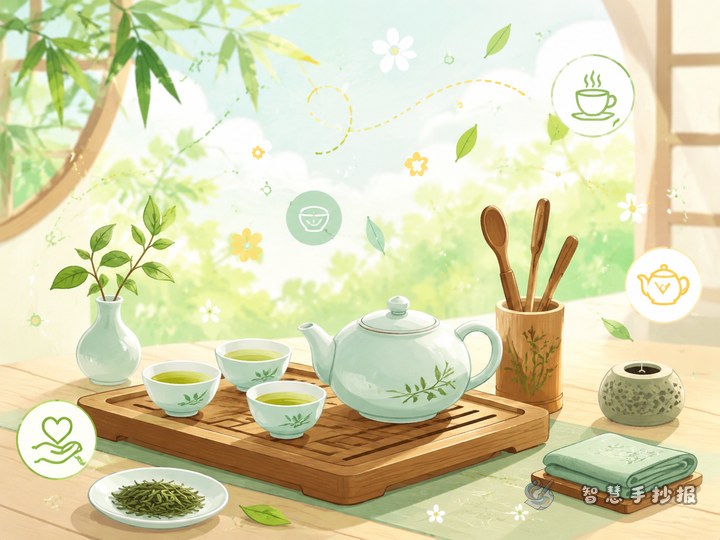
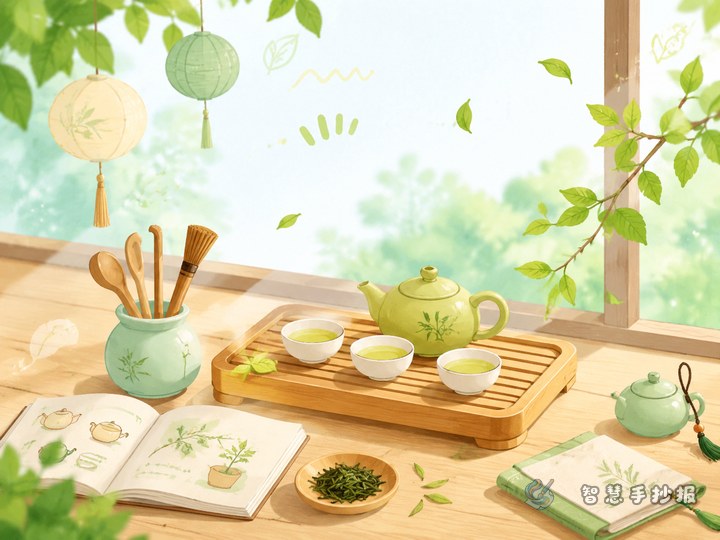
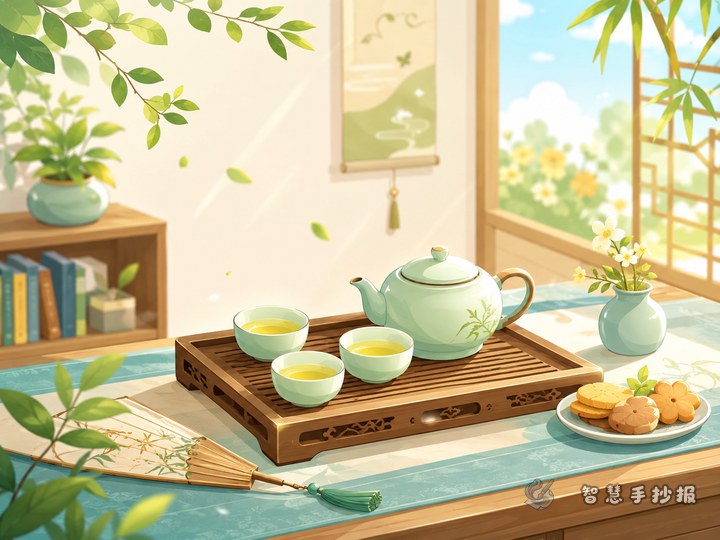
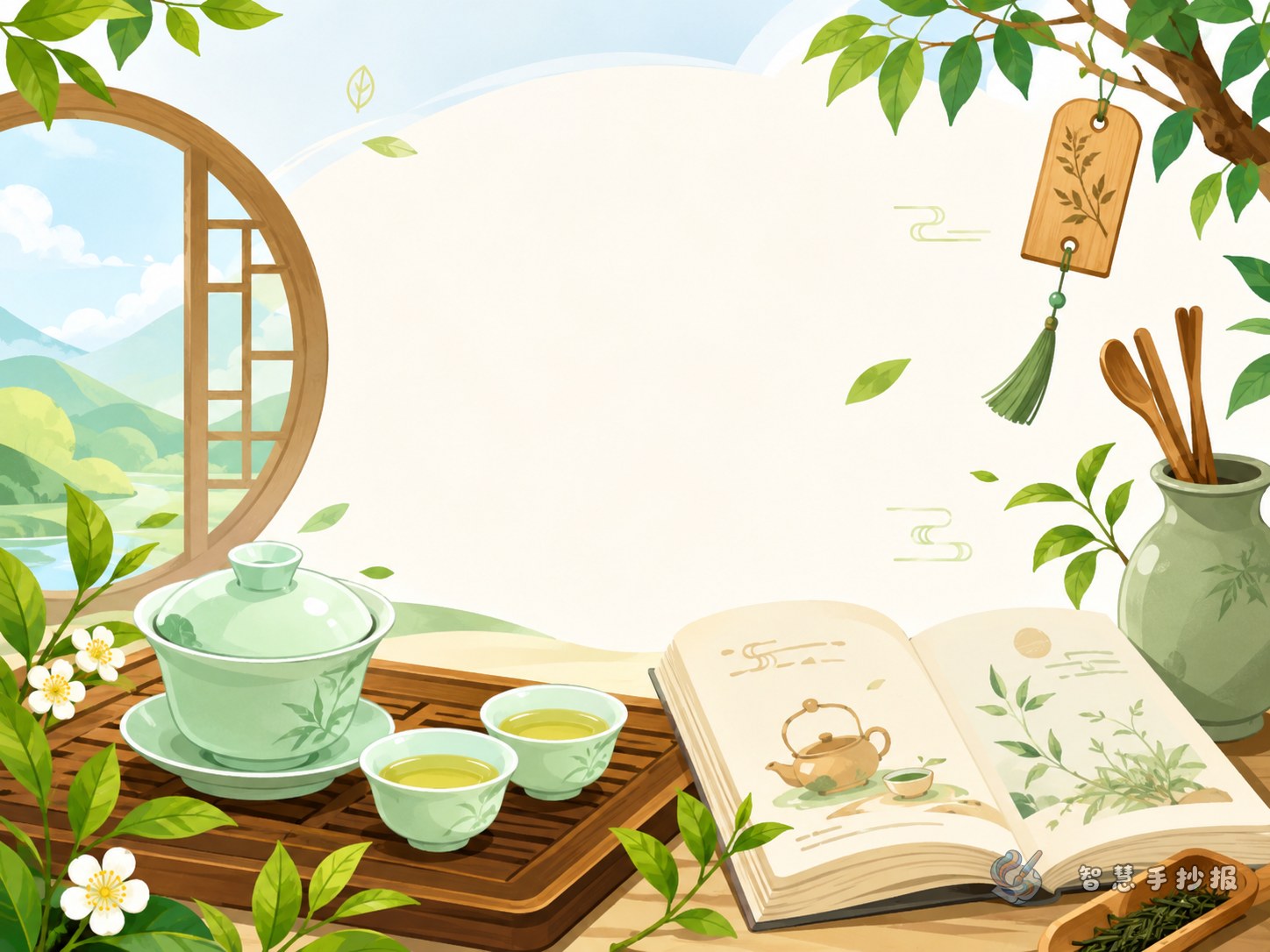
You do not need complicated drawings. Teapots, teacups, tea leaves, bamboo leaves, and gentle cloud or mountain lines all fit this topic well. Green, light brown, and beige are good color choices because they look fresh and calm. If the page feels empty, add small seal-style circles or single characters like courtesy, harmony, or calmness.
What makes this poster score better in class
The key is not writing difficult knowledge. What matters more is clear sections, correct content, neat handwriting, and easy-to-understand etiquette points. For younger students, short sentences and small paragraphs work best. If parents or teachers want to improve the page further, they can also continue organizing sections and materials in the Zhihui Shouchaobao WeChat mini program.