Start with a simple theme question
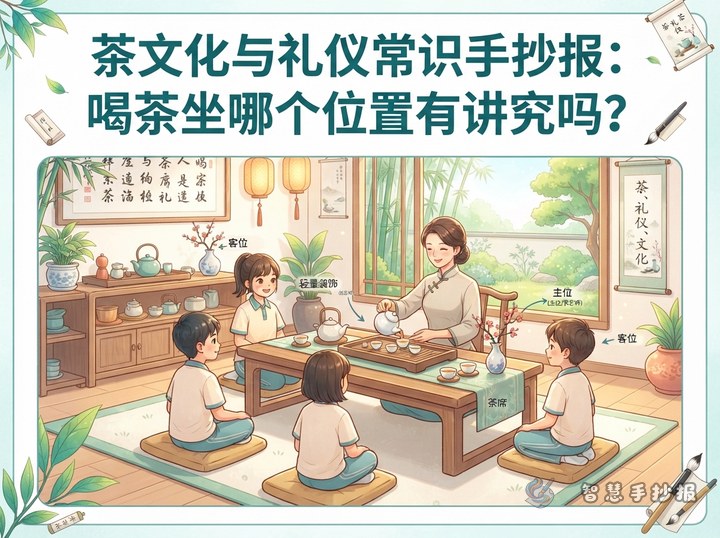
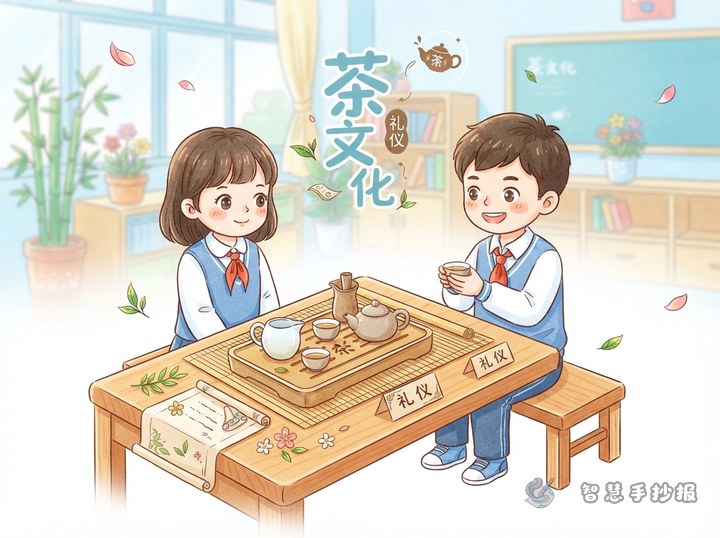
A practical way to make this handwritten newspaper is to center it on one clear question: Why does tea also reflect good manners? This makes the page easier to organize and helps students connect culture with daily behavior. Instead of writing long history paragraphs, choose short and useful points that can be read quickly.
Sections that work well on the page
- Getting to know tea: Briefly introduce tea as part of traditional culture and list a few common kinds such as green tea, black tea, and oolong tea.
- Tea etiquette in daily life: Write simple habits like offering tea politely, holding the cup steadily, and speaking softly.
- Civil behavior at the table: Mention keeping the table clean, waiting politely, and not making loud noises while drinking.
- Fun facts corner: Add a short proverb, a tiny tea poem line, or a small cultural note to make the page lively.
Short text materials students can use
Tea culture is not only about drinking tea. It also carries respect, calmness, and courtesy. When we serve tea to elders or guests, we show politeness and care. In daily life, learning simple tea manners can help us build good habits.
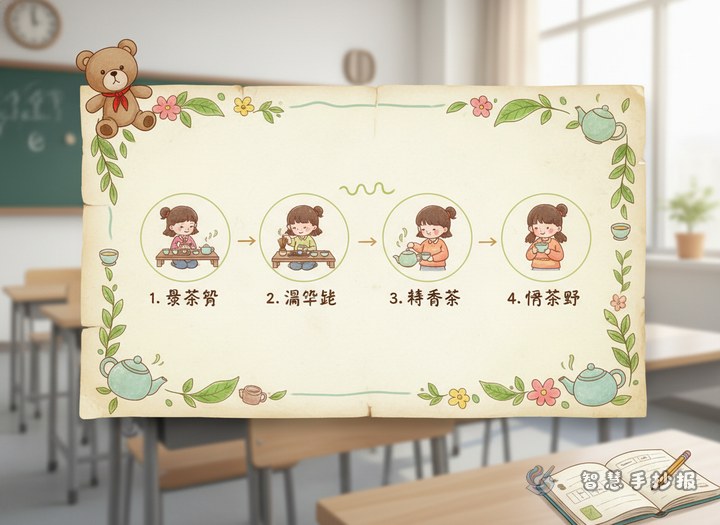
When receiving a cup, it is polite to use both hands when possible. When offering tea, we should be gentle and respectful. While drinking tea, we should keep our voices low and the space tidy. These small actions show good manners.
Layout ideas for a neat handwritten newspaper
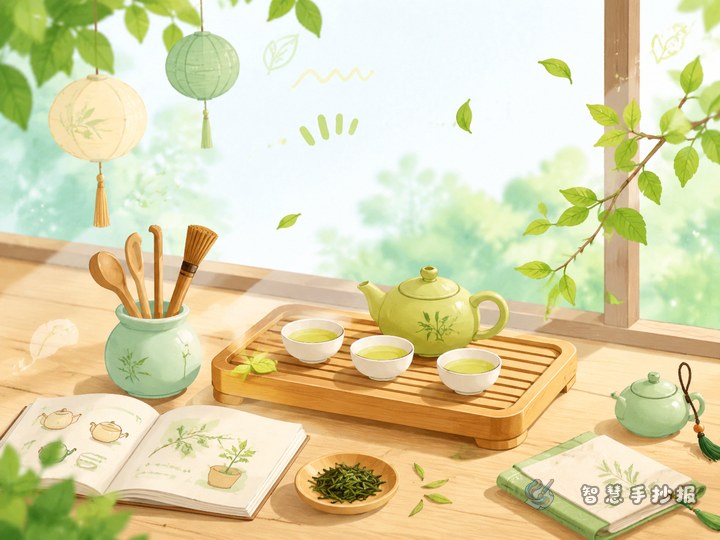
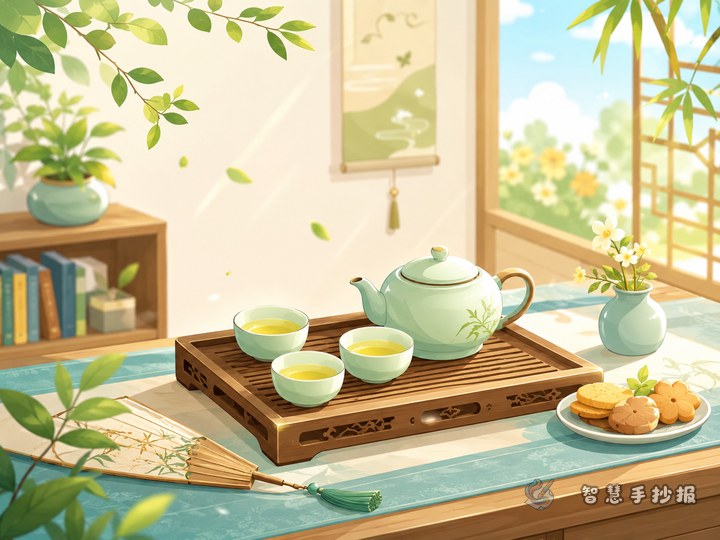
You can place the main title in the top center and decorate it with a teapot or tea leaf border. Divide the body into three or four blocks so each part stays clear. Use light green, beige, and soft brown as the main colors to create a calm and elegant look.
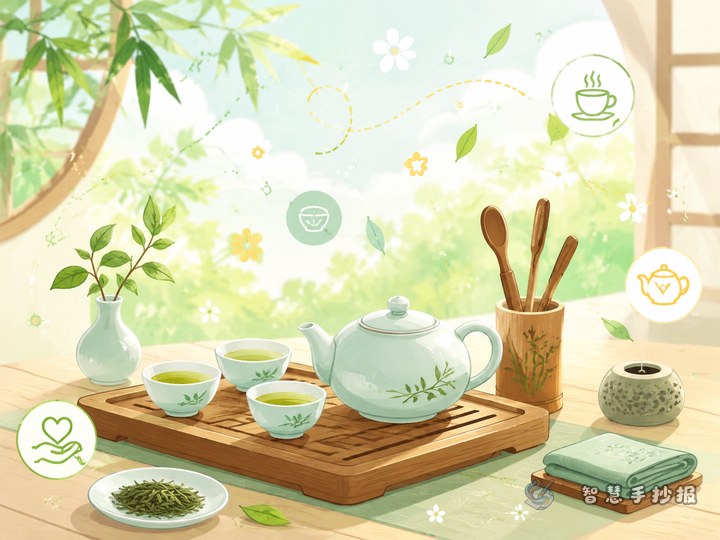
If the page feels too plain, add small drawings such as teacups, leaves, steam lines, bamboo, or seal-style corners. Keep the decorations light so the writing remains the focus.
How to make the content feel natural for primary students
Choose examples from home, school, and holiday visits. For example, students can write about serving water or tea to grandparents, receiving a cup politely, or speaking gently when guests are present. This makes the topic easier to understand and more useful than abstract explanations.
After drafting the text, students can continue adjusting the title, border, and block arrangement in the Zhihui Shouchaobao WeChat mini program to create a cleaner final page.