Choose One Clear Thread: Let the Instruments Follow the Seasons
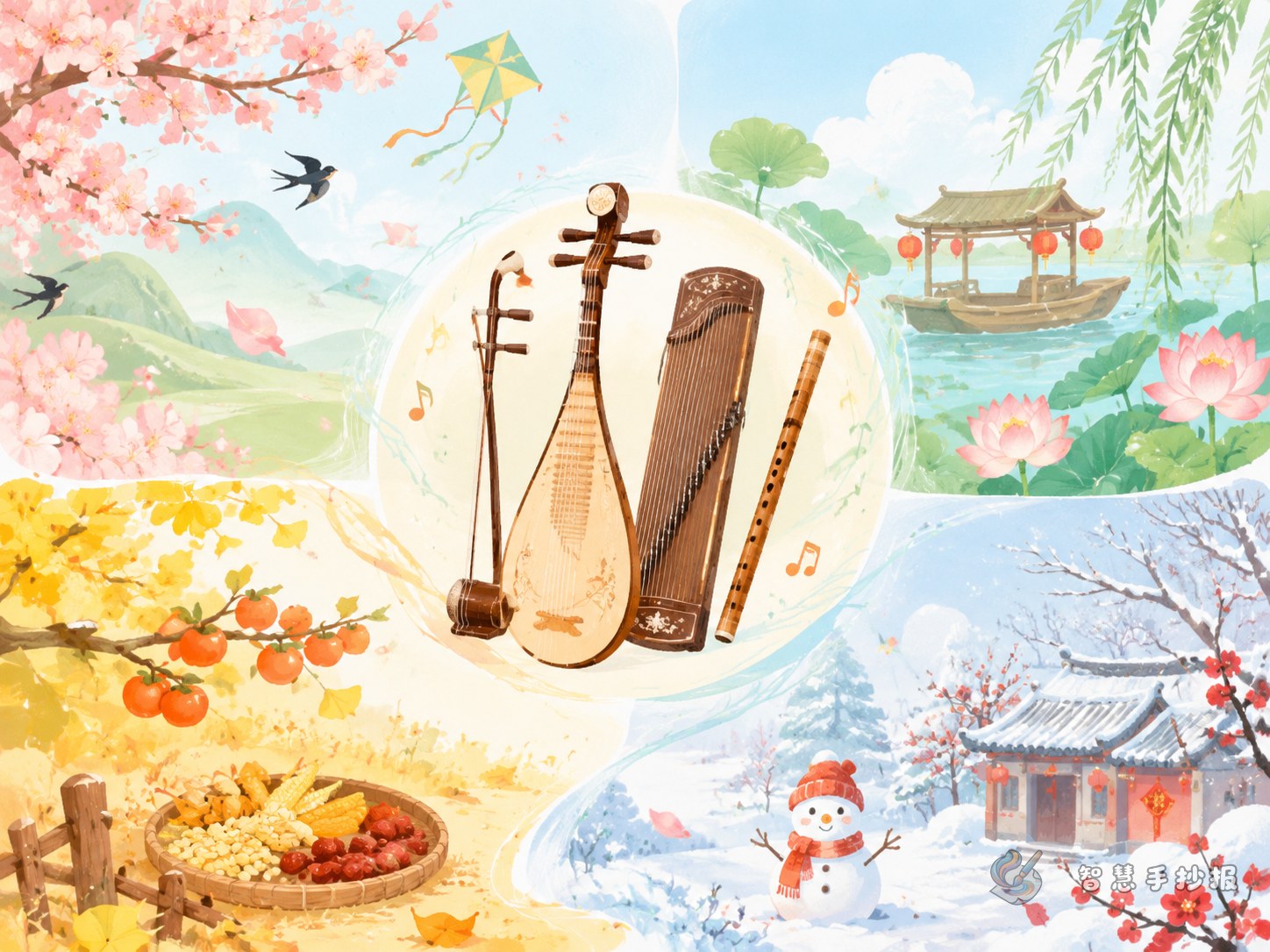
Instead of listing instruments one by one, design this handwritten newspaper around four seasonal stories. Spring can show fresh growth and gentle melodies, summer can show village gatherings and lively rhythms, autumn can show harvest, reunion, and lasting tunes, while winter can show festivals, good wishes, and cheerful celebrations. This order gives the page a natural flow and allows different instruments to enter the story smoothly.
Remember that matching instruments with seasons is a creative design choice, not a strict classification. Under the title, you can write: “Traditional instruments turn our feelings about the seasons into cultural memories we can hear.”
What to Write in Each Season
- Spring Sounds: Mention the fresh mood of instruments such as the dizi or guqin. Add willow branches, swallows, young leaves, and rippling water to show a quiet but lively spring.
- Summer Gatherings: Write about the warm atmosphere of folk music events. Add lotus leaves, fireflies, a evening breeze, and small lanterns to show how music brings neighbors and friends together.
- Autumn Melody: Use instruments such as the pipa or erhu to suggest rich emotions. Add rice ears, the moon, fruit, and reunion patterns to express harvest and remembrance.
- Winter Celebration: Describe the festive energy of drums and other celebratory music. Add paper-cut patterns, plum branches, red lanterns, and clouds to express hopes for a happy new year.
If space is limited, place only one instrument card in each seasonal section. Each card can include the instrument’s name, appearance, usual playing style, and one adjective describing its sound. Short text is easier to copy and read.
Ready-to-Use Text for the Page
Opening paragraph: Chinese traditional instruments come in many forms and styles. They do more than play melodies: they preserve memories of daily life, festivals, feelings, and artistic taste. When instruments are placed into stories about the four seasons, we can see the connection between traditional music and everyday life.
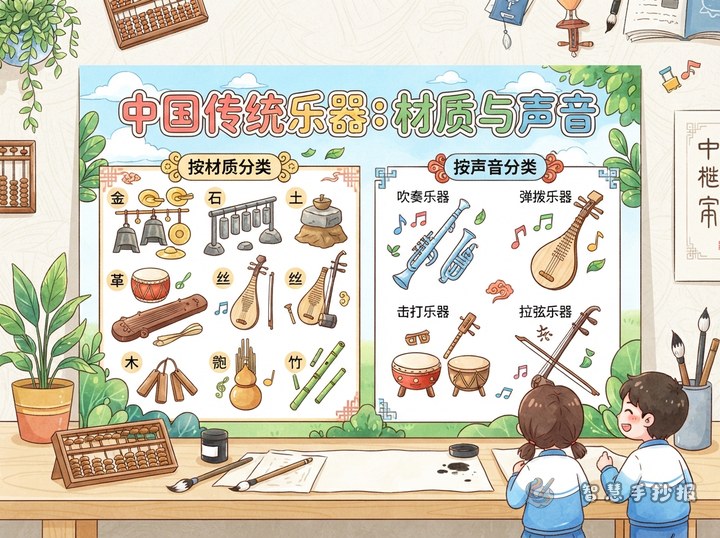
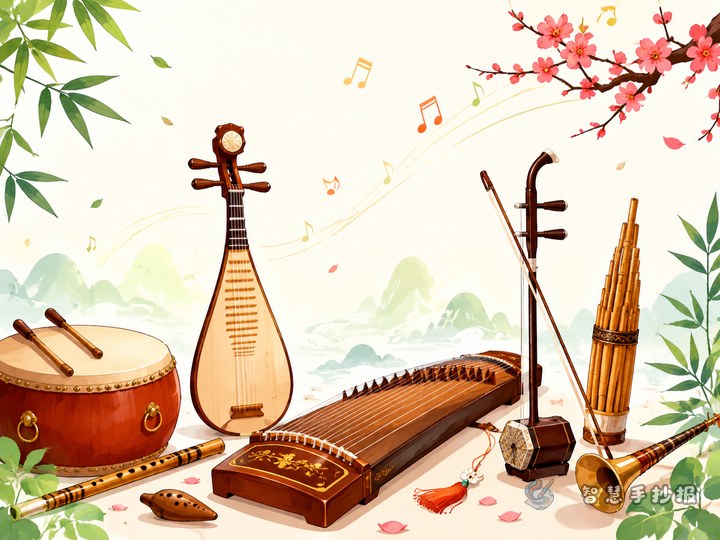
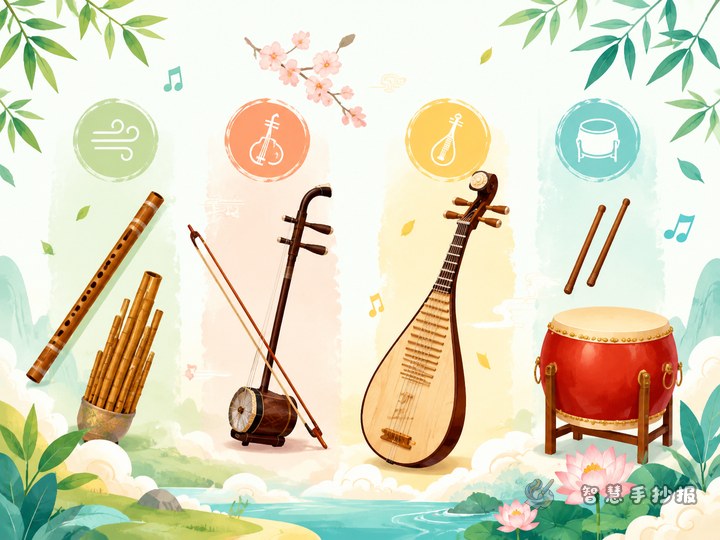
Instrument card examples: The guqin has a simple, elegant shape and often suggests a quiet, deep mood. The dizi is light and bright, making it suitable for a feeling of openness and movement. The pipa has a graceful form and can express both cheerful energy and delicate emotion. The suona has a bright, powerful sound that makes a festival scene feel especially lively. Add more information according to your teacher’s requirements and reliable materials.
Closing sentence: Traditional instruments are not distant symbols from the past. They can still be part of school life, family life, and festivals. Learning about one instrument opens a window into Chinese culture.
Turn the Layout into a “Four-Season Music Calendar”
- Draw a round record, clock, or four-part calendar in the center of the page and divide it into spring, summer, autumn, and winter.
- Write the main title at the top, such as “Hearing the Seasons: Chinese Traditional Instruments.” Add small music notes and flowing ribbons beside it.
- Use coordinated colors for the four sections: fresh green for spring, blue-green for summer, golden yellow for autumn, and light blue or red for winter.
- Give every section three small parts: a seasonal scene, an instrument card, and a cultural feeling. This keeps the page from becoming only a collection of drawings.
- Add a “My Folk Music Discovery” section at the bottom. Write the name of one instrument you would like to learn more about or try.
Three Practical Tips
First, sketch the four sections and text boxes with a pencil before copying the final text. This prevents the title from becoming too large or the columns from feeling crowded. Second, simple instrument drawings are enough; focus on recognizable details such as strings, finger holes, drum surfaces, or bows. Third, keep facts brief and accurate, and avoid adding uncertain dates or legends. After planning the theme, you can continue arranging sections and viewing layout references in the Smart Handwritten Newspaper WeChat Mini Program, making it easier to turn your idea into a neat finished page.