Choose a Centerpiece: Turn Festival Foods into a Hometown Flavor Map
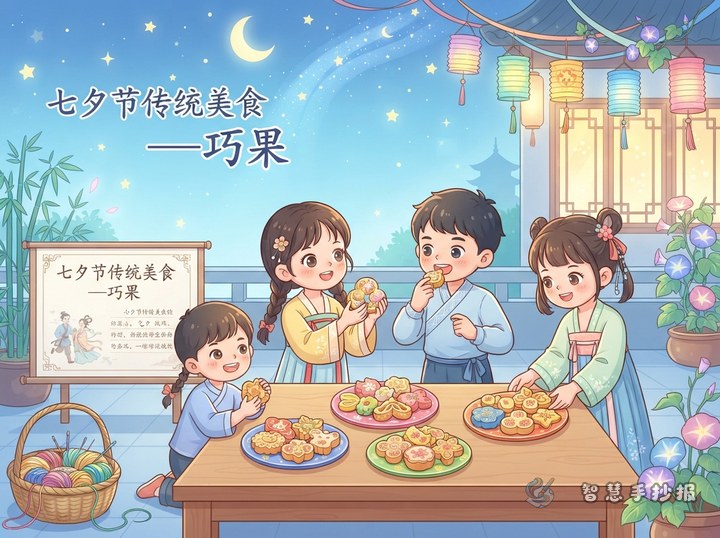
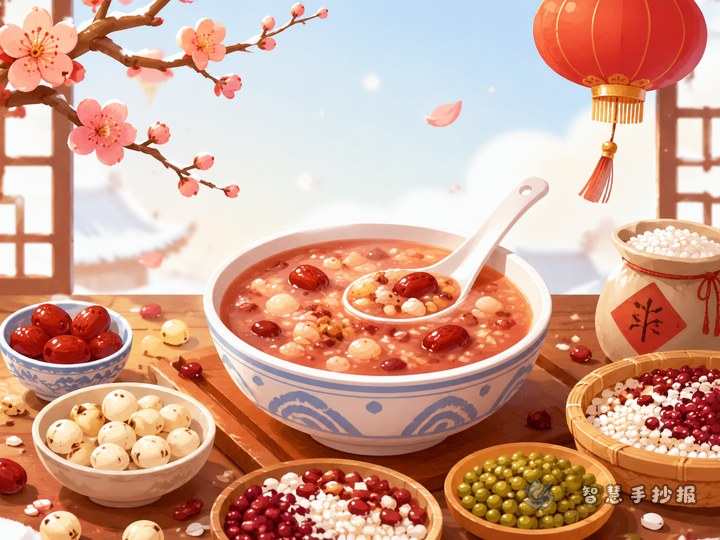
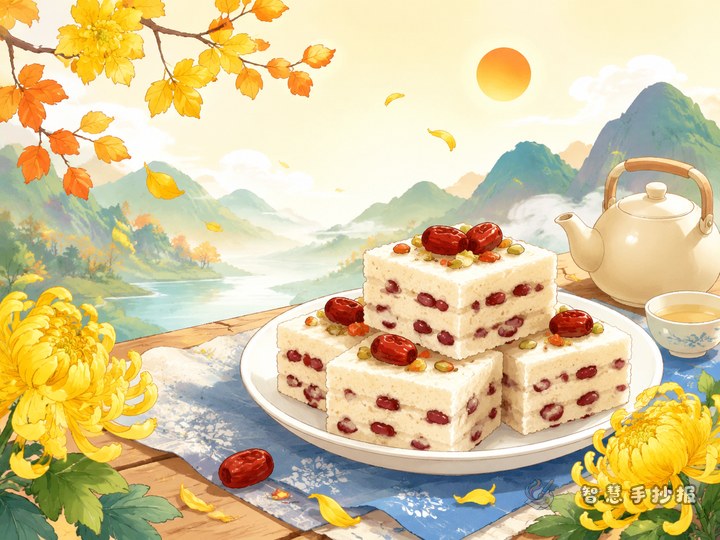
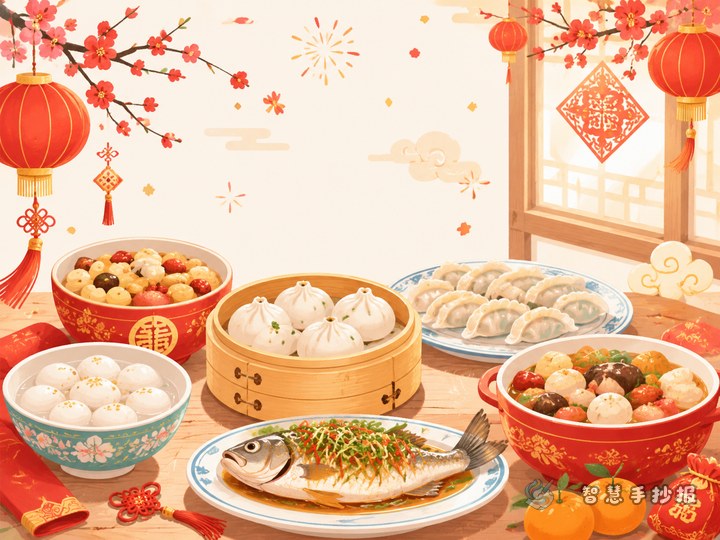
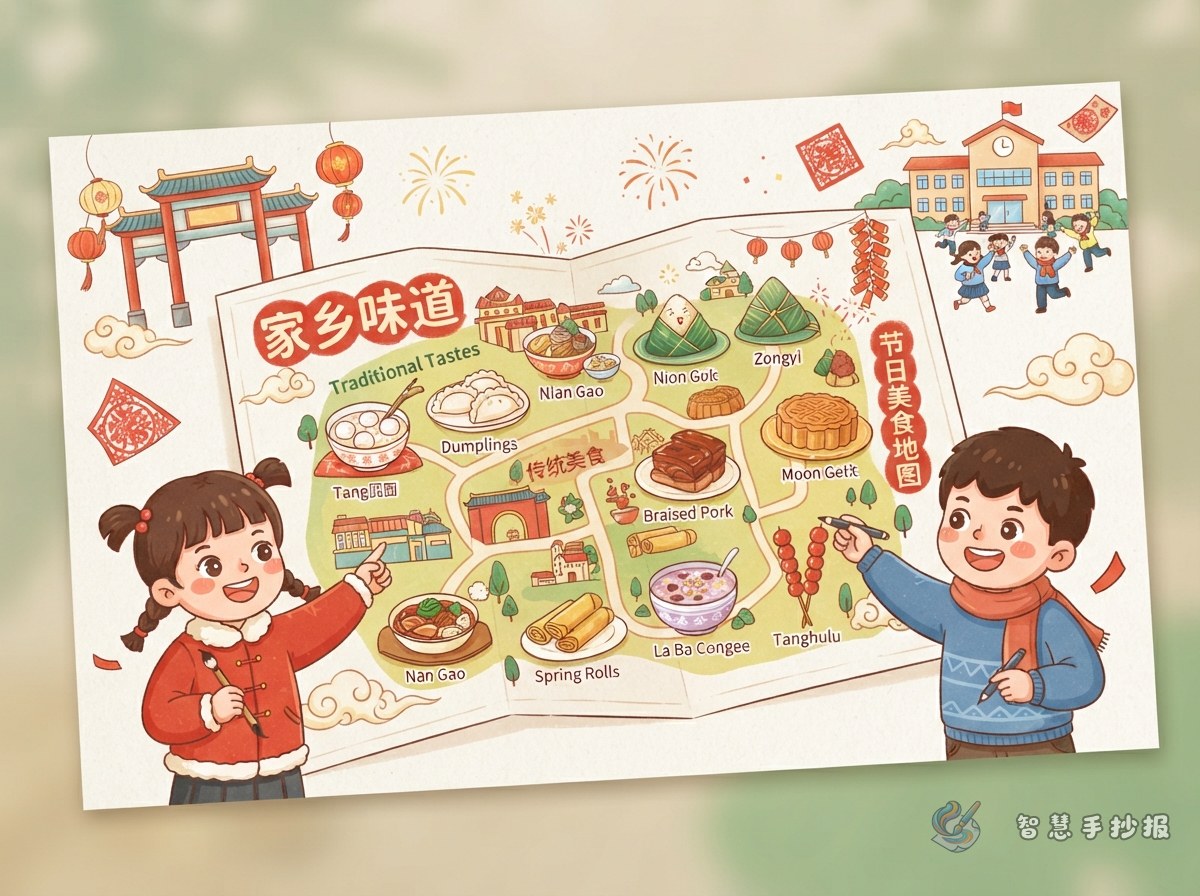
A traditional festival food poster does not have to focus on only one festival or one dish. You can connect New Year rice cakes, Dragon Boat Festival zongzi, and Mid-Autumn mooncakes through the theme of how your hometown celebrates. Use a small map, dining table, or colorful ribbon to link the foods together. A title such as “Hometown Flavors, Festival Blessings” can make the poster feel both cultural and personal.
If the topic feels too broad, choose only three festivals and give each one a representative food. This keeps the research manageable and makes the layout easier to read.
Three Writing Sections That Show the Meaning Behind Festival Foods
Festival Food Cards
Introduce each food in three short sentences: Which festival is it connected with? What does it look or taste like? What wish does it represent? For example, rice cakes can suggest progress and improvement, while mooncakes often represent reunion. You may use expressions shared by your family instead of trying to include complicated historical facts.
Food on My Family’s Festival Table
This can be the warmest section of the poster. You might write: “When the festival arrives, my family prepares ingredients, wraps zongzi, steams rice cakes, or cuts mooncakes together. We talk while working, and the smell of food makes our home lively.” Add one festival food you like best and explain why.
Wishes Shared Through Food
End the section with a short sentence such as “One bite remembers a festival; one table brings a family together.” You can also include words such as reunion, gratitude, remembrance, sharing, and blessings to show that festival food carries family feelings and cultural memories.
A Fresh Layout Idea: Put a Dining Table in the Center
A horizontal layout works well. Draw a round table or wooden plate in the middle, write the main title there, and add several small festival food illustrations. Place “Festival Food Cards” on the left, “My Family’s Festival Table” on the right, and “Wishes Shared Through Food” at the bottom. If you choose three festivals, connect them with a curved ribbon, footprints, or a map route.
- Top: Decorate the title with lanterns, flags, paper-cut patterns, or clouds.
- Upper left: Draw rice cakes or dumplings and add a Spring Festival section.
- Upper right: Draw zongzi or a local snack and add a Dragon Boat Festival section.
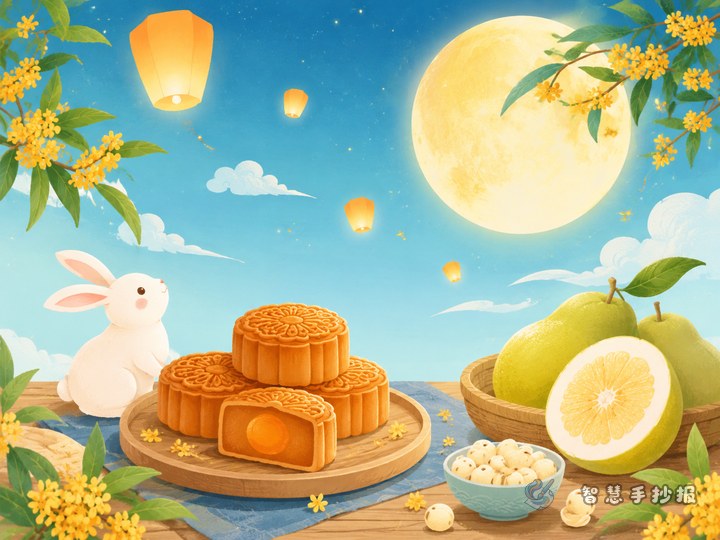
- Bottom: Draw mooncakes or tangyuan to express reunion and sharing.
- Open corners: Add a small “Festival Food Word Card” so the page does not feel empty.
Let Hometown Food Become the Poster’s Special Feature
The same festival may have different foods and cooking traditions in different places. Ask your family: “What must we eat during a festival?” “Who taught the family to make it?” and “What is special about the recipe?” Turn the answers into two or three sentences for a “Hometown Flavor Discovery” section. There is no need to invent a place name or a historical story. Real family memories are more suitable for a child’s poster.
You can also create a “Flavor Timeline” showing preparation before the festival, cooking during the festival, and sharing at the table. This turns the poster from a simple food list into a small story with a clear sequence.
Color and Drawing Tips: Festive, but Easy to Read
Red, gold, and orange create a warm festival mood. Green or light blue can be added for a fresher look. The food illustrations do not need to be complicated; show recognizable details such as bamboo leaves, mooncake patterns, or sliced rice cakes. Use thick colored letters for the title and black or dark brown for the main text. Separate sections with thin lines or small icons.
Before coloring, check whether the title stands out, every section has enough text, and no illustration covers the writing. When you need help organizing the theme, sections, and layout, you can continue making the poster in the Zhihui Shouchaobao WeChat Mini Program, then adjust the design with your own hometown foods.