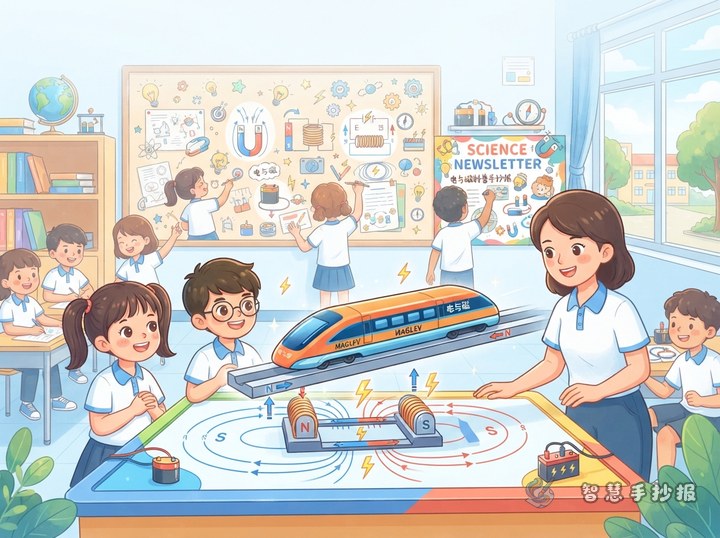
Start with the question: Why can an elevator move up and down?
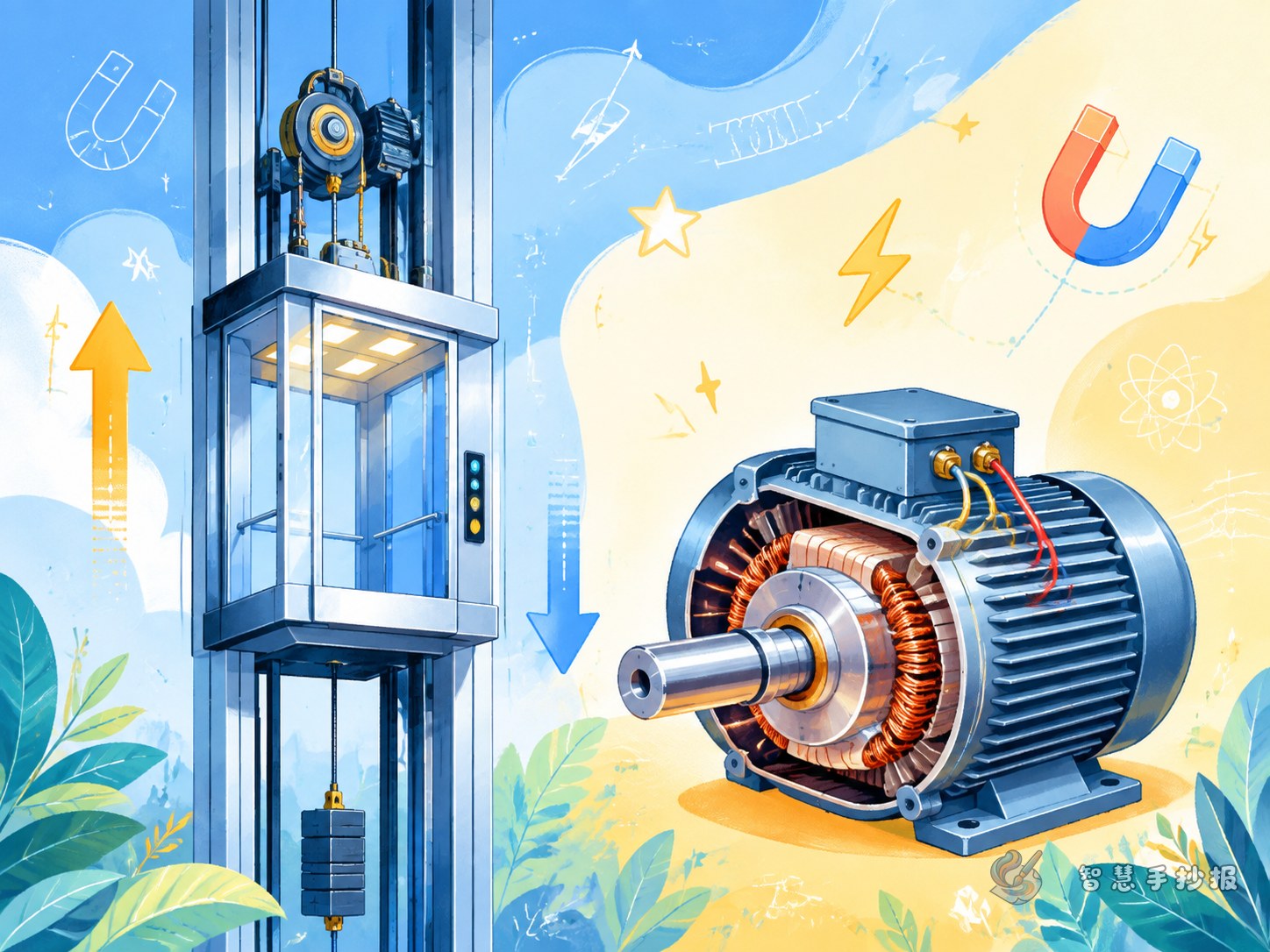
This handwritten newspaper can use an elevator as an introduction to everyday science. An elevator depends on an electric motor, cables, pulleys, and a control system. When electricity flows into the motor, electrical energy is changed into mechanical energy, which drives the moving parts. By changing the motor’s direction of rotation, the elevator can travel upward or downward. Real elevators also use counterweights, brakes, and several safety systems. A simple diagram is enough for a school project.
Three sections for electricity and magnetism
Section 1: How does an electric motor turn?
You can explain the main idea with this sentence: “A current-carrying coil experiences a force in a magnetic field and begins to turn.” The magnetic field may come from a magnet or an electromagnet. This same principle can be found in fans, washing machines, and electric vehicles.
Section 2: What is an electromagnet used for?
An electromagnet becomes magnetic when current flows through it, and its magnetism can weaken or disappear when the power is off. Some control, braking, and safety parts in elevators use electromagnetic principles. A useful fact to copy is that stronger current and more coil turns usually make an electromagnet stronger, although its exact strength also depends on its materials and design.
Section 3: The science of elevator safety
Elevator safety comes from several mechanical and electrical protections working together. List words such as speed limiter, brake, floor button, and alarm bell. You can also add a reminder: do not jump inside an elevator or force the doors open, and ask for help according to the instructions if a problem occurs.
Short sentences and facts to copy
- Main idea: Electricity provides power, and magnetism helps machines move.
- Science sentence: An electric motor changes electrical energy into mechanical energy and helps an elevator run smoothly.
- Everyday connection: Motors can also be found in fans, water pumps, and washing machines.
- Safety reminder: Ride elevators calmly and follow the instructions if anything seems unusual.
A clear layout for the page
Try using a tall elevator shaft as the main composition. Draw a simple elevator car in the center, with arrows pointing up and down to show movement. Place “How the Motor Works” on the left, “Electromagnets and Safety” on the right, and “Motors in Everyday Life” along the bottom. Blue, yellow, and orange make a bright science-themed color palette.
Decorate the corners with circular magnetic field lines, coils, pulleys, and button icons. Do not squeeze every sentence into the elevator drawing; leave open space around each section. First use a pencil to plan the title, illustrations, and text areas. Then outline, add color, and copy the text neatly. You can also continue arranging the page in the WeChat mini-program “智慧手抄报” when you want a more convenient制作 process.