What Makes a Maglev Train Float
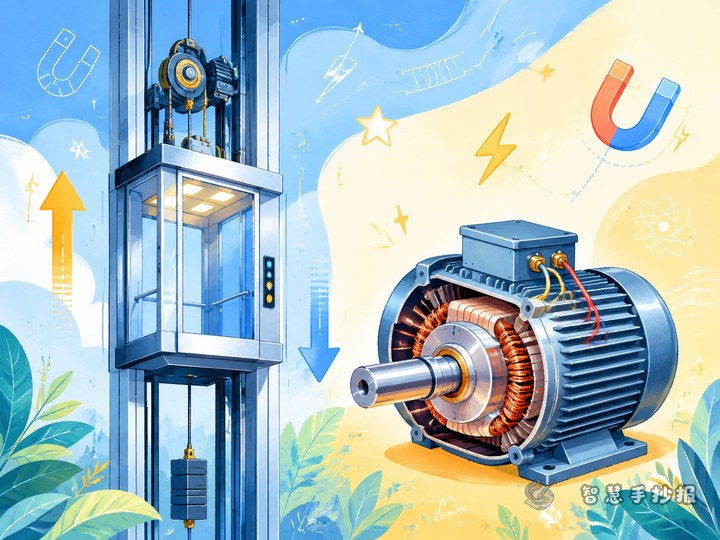
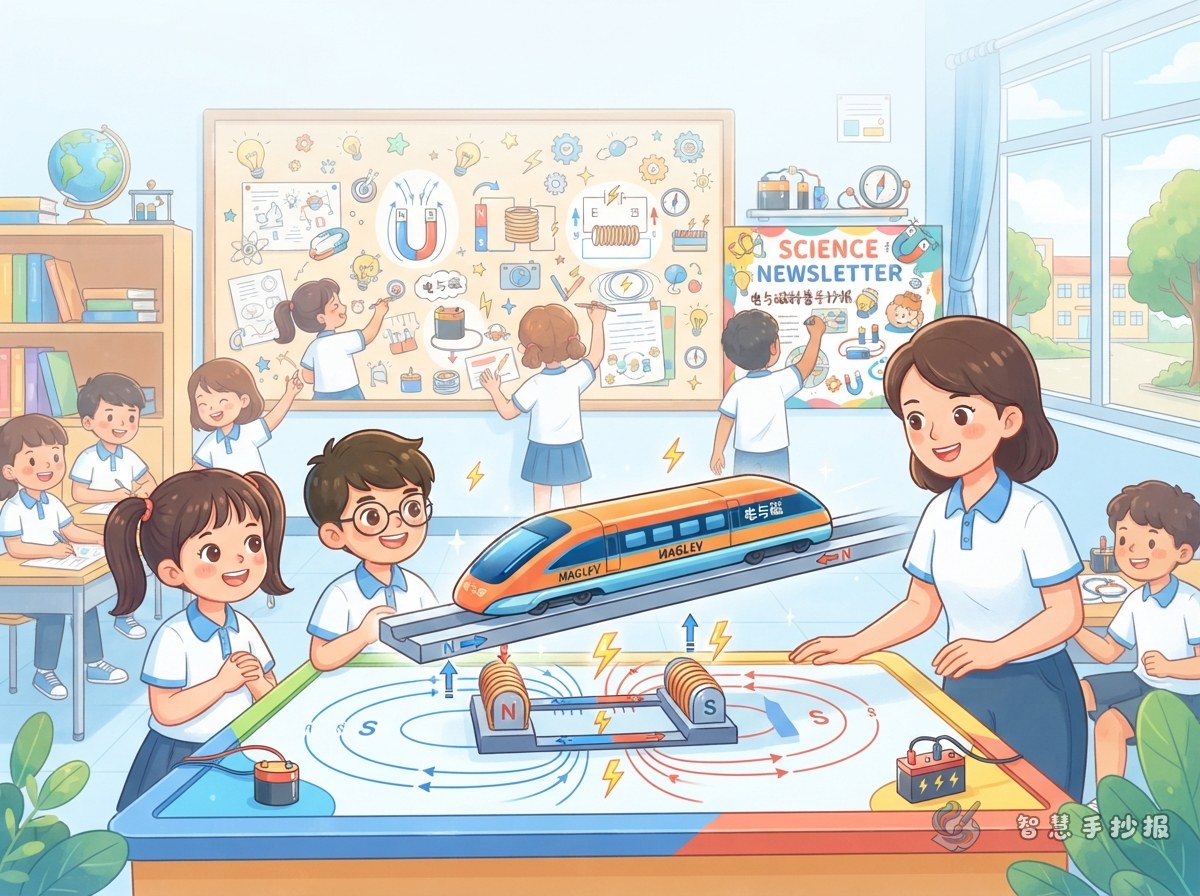
The most eye-catching idea for this handout is simple: the train moves without touching the track. Magnets have two habits — like poles push apart, and opposite poles pull together. Electromagnets under the train face coils in the track, and the pushing force lifts the whole train. Changing electromagnetic force then drives it forward, so there is almost no friction and the ride is fast and quiet.
You do not need complicated formulas. One short line is enough: electric current makes magnetism, and magnetism moves the train.
Four Points That Fill the Page
1. Two poles of a magnet
N and S. Like poles repel, unlike poles attract. Draw two small bar magnets with arrows showing the push and the pull.
2. Electric current creates magnetism
When current flows through a wire, a magnetic field appears around it. That is how an electromagnet works. Try picking up paper clips with a coil and draw the result.
3. Two ways to float
One uses opposite poles pulling upward, the other uses like poles pushing upward. For a primary school handout, the pushing version is easier to explain.
4. Maglev around us
Maglev trains, floating globes, floating lamps and floating toy cars all use the same idea. Four tiny pictures make a neat row.
Layout Plan: Three Columns and a Test Corner
Divide the sheet into three parts, wider in the middle and narrower at the sides.
- Title area: write “The Train That Floats” in large letters beside a curved track.
- Science area: draw the magnets under the train and in the track, mark N in red and S in blue, and add facing arrows for the push.
- Life area: list three or four maglev objects such as a floating globe and a toy car.
- Test corner: record the magnet experiment you tried and what you saw.
Captions You Can Copy Straight Onto the Page
- A magnet has an N pole and an S pole. Like poles repel, unlike poles attract.
- A coil with electric current creates a magnetic field — that is an electromagnet.
- A maglev train does not touch the track, so friction is small and it runs fast and steady.
- Electricity and magnetism work as a team: current can move magnets, and magnets can make electricity.
- A small magnet can be surprisingly strong. Science is all around us.
Try It Yourself, and Stay Safe
Test one: slowly bring the same poles of two bar magnets together and feel the push. Draw the direction of the force on your page.
Test two: line up some paper clips, move a magnet slowly under the paper, and watch how the clips follow.
Keep magnets away from phones, watches, bank cards and computers. If you use a battery, do not leave the wires connected to both ends for long, and disconnect them afterwards so nothing gets hot.
Colours, Lettering and the Final Touch
Use light blue and pale grey for the background to give a tech feel, red and blue for the poles, and yellow outlines for the title. Shape the border like a railway track and add a small carriage in each corner. Leave a little space at the bottom right for your name and class.
If you want a tidy layout without redrawing it many times, open the 智慧手抄报 mini program in WeChat, pick a template in the electricity and magnetism theme, type in these captions, and add your own drawings to finish a science handout of your own.