Start with the Opening Words: They Set the Scene
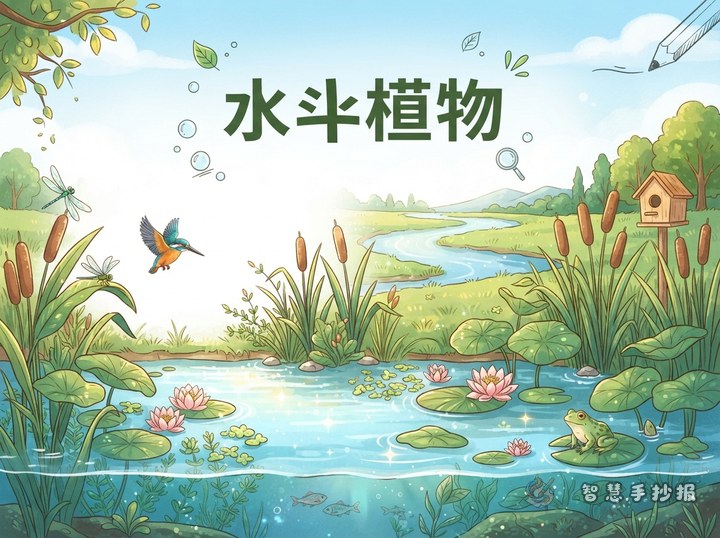
The opening words are not a full essay. They sit in a visible spot and tell readers that this poster is about rivers, wetlands, and water ecology. Try three sentences: one describes a scene, one asks a question, and one introduces the topic. For example: The morning river shines, and the reeds sway gently. Why are rivers called the blood vessels of the earth? Let us explore the world of river wetlands and water ecology together.
Choose a main title first, such as Protect a Clear River, Wetlands Are Water's Home, or Little River Ecology Guardian. The opening words should support that title and stay on topic.
Three Opening Styles You Can Use Right Away
Ask a Question
Draw readers in with a question. Example: Have you seen an egret fly over a river? Do you know why wetlands can hold clean water? This poster will help you find out.
Paint a Picture
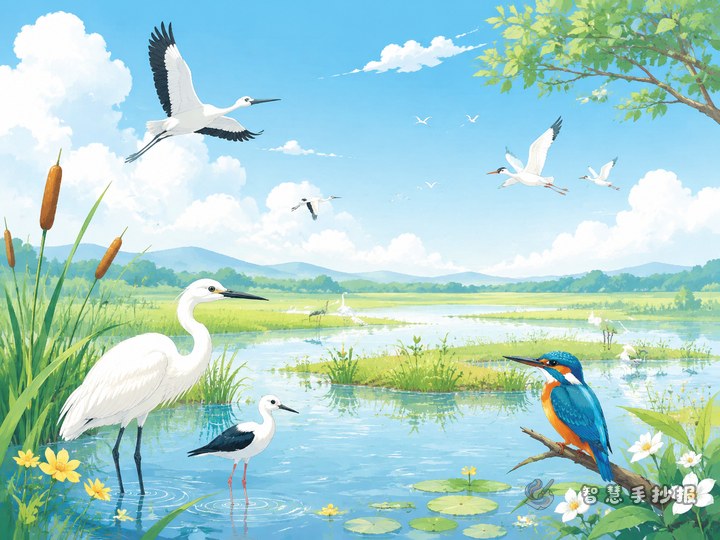
Begin with what you can see. Example: In spring, green reeds grow by the river, and wild ducks swim on the water. This beautiful view needs our care.
Invite Action
Start with a direct invitation. Example: Not throwing rubbish into the river and saving every drop of water are small actions that protect water ecology. Let us begin by learning about river wetlands.
Make the Closing Words Circle Back
Place the closing words in the bottom right corner or in the last section. Good closing words respond to the opening and offer one small promise. Avoid stopping at Protect the environment, everyone's duty. Try something more specific:
- Let the river stay clear and the wetland stay green. It starts with using one less plastic bag and pouring less dirty water.
- Today we learn about wetlands. Tomorrow we protect the rivers in our hometown.
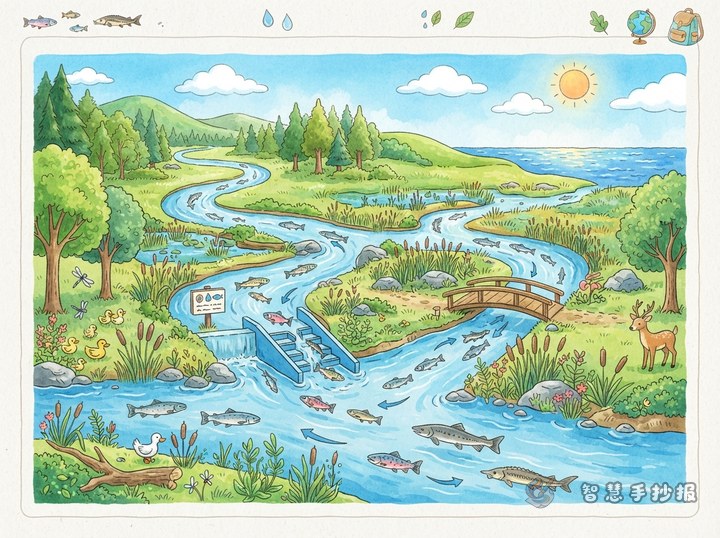
- One river connects thousands of homes, and one drop of water reflects a big world.
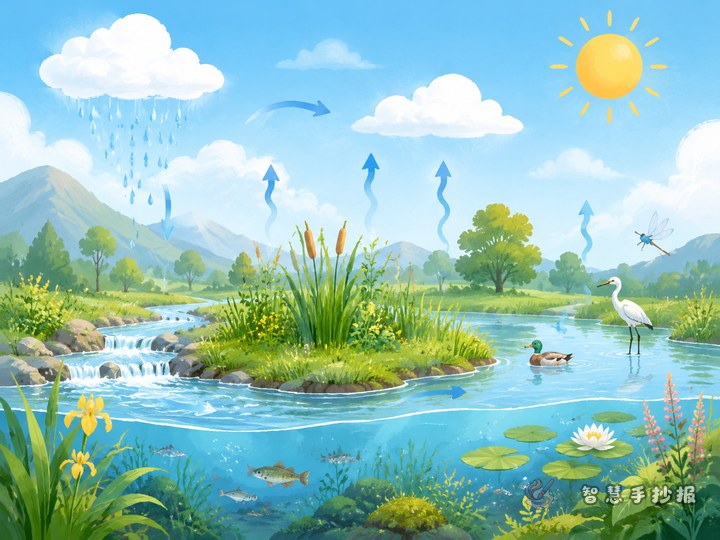
If the opening asks a question, answer it in the closing. For example, if the opening asks why wetlands can hold clean water, the closing can say that water plants, soil, and tiny living things work together to help wetlands clean water.
Section Introductions and Short Lines
Most posters have several small sections. A one-sentence introduction at the start of each section helps readers understand it. You can write:
- Water Ecology Facts: River wetlands are home to many plants and animals.
- River Protection Actions: Do not dump waste water or throw rubbish into the river.
- My Observation: Record the river's color, smell, and the plants along the bank.
- Slogan Corner: Clear water protects our home, and wetlands grow with us.
Short lines you can use include: Clear river, beautiful home. Wetlands are the earth's kidneys. Small fish have a home, and the river stays alive. Save water and protect water, starting with me. Write one line at a time so they fit neatly into small boxes.
Layout and Colors: Blue, Green, and Plenty of White Space
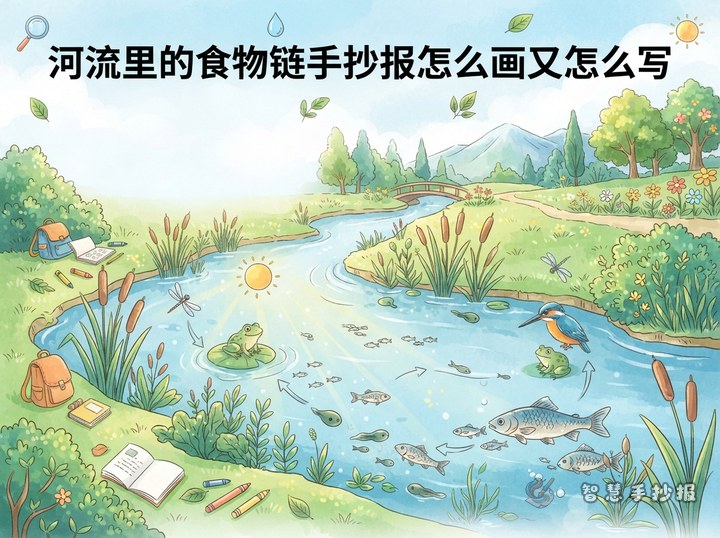
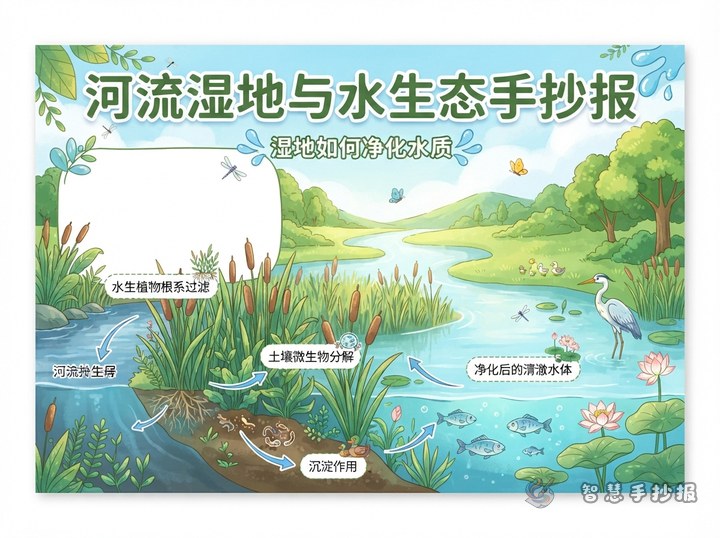
Blue, green, and white work well for a river wetland theme. Divide the page into four parts: put the main title in the top left and the opening words in the top right. Draw a curved river through the middle to separate the page naturally. Put Water Ecology Facts in the bottom left, and River Protection Actions plus the closing words in the bottom right. This guides the reader's eyes along the river.
Do not use too many decorations. Choose three or four: water waves, reeds, small fish, egrets, lotus leaves, or raindrops. Outline the title in blue and use dark blue or dark green for the body text. Avoid making the whole page too light, or it will be hard to read in a photo.
A Simple Order: Write First, Decorate Later
- Use a pencil to lightly divide the page and mark the title, opening words, sections, and closing words.
- Write the opening and closing words on scratch paper. Read them aloud and remove repeated sentences.
- Copy the text with a black pen, then use colored pencils or markers to draw borders and small pictures.
- If you are short on time, finish the text first and add decorations at the end.
To make the layout easier, open the 智慧手抄报 WeChat mini program, choose a river wetland and water ecology template, add your opening words and section text, and follow the prompts to fill in borders and small illustrations.