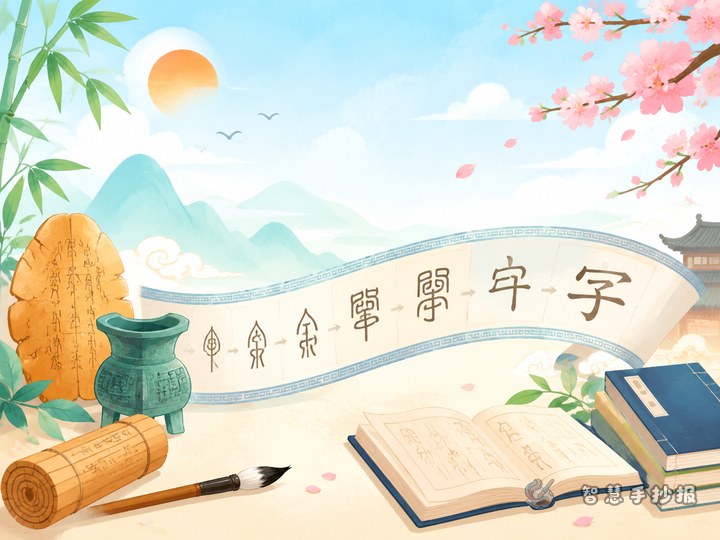
Start With a Short Poem and One Key Character
When the topic is Chinese characters and classical poetry, you do not have to copy out a whole poem. Try a different angle: one poem, one character. The character should carry the mood of the verse, such as the word for empty in a quiet forest poem, the word for green in a poem about spring, or the word for longing in a moonlit poem. Read the poem first, then choose the character that stands out or that the line cannot do without.
Pick a poem you have already met in class. Short poems with familiar words are easier to write about, and you can plan the page before copying any text, so that later boxes do not get squeezed.
Five Blocks That Fill the Page With Real Content
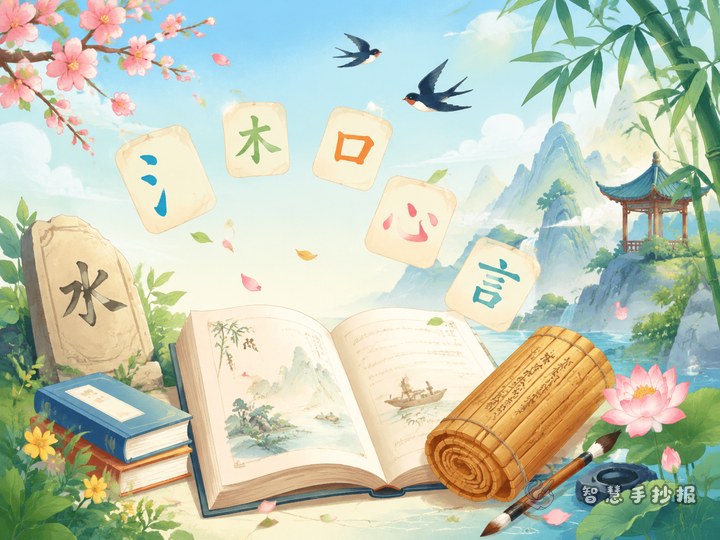
- Character file: show the structure, radical and stroke count. If it is a pictograph or a compound character, add a small sketch of how it changed over time.
- Meaning and words: explain the meaning in two or three sentences and list three to five common words that use it.
- The original line: copy the line of poetry and circle the key character in a different colour, then say what picture it creates.
- Another line with the same character: find one or two more lines that use it, and place them side by side as a small comparison.
- A simple illustration: draw a scene linked to the meaning, such as fresh leaves for green or a moon and window for quiet.
Put the Character Where the Eye Lands First
In this kind of newspaper the character is the star, so arrange the page from large to small:
- Write the main title across the top, including the key character, for example One Character, One Poem: Green.
- Leave a box in the centre or upper left and write the character two or three times larger than the body text, with pinyin and a short meaning beside it.
- Divide the right side or lower area into three small boxes for the original line, another line with the same character, and word groups.
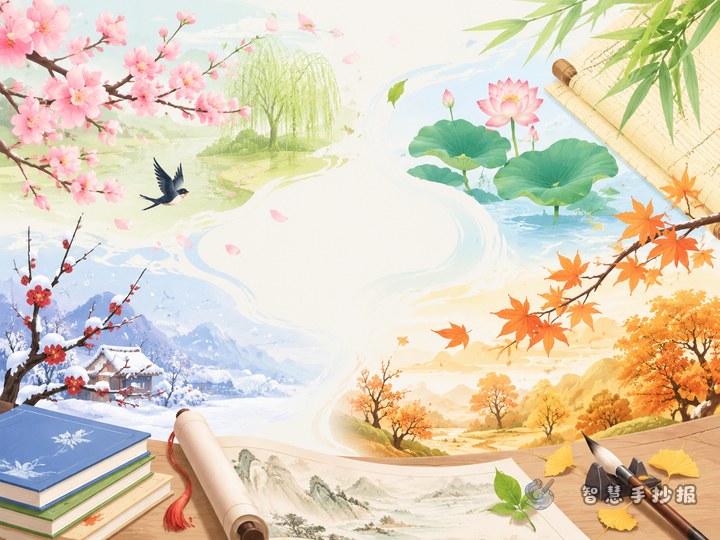
- Keep the corners light with simple lines, bamboo or cloud patterns instead of filling every space.
Naming the Title and the Boxes
Avoid piling up plain phrases such as Chinese character newspaper. Try titles like One Character, One Poem, A Character Inside a Poem, or The Character That Holds Up a Poem. Box names can follow the same idea: Where the Character Comes From, Character Notes, Where the Poetry Eye Sits, Lines With the Same Character, or A Picture for the Character. Keep each box name to four to six characters and write it neatly above the frame or in the top left corner.
Making It Easier or Harder by Grade
- Lower grades: keep only the look of the character, its meaning and one line of poetry. Write the character large and use drawings instead of long sentences.
- Middle grades: add word groups and a second line of poetry, and use two colours to separate the original text from the explanation.
- Upper grades: include the character's development, a short appreciation, or a comparison of how the same character feels different in two poems.
Final Details That Keep It Tidy
Do not fill every empty space, because the page needs room to breathe. Explain the meaning in your own words instead of copying a dictionary. Keep illustrations away from the text. When you finish, stand back and check that the title and the key character are the first things you notice. If you want to try another layout, add a border or change the lettering, you can continue in the WeChat mini program Smart Handwritten Newspaper and leave the handwriting itself to the child.