Start with a clear idea: connect radicals and poetry on one page
This type of handwritten newspaper works best when you choose one focused angle, such as “water radicals in classical poems,” “wood radicals and spring poetry,” or “sun and moon radicals in poems about time and scenery.” A narrower topic makes the whole page look more organized and easier for children to complete.
You may use a title like “Poetry Hidden in Radicals”, “Reading Poems Through Chinese Radicals”, or “When Character Parts Meet Classical Poetry”. These titles feel natural and fit a school handwritten newspaper well.
Keep the layout simple with four useful sections
1. A short radical introduction
Briefly explain what a radical is and how it often suggests meaning. For example, the water radical is often related to rivers or liquids, the wood radical often connects to trees and plants, and the speech radical often links to speaking or expression.
2. A group of characters with the same radical
Choose 6 to 10 characters from the same category and write their meanings or simple words made from them. For example, with the water radical you can list river, lake, sea, spring, stream, and wave. With the wood radical you can list forest, branch, pine, willow, peach, and pear.
3. Matching poem lines
Pair your chosen characters or radical group with lines from classical poems that share the same imagery. Water-related characters can go with lines about rivers, flowing water, or rain. Wood-related characters can go with lines about trees, blossoms, leaves, or forests. This helps the page feel meaningful instead of random.
4. My discovery
End with two or three sentences about what you learned. For example: characters with the same radical often share similar meanings, and many classical poems use those same images to describe nature. Learning radicals can also make poetry easier to understand and remember.
Ready-to-use writing material
- Opening note: Chinese characters do more than show sound and meaning. Their parts also carry cultural clues. When we read radicals together with classical poetry, we can discover interesting links between form, meaning, and poetic imagery.
- Water radical ideas: river, lake, sea, spring, stream, wave. Pair them with poem lines about flowing water, broad rivers, or quiet ponds.
- Wood radical ideas: forest, branch, pine, willow, peach, pear. Pair them with lines about spring trees, autumn leaves, flowers, and mountain woods.
- Sun and moon ideas: bright, morning, evening, dawn, moonlight, glow. Pair them with lines about sunrise, sunset, moonlight, or early morning scenes.
A layout that looks neat and thoughtful
A practical design is “large title in the center, two content columns, and a short conclusion at the bottom.” Put the title in the middle top, the radical knowledge and character cards on one side, and poem lines on the other side. Use the bottom area for “My discovery” or a short learning reflection.
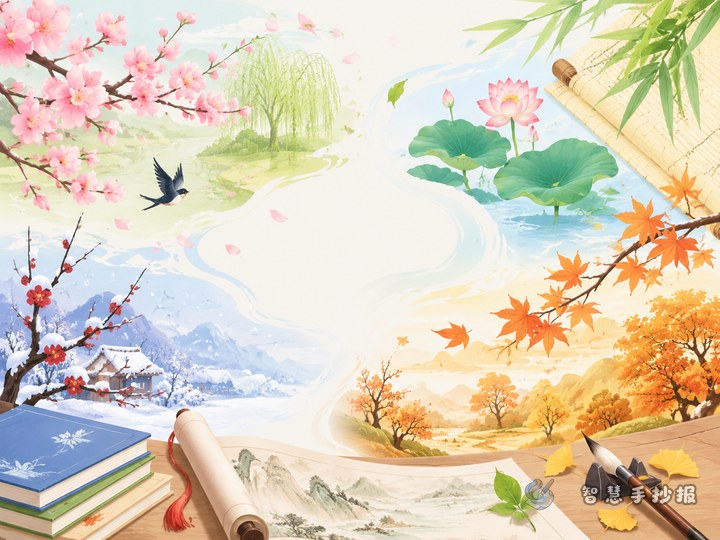
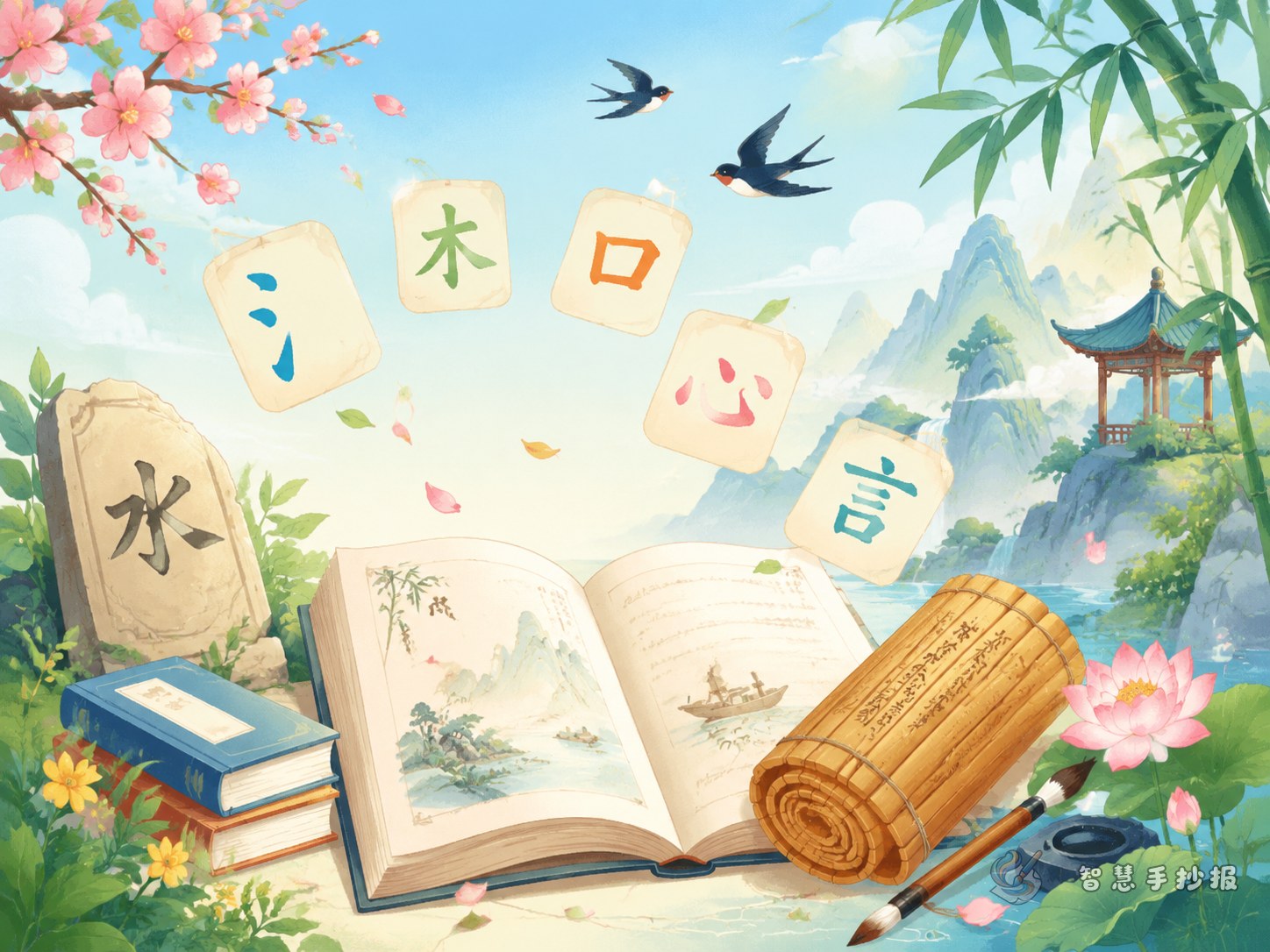
Decorations can include water drops, leaves, clouds, moons, scroll borders, or small seals. Keep the colors consistent with the topic: blue-green for water, green-brown for wood, and warm yellow with light blue for sun and moon themes. A clean color plan makes the page more attractive.
How to make the final work stand out
- Choose only one or two radical groups instead of too many.
- Keep each paragraph short so the page does not feel crowded.
- Write the key characters a little larger to emphasize the theme.
- Add one sentence of your own understanding next to a poem line.
- Draft the structure first, then copy it neatly onto the final page.
If you want to continue arranging sections, choosing a title, and polishing the page more easily, you can also explore the Zhihui Shouchaobao WeChat mini program for further handwritten newspaper creation.