Choose One Main Idea First
Losing baby teeth is something every primary school child goes through, which makes it a great poster subject. Pick one main idea, such as "Losing teeth is normal, caring for them is easy," and let every panel support it: what happens during these years, how to treat a wobbly tooth, and how to look after teeth every day. A clear main idea keeps the page from feeling scattered.
Tooth Facts You Can Put on the Poster
These work best in the middle or the top-left corner of the page.
A Simple Timeline
- Children have 20 baby teeth, and they usually start being replaced around age 6.
- The lower front teeth often go first, then the upper front teeth, then the back teeth.
- By about age 12 most baby teeth are gone, leaving around 28 permanent teeth.
- Every child is different, so falling early or late is still within the normal range.
What to Do About a Loose Tooth
- Do not keep wiggling it with your fingers or pushing it with your tongue.
- Do not pull it out yourself or tie a thread around it.
- Eat softer food for a few days and avoid biting hard things with that tooth.
- If it falls out and bleeds, bite gently on clean gauze or cotton for a few minutes.
- If a new tooth has come through but the baby tooth is still there, tell a parent and see the dentist.
A Daily Habits Checklist for One Panel
Writing it as a short vertical list keeps the panel looking clean.
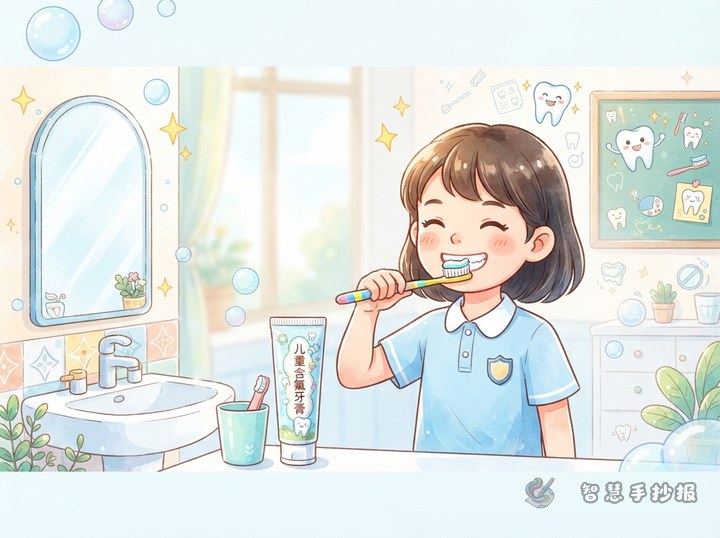
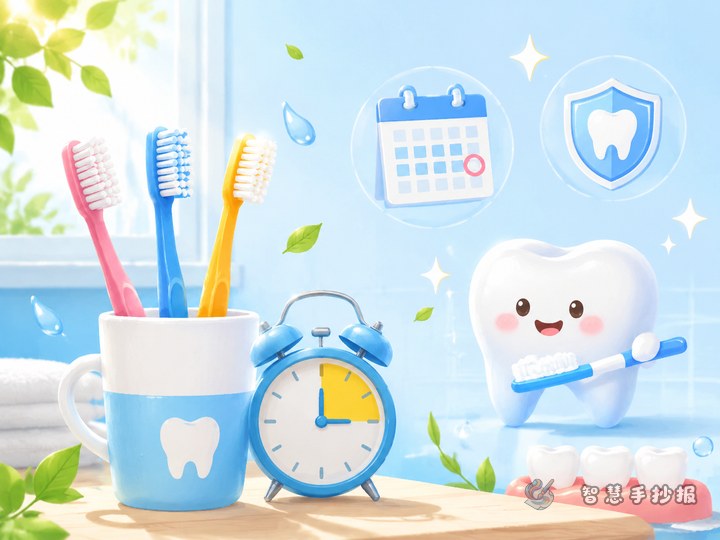
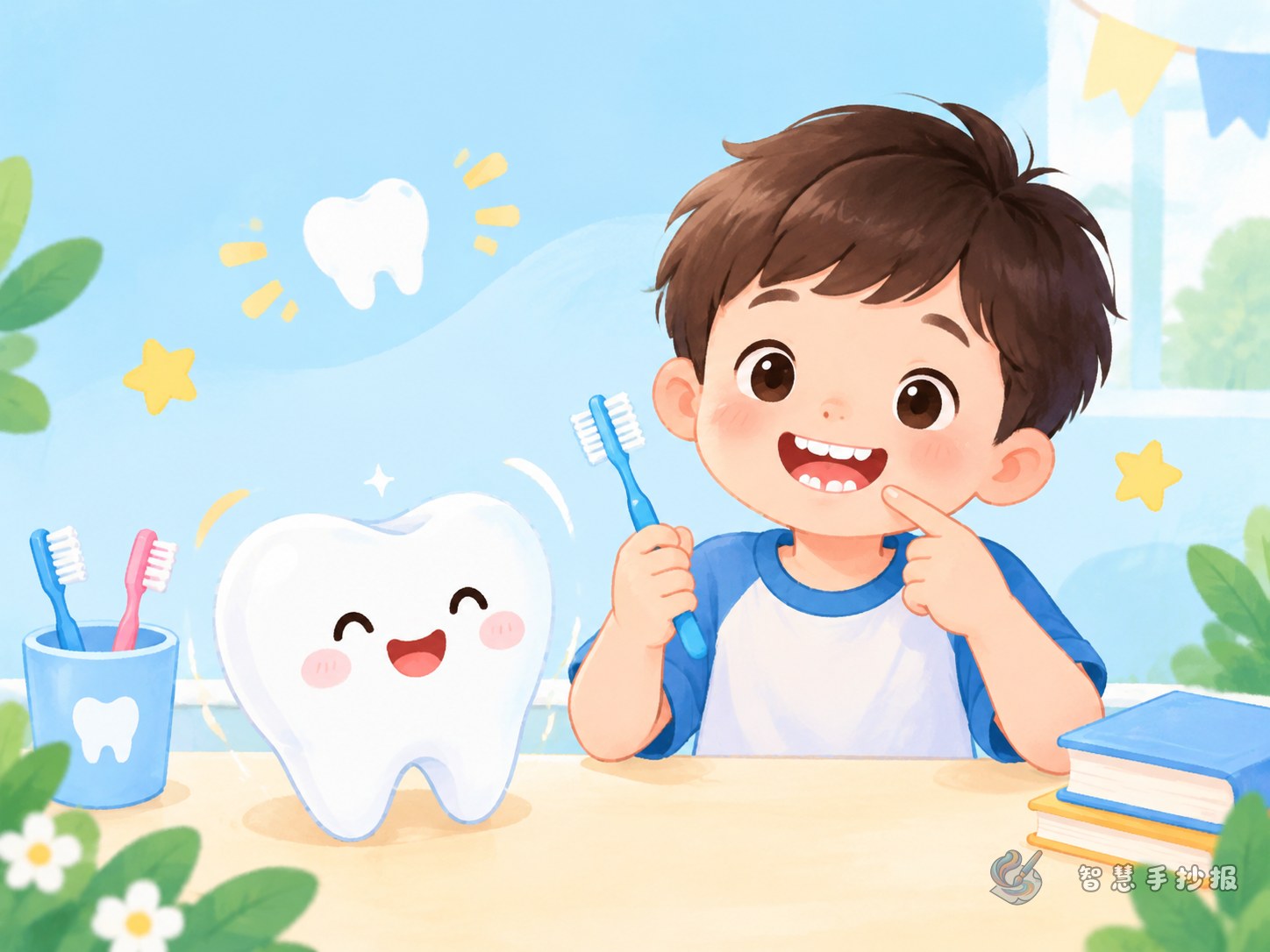
- Brush twice a day: once after waking up and once before bed, two minutes each time.
- Reach the back teeth: the chewing surfaces and inner sides are easy to miss, so slow down there.
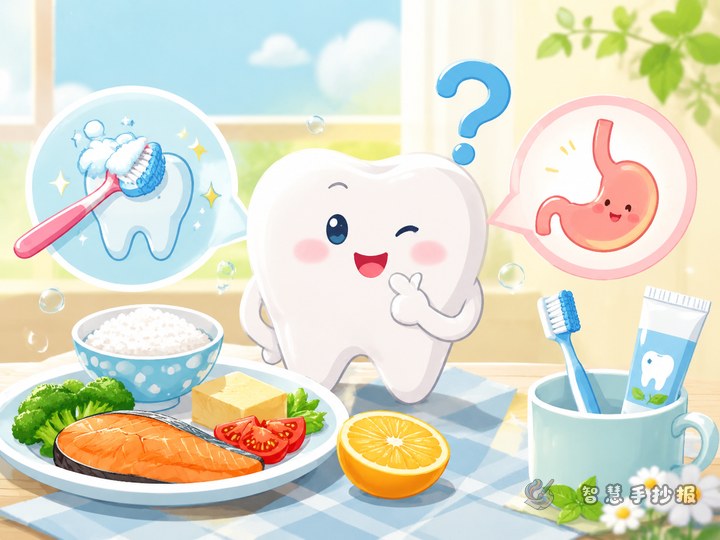
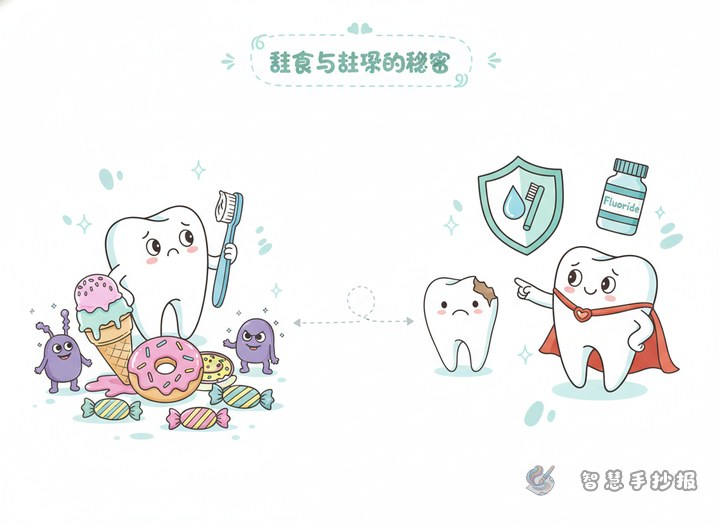
- Limit sticky sweets: soft candy and cake cling between teeth, so rinse after eating them.
- Chew your food: apples, corn and vegetables give the gums healthy exercise.
- See the dentist regularly: checking new teeth early is easier than waiting for pain.
Layout: Four Panels and One Timeline
A simple plan is to divide the page into four blocks.
- Title area across the top, with a large heading such as "A Guide to the Tooth-Changing Years" and a small tooth or toothbrush drawing beside it.
- Timeline panel on the left, with a curved line linking the ages 6, 8 and 12.
- Knowledge panel in the middle, listing what to do about a loose tooth in short bullet points.
- Habits panel at the bottom right, with small boxes to tick for things to do every day.
Colour and Decoration
Use light blue, light green or cream for the background and dark ink for the text so it stays readable. Small drawings of a toothbrush, a rinsing cup, a smiling tooth or a sun work well as accents, but leave room for writing. Drawing faint pencil lines before writing keeps the text evenly spaced and makes the whole page look neater.
Sentences You Can Copy for the Opening and Ending
If starting feels hard, these two lines are a good base.
- Opening: Everyone has two sets of teeth. The first set grows up with us, and the second set stays with us for life.
- Ending: Losing teeth is a sign of growing up. Brush well, eat well, and let the new teeth line up neatly.
Short slogans fit nicely in the empty corners too, such as "Healthy teeth, happy me," "Two minutes a day keeps the dentist away" and "Never wiggle a loose tooth." For a more polished finish, open the Smart Handwritten Newspaper mini program in WeChat to pick a template, change the colour scheme and lay the finished text onto the page.