Start With the Shadow: Two Layers, Three Kinds of Eclipse
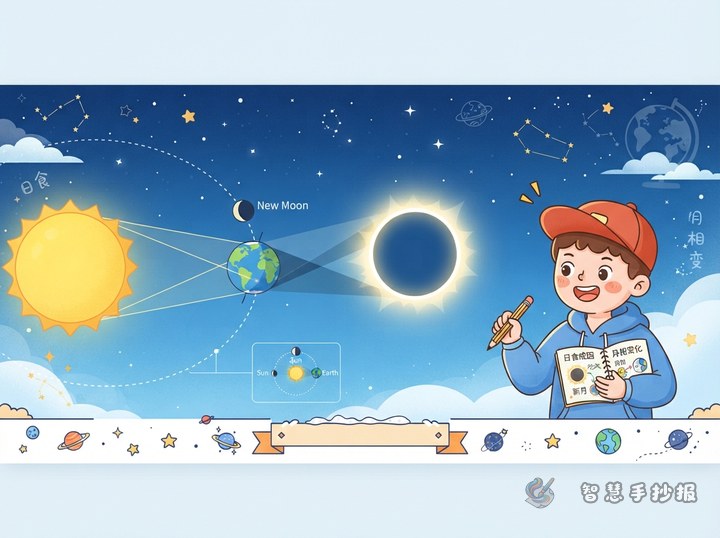
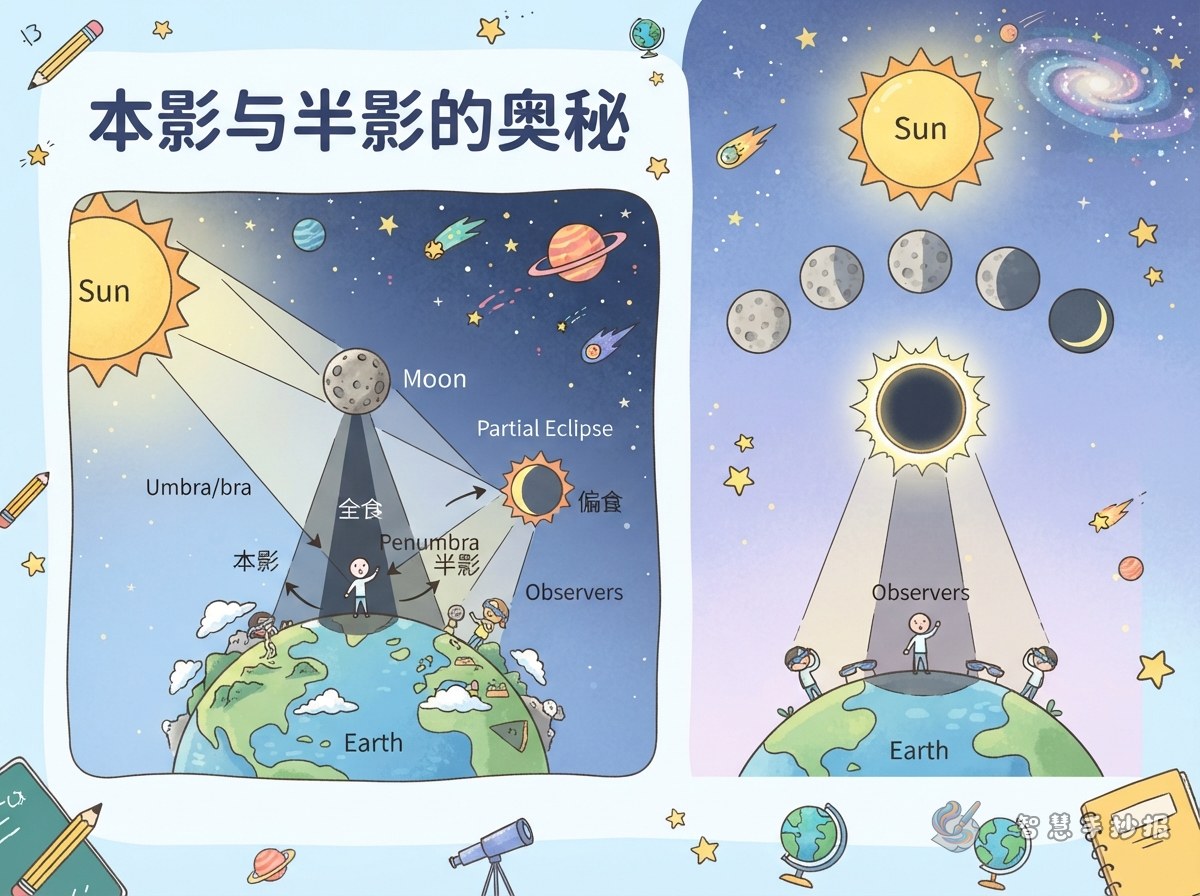
When the Sun, the Moon and Earth line up, the Moon casts a long cone-shaped shadow. The darkest inner part is called the umbra. People inside the umbra see the Sun completely covered, and that is a total solar eclipse. Around it lies the lighter shadow called the penumbra, where people see only part of the Sun hidden, which is a partial solar eclipse.
If the Moon is farther from Earth, the tip of the umbra never reaches the ground, so only the penumbra lands on Earth. Then the middle of the Sun is blocked while a bright ring remains, and we call it an annular eclipse. That is why people in different places see different eclipses on the same day.
Drawing the Main Picture Step by Step
The shadow diagram in the middle of your poster does more work than three paragraphs of text. Follow this order:
- Draw a big Sun on the left and add short lines going outward to show sunlight.
- Draw the Moon in the middle with a grey cone of shadow pointing to the right.
- Colour the narrow centre of the cone dark grey and label it "umbra".
- Shade the wider outer part light grey and label it "penumbra".
- Draw a curved strip for Earth's surface. Place a small figure where the umbra lands and label it "total eclipse".
- Place another figure in the penumbra and label it "partial eclipse".
- To include an annular eclipse, move the Moon slightly so the cone tip stops in mid-air, then label the landing spot "annular eclipse".
Keep the Sun, Moon and Earth on one straight line so the shadow does not run off the page.
A Three-Column Layout That Fits Everything
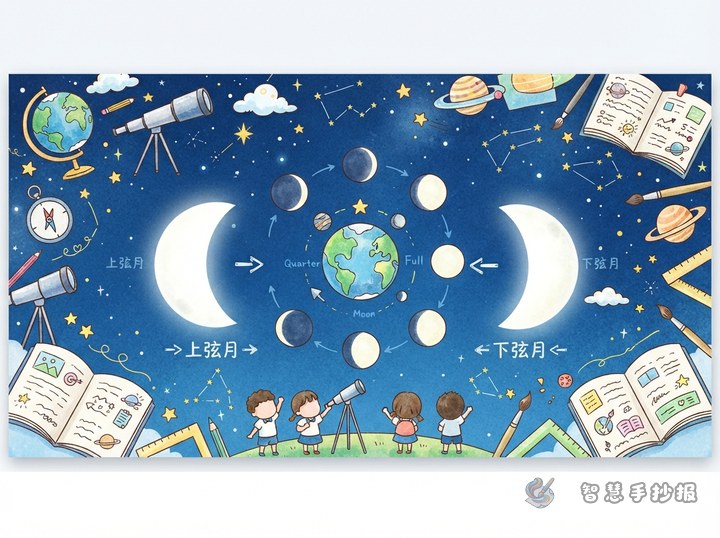
Use landscape paper with a full-width title strip across the top, decorated with two crescent moons, then split the rest into three columns.
Left column: concept cards
Make two or three small boxes for "umbra", "penumbra" and "annular eclipse". One sentence each keeps it readable.
Centre column: the big shadow cone
Give the diagram plenty of space. Use short arrows instead of long labels so you save room.
Right column: observation log and safety
Draw a simple table with date, place and what you saw, then add three safety lines underneath.
Sentences You Can Copy Straight Onto the Poster
- The Moon's shadow has two layers, and each layer shows you a different Sun.
- Stand in the umbra for a total eclipse, in the penumbra for a partial one.
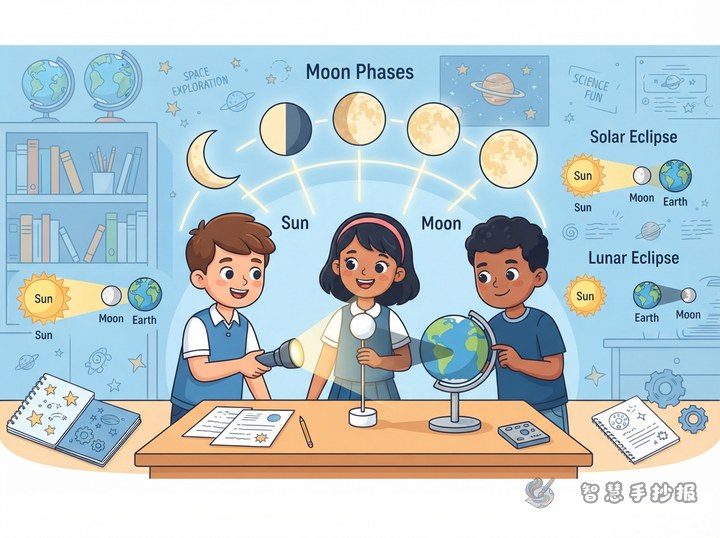
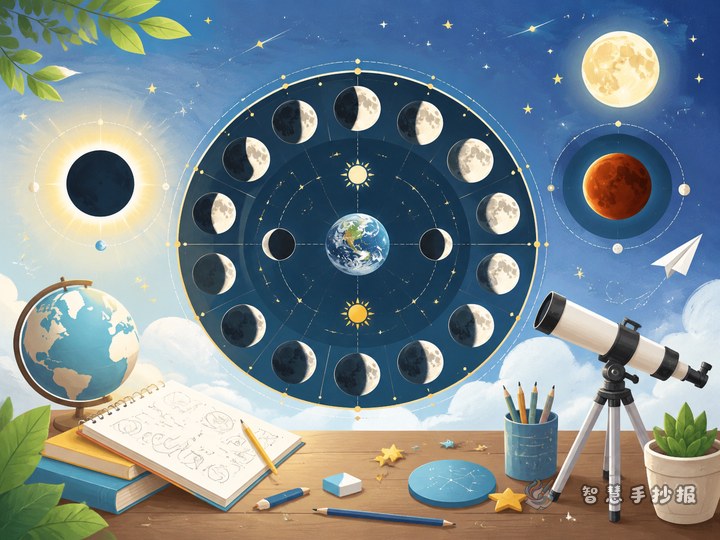
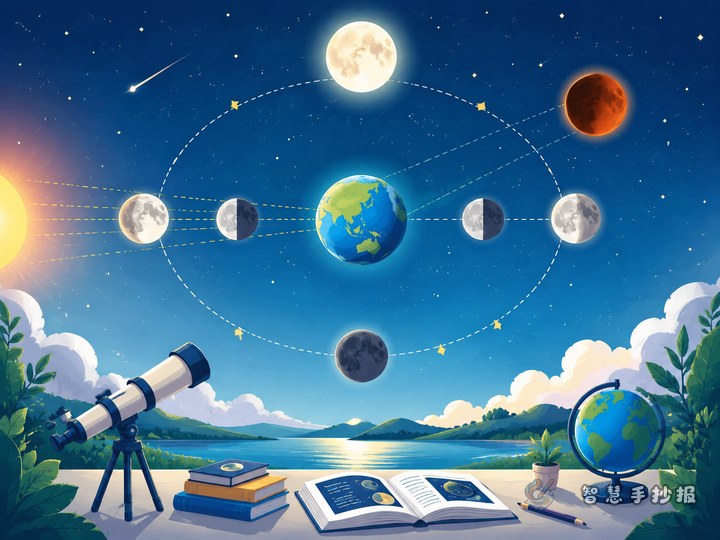
- Solar eclipses come with a new Moon by day, lunar eclipses with a full Moon by night.
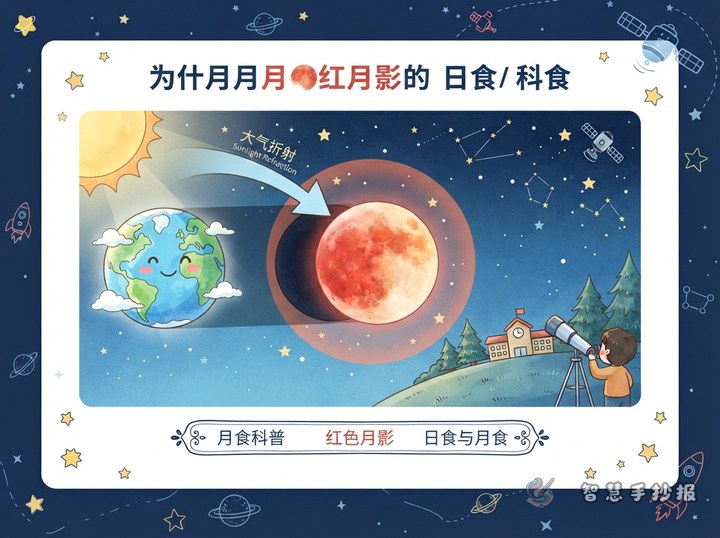
- A solar eclipse happens when the Moon blocks the Sun; a lunar eclipse happens when Earth's shadow covers the Moon.
Add a Safety Box
Never look straight at the Sun during a solar eclipse. Ordinary sunglasses, exposed film and tinted glass are not enough; use certified eclipse glasses or a pinhole projector that throws the Sun's image onto paper. A lunar eclipse is gentle enough to watch with your own eyes, but go outside with an adult at night. Three short lines in the bottom corner make your poster both scientific and responsible.
Finishing Faster
Sketch the shadow cone on scrap paper first, then copy it onto your final sheet once you know where everything fits. The WeChat mini program "智慧手抄报" offers layout ideas for moon phase and eclipse themes, so you can pick a format, drop these sentences in and finish the colouring in one sitting.