Start with a Question Children Really Ask
This handwritten newspaper can focus on the question: “If the Moon is full so often, why don’t we see a lunar eclipse every month?” It helps children connect moon phases with the positions of the Sun, Earth, and Moon.
A good title could be “Why Doesn’t Every Full Moon Become a Lunar Eclipse?” It is clear, interesting, and suitable for a science-themed school project.
Key Facts to Put on the Page
Moon phases change as the Moon moves
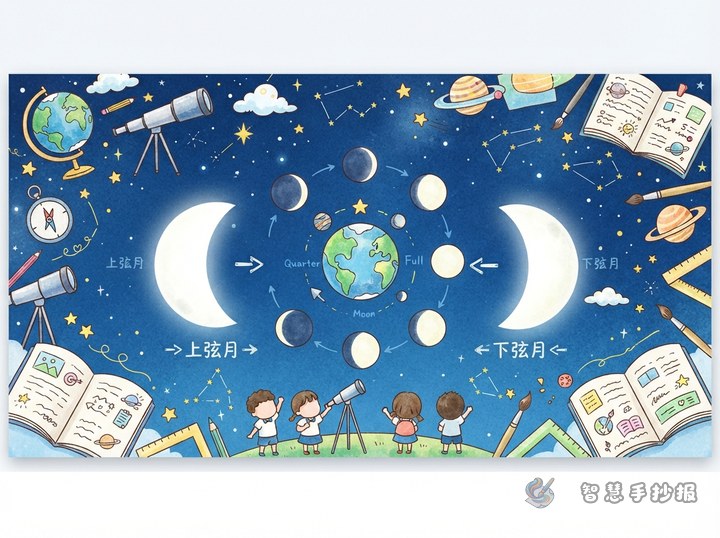
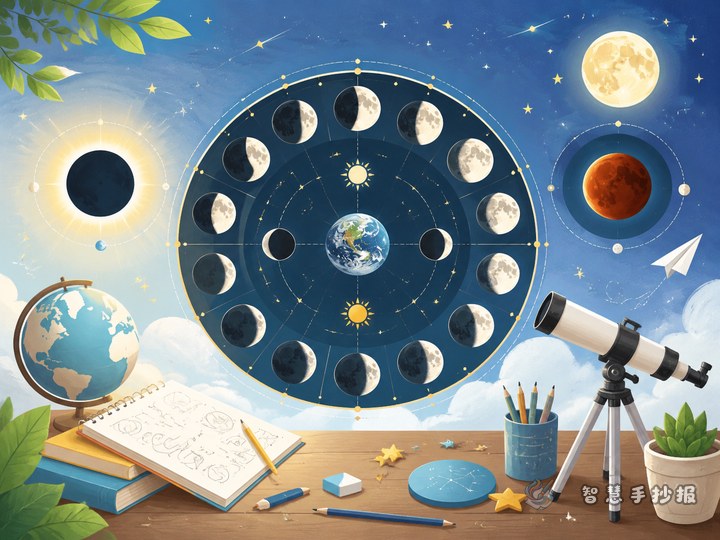
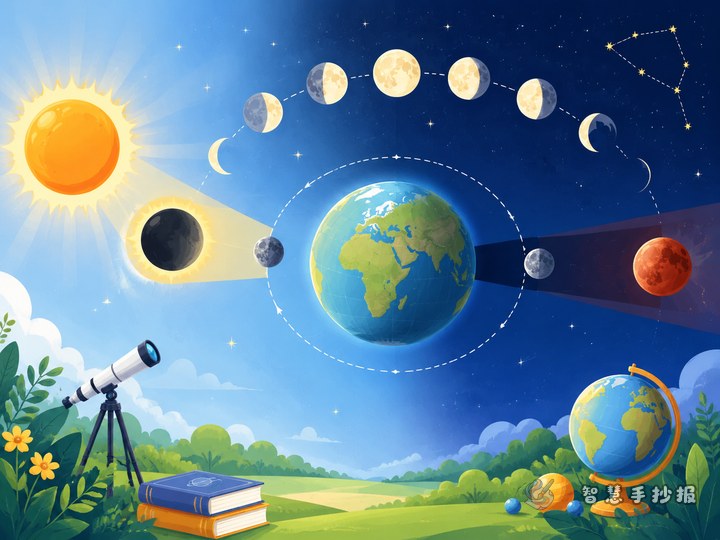
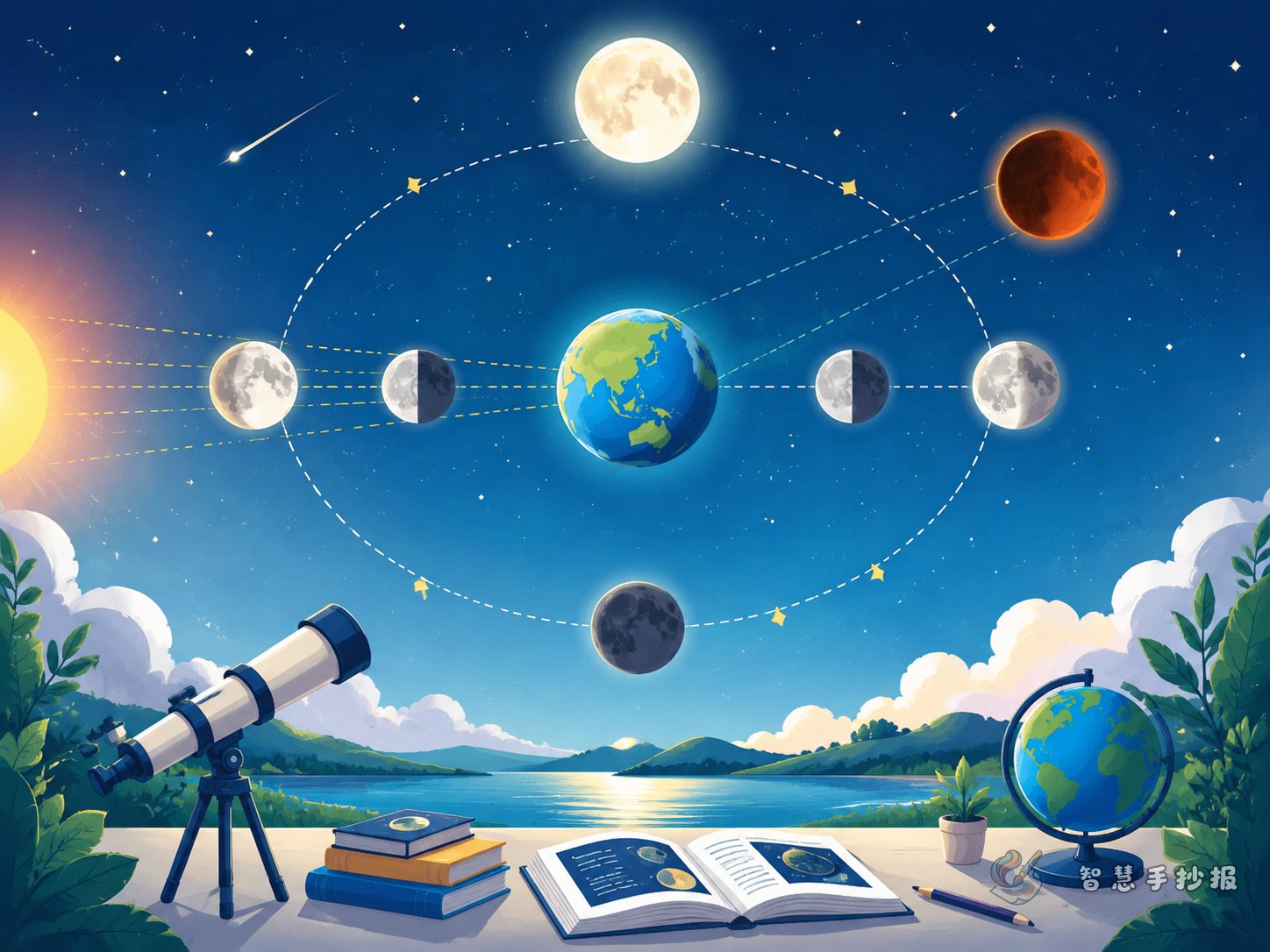
The Moon does not make its own light. We see the part of the Moon lit by the Sun. As the Moon travels around Earth, the bright part we see changes, creating phases such as new moon, first quarter, full moon, and last quarter.
A lunar eclipse needs more than a full moon
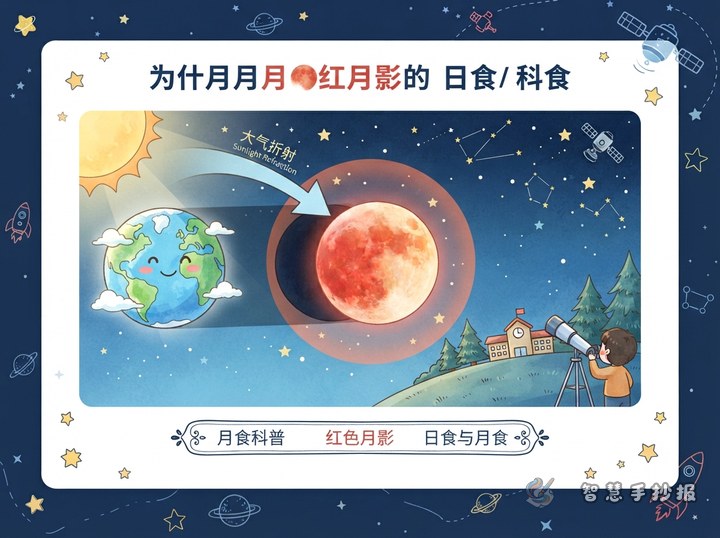
A lunar eclipse happens when Earth is between the Sun and the Moon, and Earth’s shadow falls on the Moon. It can only happen near a full moon, but the three bodies must also line up very closely.
Remember the difference between eclipses
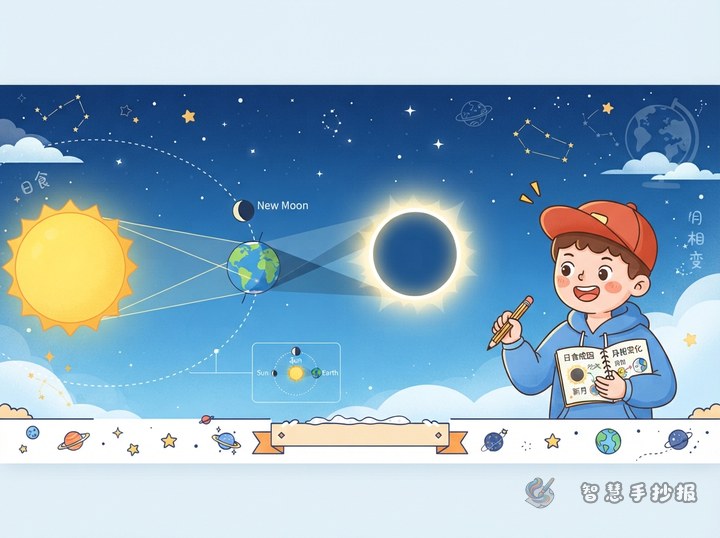
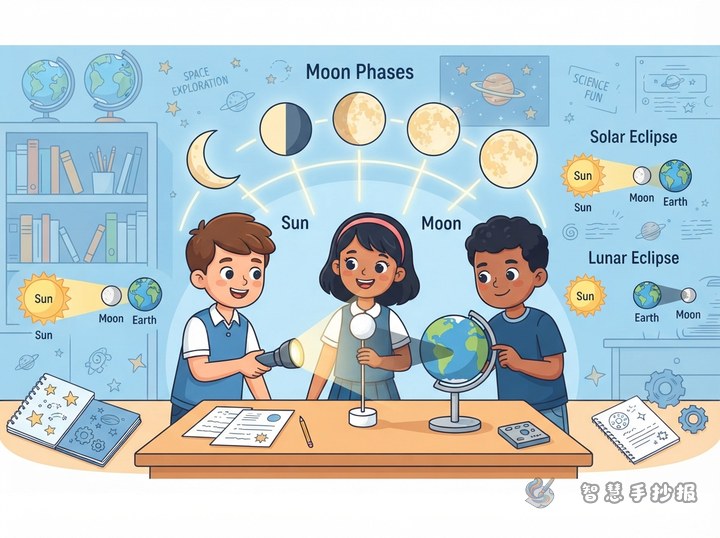
In a solar eclipse, the Moon blocks sunlight from reaching part of Earth. In a lunar eclipse, Earth’s shadow falls on the Moon. A simple memory line is: solar eclipse: the Sun is blocked; lunar eclipse: the Moon enters a shadow.
Column Ideas for a Clear Handwritten Newspaper
- Question Corner: Explain why not every full moon has a lunar eclipse.
- Moon Phase Strip: Draw simple circles showing the main moon phases in order.
- Shadow Lab: Use three circles to show the Sun, Earth, and Moon during a lunar eclipse.
- Common Mistake Card: Write that the Moon is not turning off; it is passing through Earth’s shadow.
- Safe Sky Watching: Remind readers that solar eclipses require proper eye protection.
Short Text Materials to Copy
Moon phases: The Moon looks different because we see different amounts of its sunlit half from Earth. This repeated change is called the cycle of moon phases.
Lunar eclipse: When Earth moves between the Sun and the Moon, Earth’s shadow may cover the Moon. This is why a lunar eclipse can happen only near a full moon, but not at every full moon.
Science summary: Moon phases show the changing shape of the lit Moon, while eclipses show how shadows and positions in space work together.
Layout Tips: Make Circles the Main Visual Element
Place a large Moon in the center and arrange small knowledge boxes around it. Put a moon phase chart on the left, an eclipse comparison card on the right, and safety tips at the bottom.
Use dark blue, pale yellow, silver gray, and white to create a night-sky feeling. Stars, orbit lines, telescopes, and small rockets can be used as decorations, but keep enough blank space for readable text.
Continue Making It in the Mini Program
After choosing the title and columns, students and parents can open the 智慧手抄报 WeChat mini program to organize the layout, refine the text, and turn the moon phase and eclipse ideas into a complete handwritten newspaper.