Choose One Clear Angle First
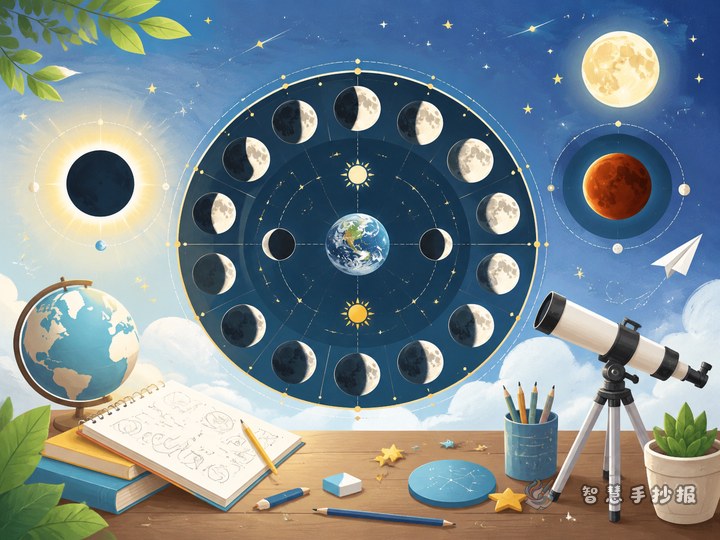
A good handwritten newspaper on this topic works best when it focuses on one easy question: Why does the moon change shape, and how do solar and lunar eclipses happen? This angle is easier for children to explain and organize. In the center of the page, students can draw the Sun, Earth, and Moon, then divide the rest into small sections such as moon phases, solar eclipse, lunar eclipse, and observation tips.
Core Facts Students Can Use
Why the Moon Seems to Change Shape
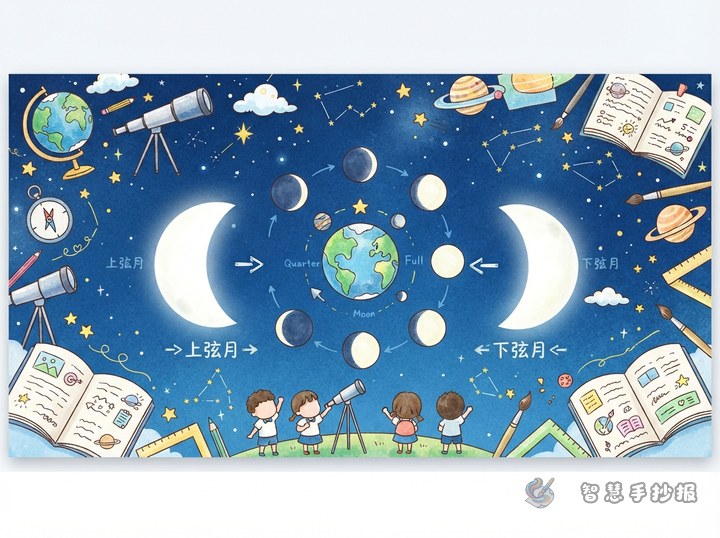
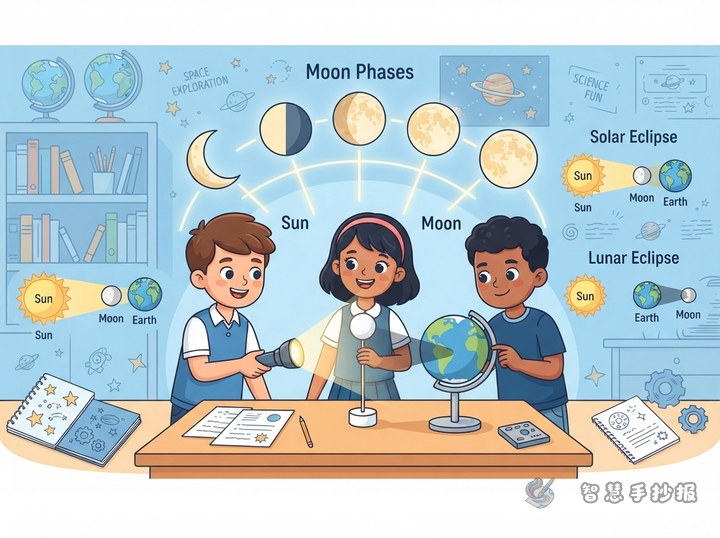
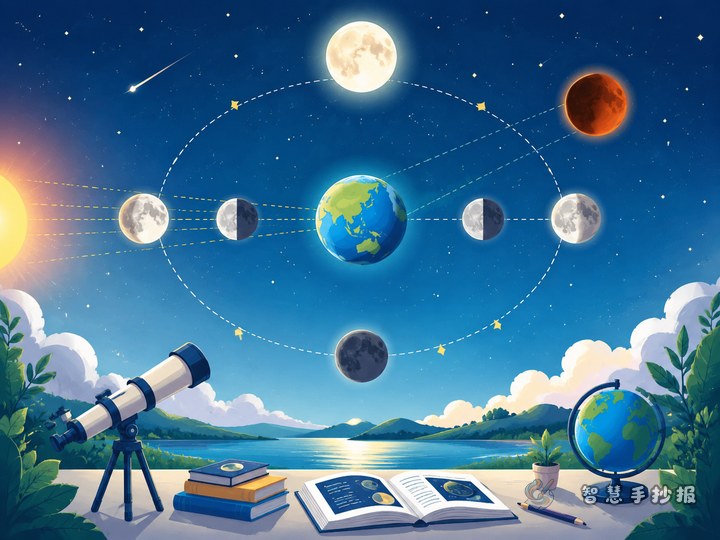
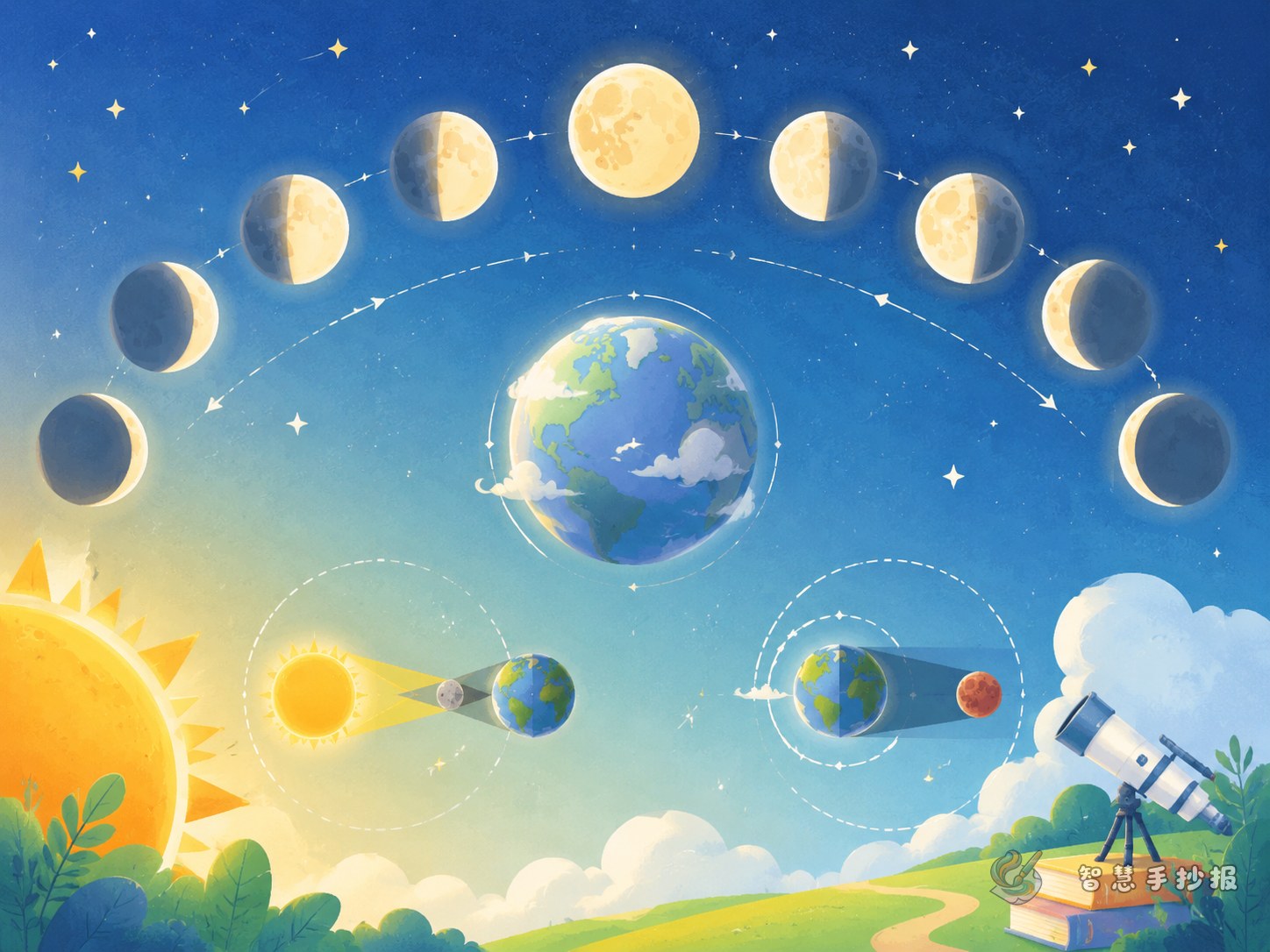
The moon does not make its own light. What we see is sunlight reflected from its surface. As the Moon moves around the Earth, the lit part we can see changes, so the moon appears to grow and shrink. Common phases include new moon, crescent moon, first quarter, waxing gibbous, full moon, waning gibbous, last quarter, and waning crescent.
How a Solar Eclipse Happens
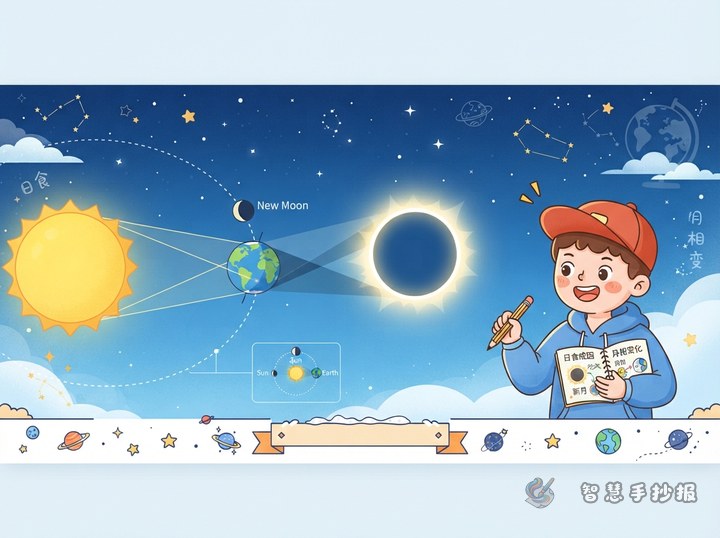
A solar eclipse happens when the Moon moves between the Sun and the Earth. If they line up closely, the Moon blocks part or all of the Sun’s light. Students can list three types: total solar eclipse, partial solar eclipse, and annular solar eclipse.
How a Lunar Eclipse Happens
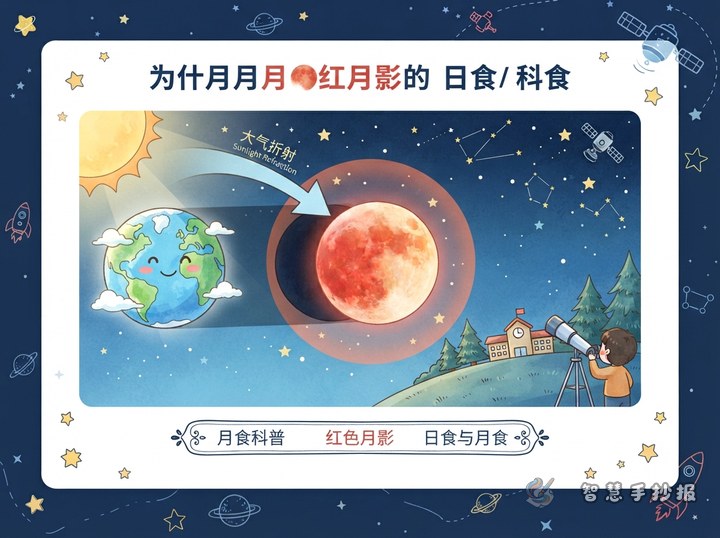
A lunar eclipse happens when the Earth moves between the Sun and the Moon, and the Earth’s shadow falls on the Moon. Common types include total lunar eclipse, partial lunar eclipse, and penumbral lunar eclipse. Lunar eclipses are usually safer and easier for people to observe than solar eclipses.
A Page Layout That Looks Neat
To make the page clear and attractive, try a center-picture layout. Put the Sun-Earth-Moon relationship in the middle. Then use the four corners for moon phases, solar eclipse facts, lunar eclipse facts, and safety reminders. Dark blue, purple, silver, and yellow can create a space theme. Small stars, orbit lines, and moon icons can make the page more lively.
- Main title: Why Does the Moon Change Shape?
- Section 1: Common Moon Phases
- Section 2: How a Solar Eclipse Forms
- Section 3: How a Lunar Eclipse Forms
- Section 4: Safe Observation Tips
Short Text Materials for Children
These simple lines work well in a handwritten newspaper:
- The moon does not change shape by itself; the bright part we see changes.
- The Moon moves around the Earth in a regular pattern.
- A solar eclipse happens when the Moon blocks sunlight.
- A lunar eclipse happens when the Earth’s shadow covers the Moon.
- Observing the sky helps us learn how the universe works.
Students can also add a small “What I Learned” box to summarize that moon phases, solar eclipses, and lunar eclipses all depend on the positions of the Sun, Earth, and Moon.
Easy Ways to Improve the Final Work
- Sketch the page lightly in pencil before adding color.
- Keep the diagrams simple and label the direction of light or movement.
- Use short paragraphs so the page stays easy to read.
- Choose a space-themed color set, such as blue, black, and yellow.
- Add small decorative icons like stars, moons, or a telescope.
If students want to keep improving the layout and turn ideas into a complete page, they can continue organizing their work in the Zhihui Shouchaobao WeChat mini program.