Turn the Topic into a Moon Calendar
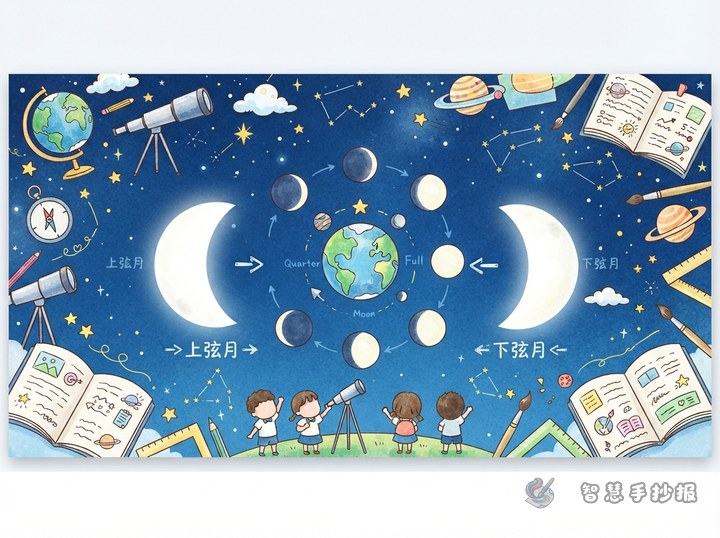
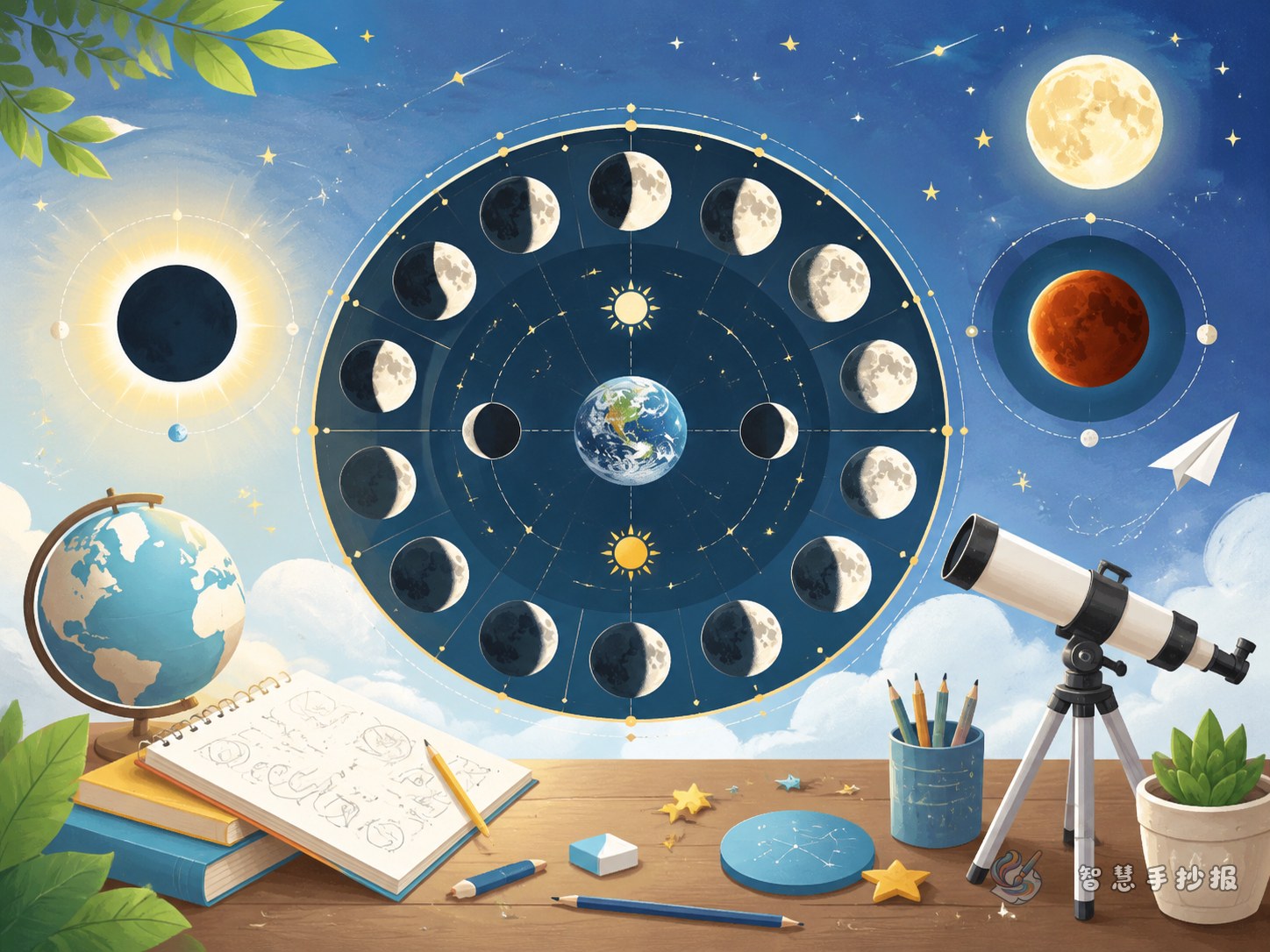
This poster does not need to be filled with long paragraphs. A strong idea is to design it as “how the Moon changes during one month.” Place a moon phase calendar in the center, starting with the new moon, then crescent, first quarter, gibbous moon, full moon, waning gibbous, last quarter, and crescent again. Add one short note beside each small Moon so readers can quickly see the pattern.
Good poster titles include “Eclipse Clues in a Moon Calendar” or “Follow the Moon to Learn About Eclipses.” They sound natural and fit a student science poster.
Simple Facts to Write on the Poster
Keep the information short and visual. Three small sections are enough for most school posters:
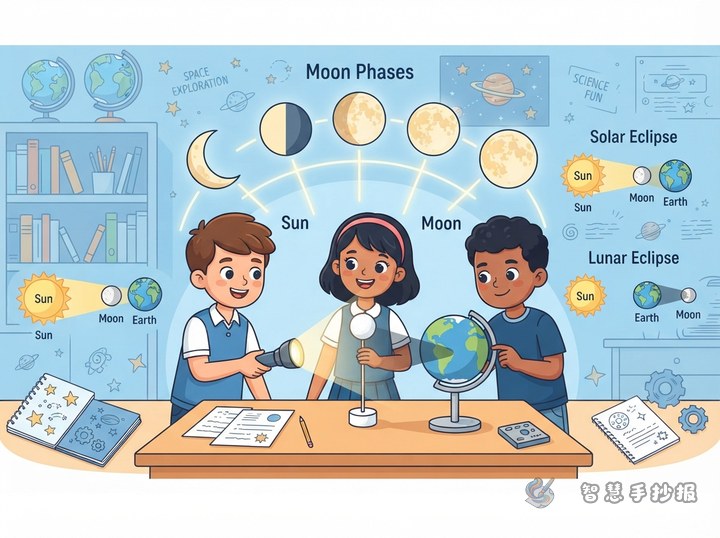
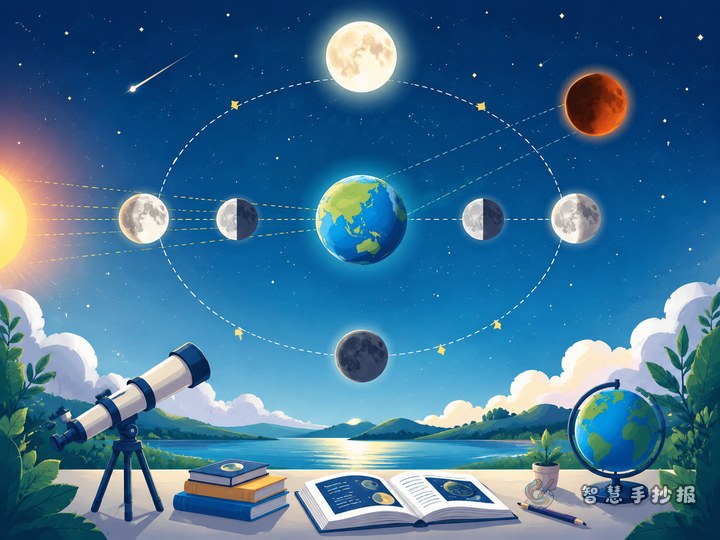
- Why the Moon changes shape: The Moon does not make its own light. We see the part lit by the Sun. As the Moon moves around Earth, the lit part we see changes.
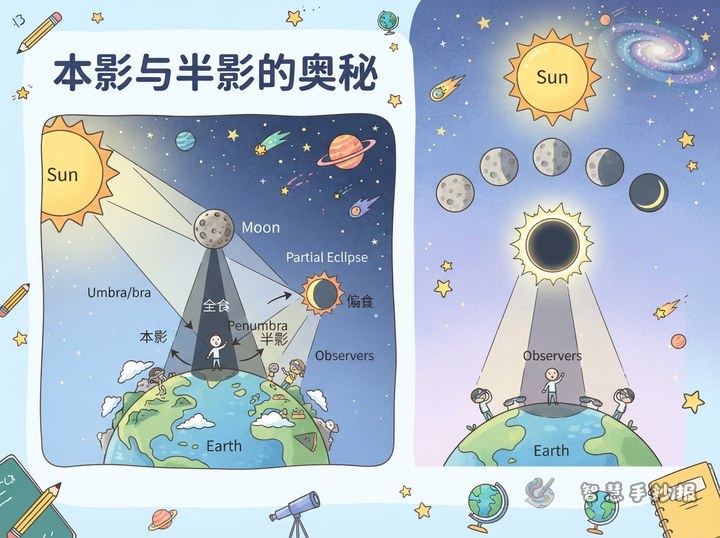
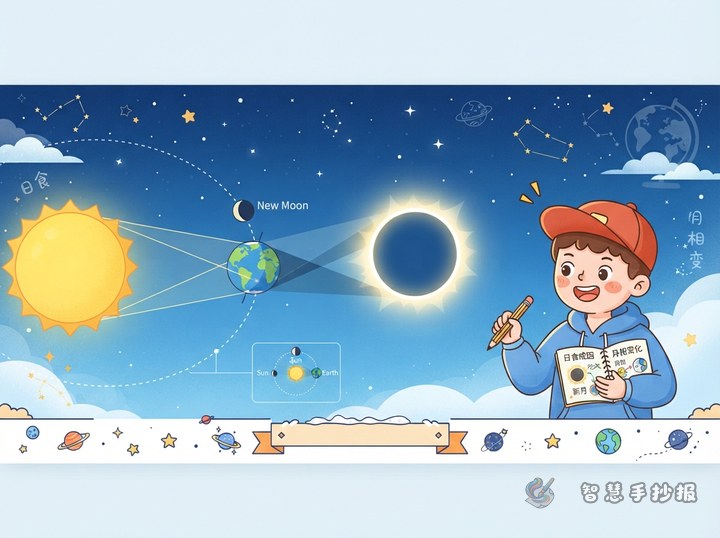
- Solar eclipses and the new moon: During a new moon, the Moon is between the Sun and Earth. If they line up very closely, the Moon may block the Sun and create a solar eclipse.
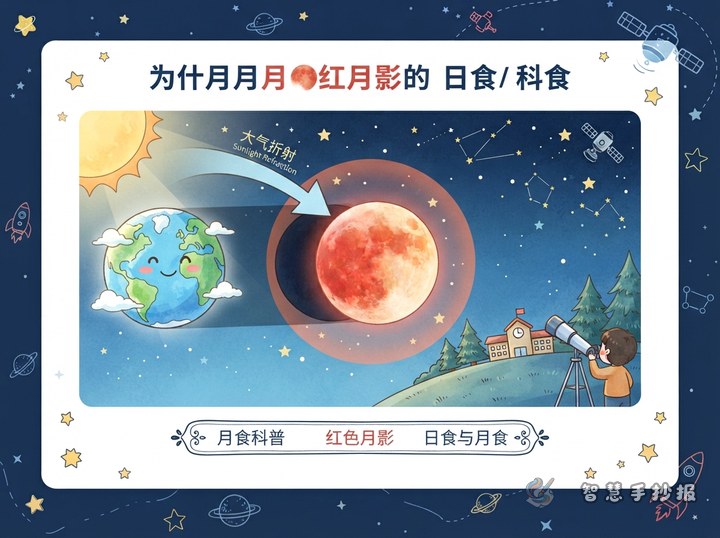
- Lunar eclipses and the full moon: During a full moon, Earth is between the Sun and the Moon. If the Moon passes into Earth’s shadow, a lunar eclipse can happen.
Show What a Moon Calendar Can and Cannot Tell
A clear comparison box can make the poster more helpful. On one side write “What a moon calendar can tell us,” and on the other side write “What it cannot prove by itself.”
- It can show: Solar eclipses are linked with the new moon, lunar eclipses are linked with the full moon, and the Moon follows a repeating cycle.
- It cannot prove alone: A new moon or full moon does not guarantee an eclipse. The Sun, Earth, and Moon must also be aligned in the right way.
- It can guide observation: If there is an eclipse forecast, students can mark the special date on the moon phase calendar.
Short Sentences for Copying
Use brief science notes around the drawings to make the poster lively and easy to read:
- At new moon, the bright side of the Moon mostly faces away from Earth.
- The first quarter Moon looks like half of a round disk.
- At full moon, the Moon appears brightest and roundest.
- A solar eclipse does not mean the Sun disappears; the Moon blocks its light for a short time.
- A lunar eclipse happens when the Moon moves into Earth’s shadow.
- Never look directly at the Sun when observing a solar eclipse.
Layout Ideas for a Neat Science Poster
Try a “center picture with four corner sections” layout. Put the moon phase calendar in the middle. Use the corners for “Moon Phase Words,” “New Moon and Solar Eclipse,” “Full Moon and Lunar Eclipse,” and “Safe Observation Tips.” Deep blue, pale yellow, and silver gray make a clean space theme. Stars, orbit lines, and a small telescope can be used as decorations.
To finish the poster more efficiently, plan the title, main diagram, section boxes, and amount of text first. Then you can continue in the Zhihui Shouchaobao WeChat mini program to choose a layout, organize materials, and create a clearer moon phases and eclipses science poster.