Start with the Moon Phase Sequence
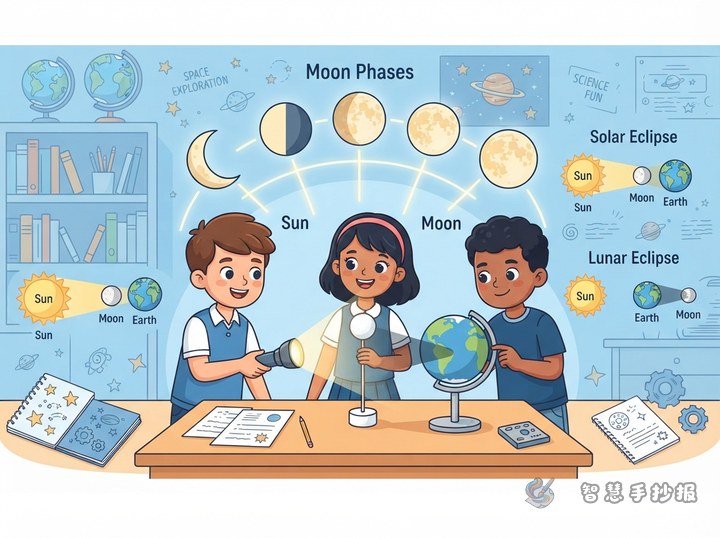
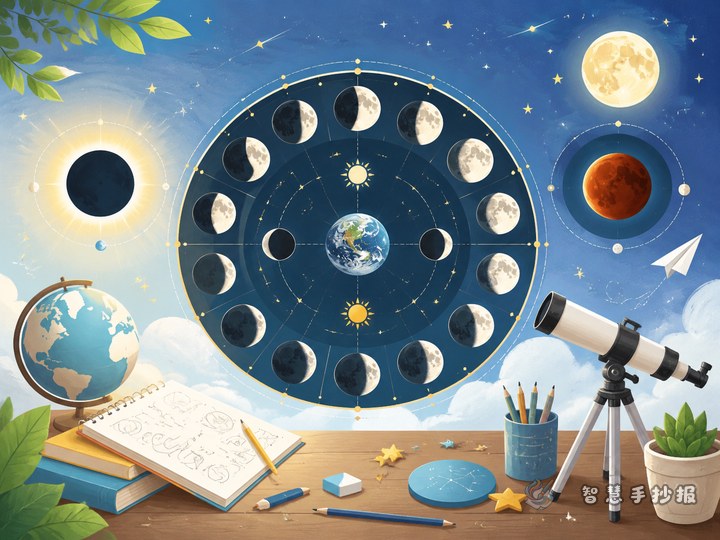
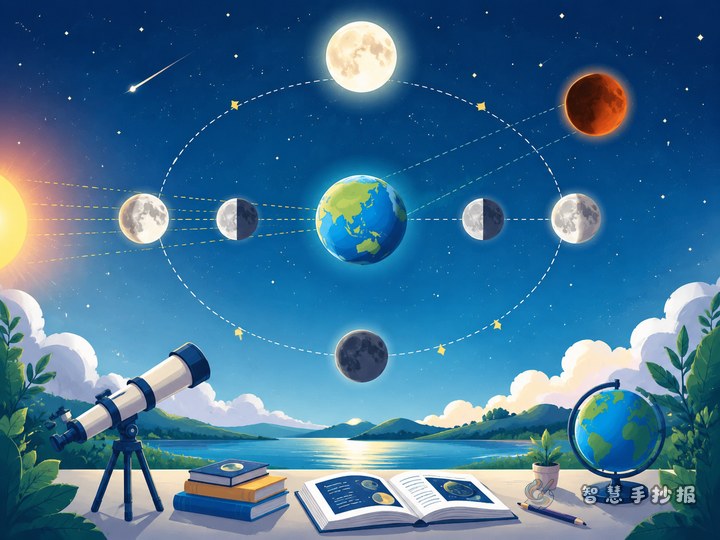
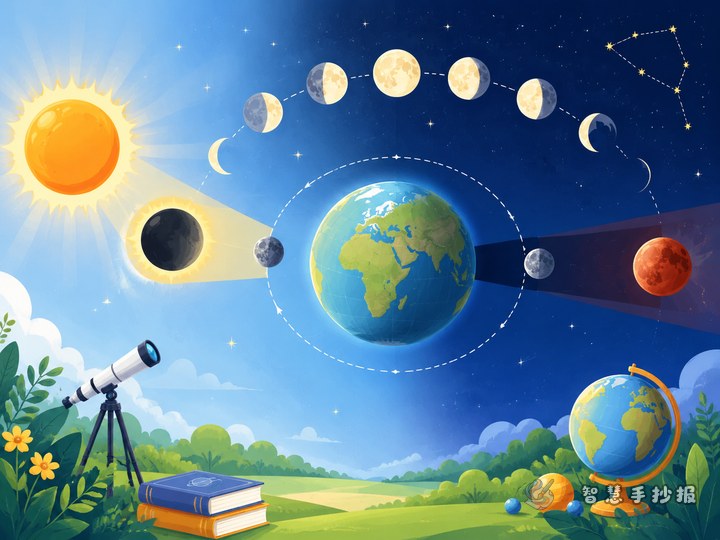
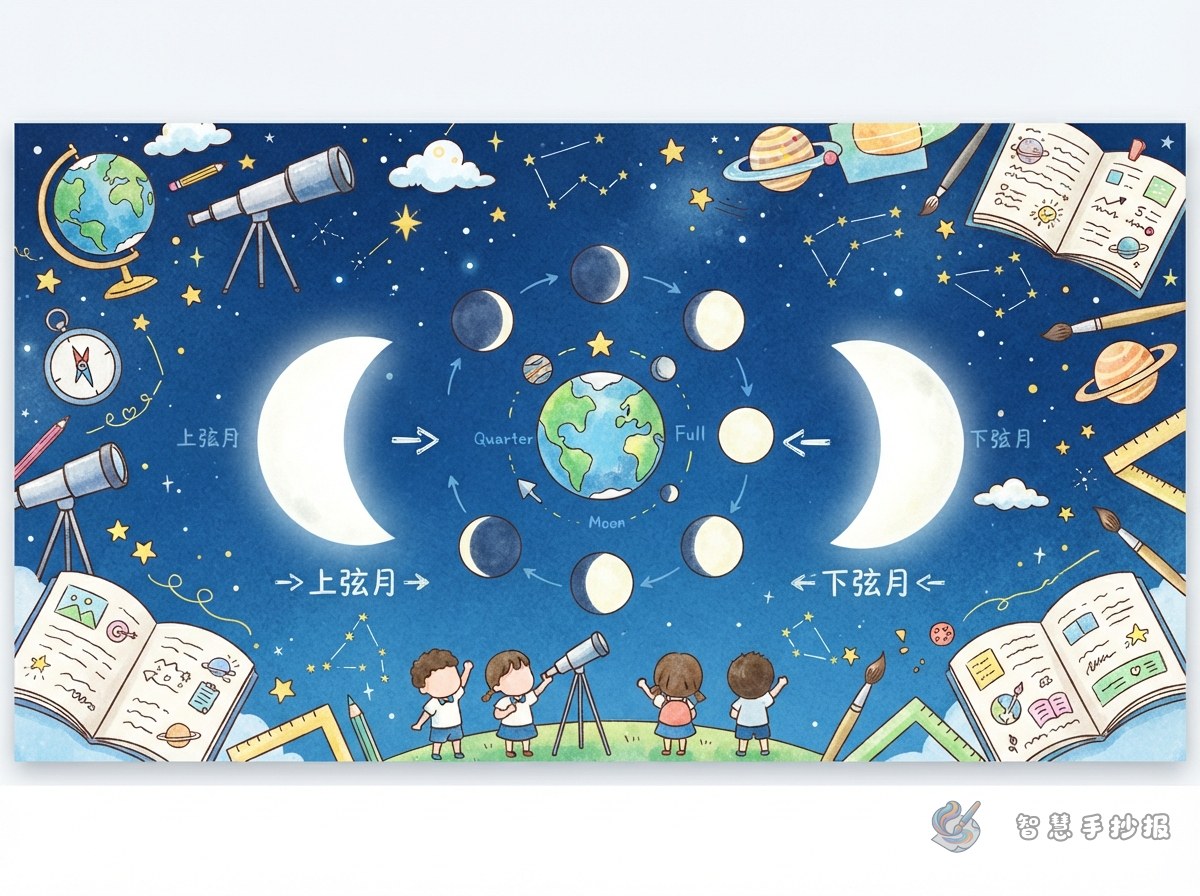
Before drawing a poster, place first quarter and last quarter in the full moon phase cycle: new moon, waxing crescent, first quarter, waxing gibbous, full moon, waning gibbous, last quarter, waning crescent. First quarter comes before full moon, when the Moon is growing. Last quarter comes after full moon, when the Moon is shrinking.
A Three-Part Comparison Box: Time, Direction, Lit Side
Use one large section of the poster for a comparison table:
- First quarter moon: around the 7th or 8th day of the lunar month; early evening in the western sky; right side lit, like the right half of a circle.
- Last quarter moon: around the 22nd or 23rd day; after midnight to early morning in the eastern sky; left side lit, like the left half of a circle.
Draw a small observer on the ground and use arrows to show east and west. This helps viewers connect the Moon's position with the time of night.
Add Simple Memory Lines
Short rhymes make the poster easier to remember. You can write:
- First quarter: evening in the west, right side bright.
- Last quarter: after midnight in the east, left side bright.
Keep a note that rhymes are only for memory. Real observation still needs dates and lunar calendar notes.
Make a Moon Diary Column
Save a corner for a small observation chart. Each box can include date, lunar date, observation time, moon shape, and which side is lit.
- New moon: not visible or a very thin crescent.
- First quarter: right half lit.
- Full moon: full circle.
- Last quarter: left half lit.
If clouds block the view, write “cloudy, not observed” instead of leaving it blank. Honest records make the poster stronger.
Layout Ideas That Keep Everything Clear
Divide the poster into three zones:
- Top title zone: write “Moon Phases: First Quarter and Last Quarter” and draw stars and moons on both sides.
- Middle sequence zone: draw eight moon phases in a row or a circle, with lunar dates below.
- Bottom comparison zone: put the first quarter and last quarter table on the left and the moon diary or memory lines on the right.
Use deep blue for the night sky, light blue for clouds, and yellow or white for the Moon. Leave some blank space so the text does not look crowded. For more moon phase templates and layout styles, you can continue in the 智慧手抄报 WeChat mini program.