Turn the Academy into a Campus That Tells a Story
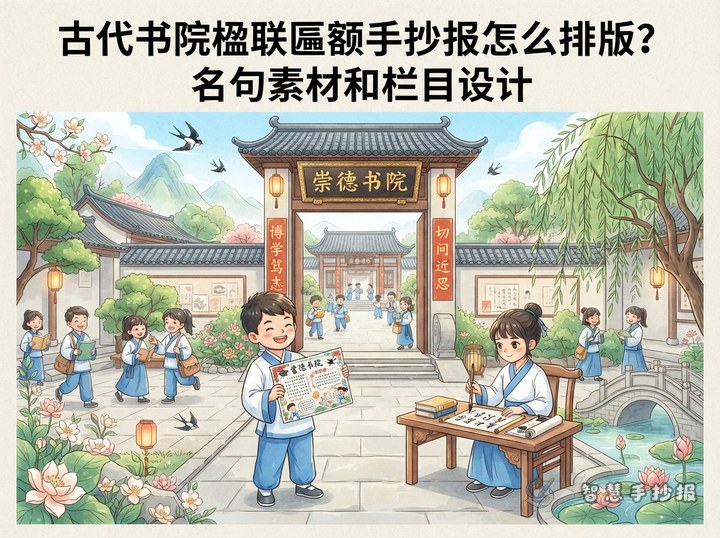
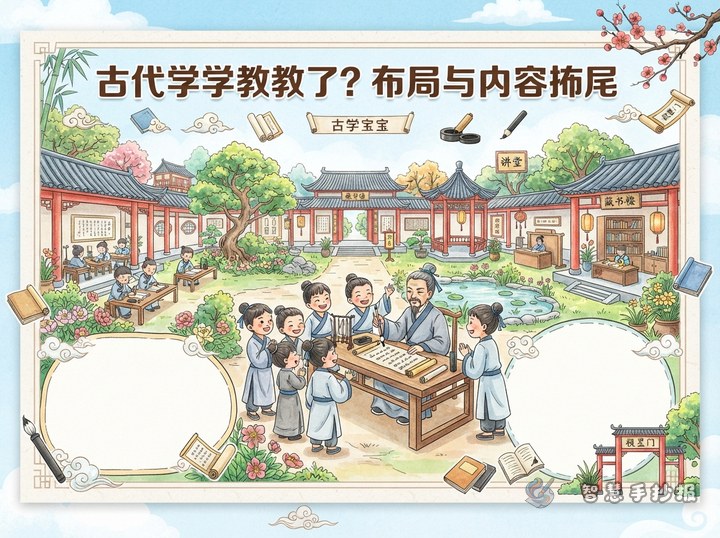
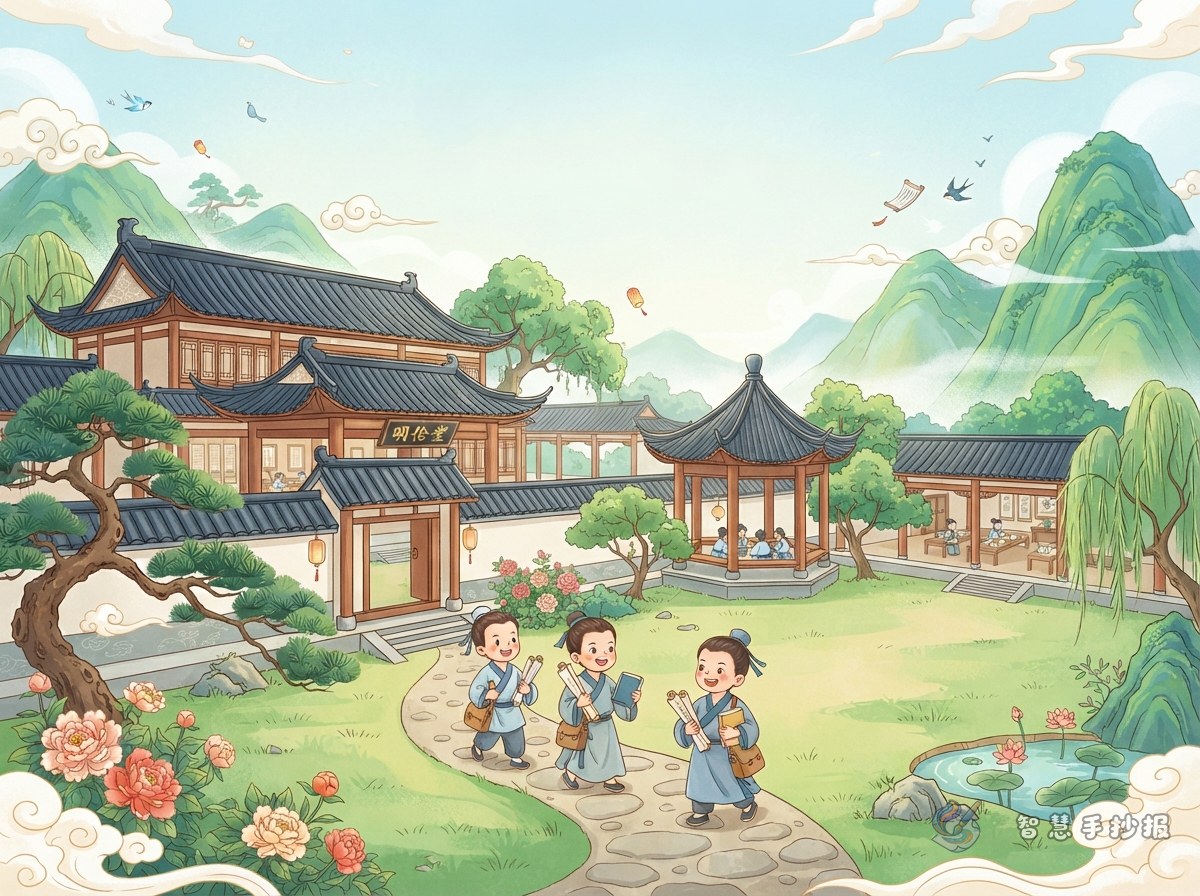
Instead of filling the poster with dates and names, begin with four spaces commonly associated with a traditional Chinese academy: the lecture hall, book collection, student quarters, and courtyard. Each space can introduce a different part of scholarly life, from attending lessons to reading quietly and developing good character.
Academies differed in size and layout, so the drawing does not need to copy one particular historical site. A simple imagined plan works well: place the lecture hall in the center, add the book room and student quarters on the sides, and surround them with steps, trees, a gate, and distant hills.
What to Write Beside Each Building
The Lecture Hall
This was an important place for teaching and discussion. Students listened to lessons, raised questions, and exchanged ideas. The scene can represent both respect for teachers and the courage to think carefully.
The Book Collection
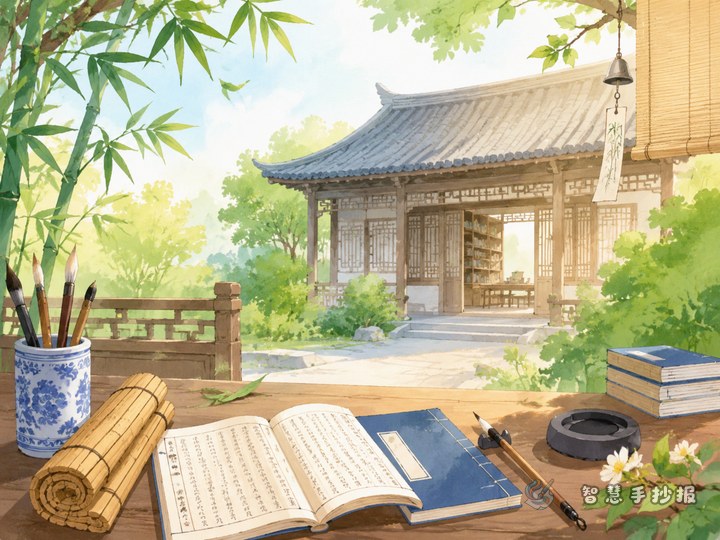
Books supported study and helped preserve knowledge. A short paragraph can explain that collecting, organizing, and reading texts allowed learning to be passed from one generation to another.
The Student Quarters
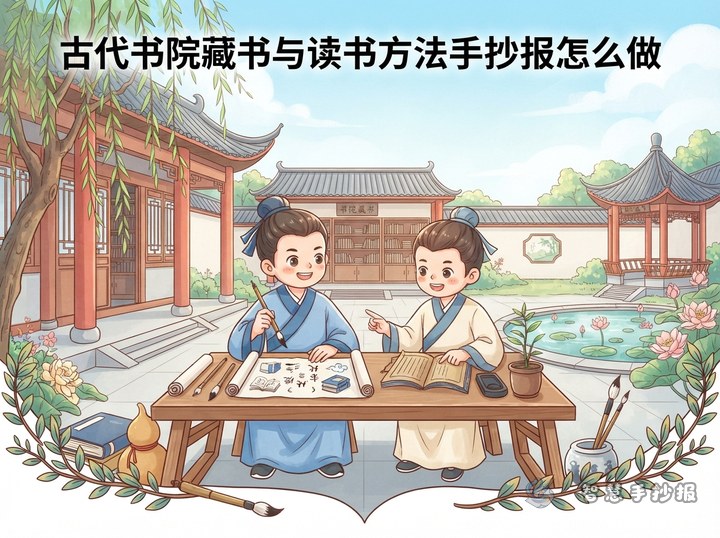
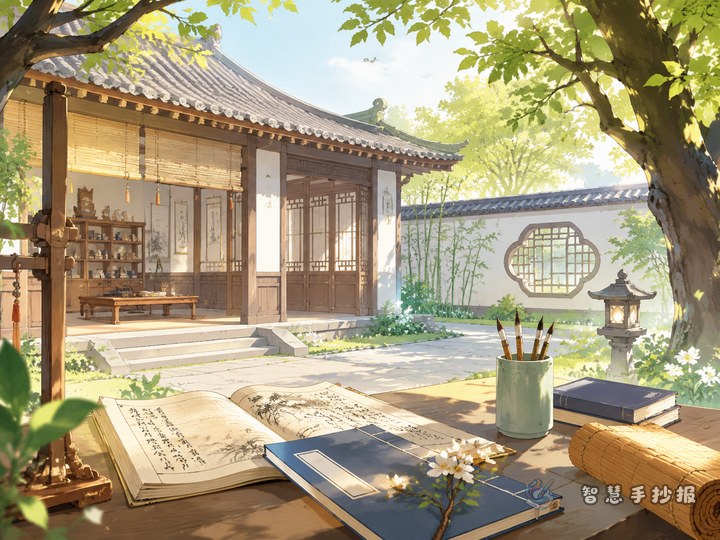
These spaces can be used to represent daily study and rest. A desk by a window, an open book, and neatly arranged writing tools create a clear picture of a student working with patience and discipline.
The Courtyard
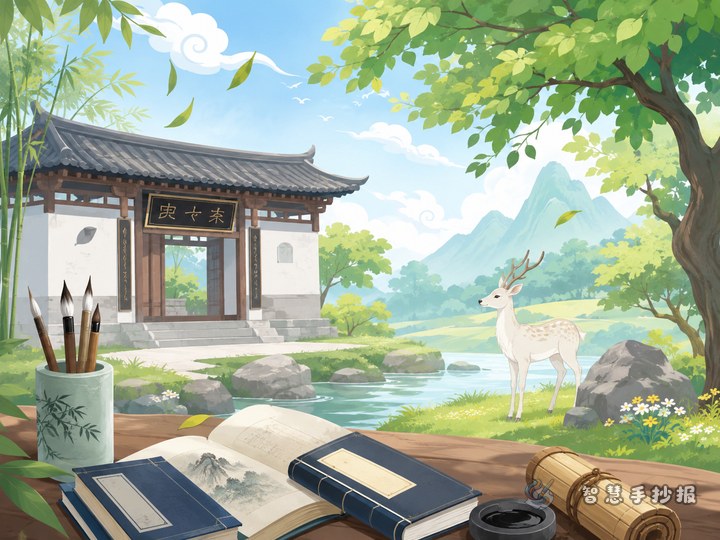
Trees, water, stones, and distant mountains can suggest a calm setting for reflection. This section can connect a peaceful environment with concentration, self-discipline, and personal growth.
Guide the Reader Along a Visiting Route
- Begin at the gate: Add an opening line such as “Step inside an ancient academy and discover the wisdom hidden in its buildings.”
- Continue to the lecture hall: Create a section about teachers, students, questions, and discussion.
- Pass the book room: Add a “Passing on Knowledge” card framed with book spines or scroll shapes.
- Finish at the quarters and courtyard: Use two small sections about diligent study and quiet reflection.
Connect the sections with a stone path, small footprints, or light arrows. This makes the reading order easy to follow and gives the poster a stronger sense of movement.
Build the Page Like a Courtyard
On a landscape sheet, place a gate-shaped title area at the top and make the lecture hall the central visual focus. Arrange three smaller text blocks on both sides, then reserve the lower courtyard for a concluding thought.
- Use warm cream, soft green, and light brown for a bright but traditional look.
- Make the title bold, but keep the body text simple and easy to read.
- Let drawings take up about one third of the page and leave enough room for short paragraphs.
- Use rooflines, lattice windows, books, and scrolls as accents rather than dense decoration.
Connect the Old Academy with Learning Today
A suitable closing message is: “Academy buildings preserve more than an old architectural style. They also remind us to respect teachers, value books, ask thoughtful questions, and improve ourselves through study.” This brings the architecture theme back to the student's own experience.
Once the sections are planned, open the 智慧手抄报 WeChat mini program to continue choosing a layout, organizing the text, and refining the courtyard-style composition.