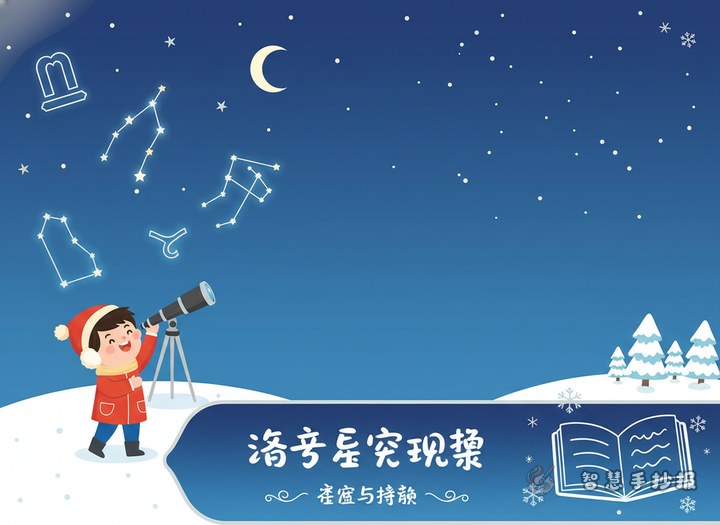

Build the page around one observing question
Give the page a simple storyline: “How did I find one object in the sky?” Choose a clear night and note the date, time, weather, and direction you faced. Then describe the brightest point or the Moon you noticed. A focused observation makes the page more personal than a long list of constellation names.
Record direction and time
Draw a small compass showing north, east, south, and west. An observation might say: “At 8 p.m., I faced south and noticed a bright point. When I looked again later, its position seemed to have changed.” The apparent motion of stars across the sky is mainly caused by Earth's rotation. A time, direction, and nearby landmark help readers understand the note.
- Observation card: Date, time, weather, location, and viewing direction.
- What I noticed: The brightest point, the Moon's appearance, or cloud cover.
- One question: Write down a question such as “Is it a planet or a star?” and add an answer only after checking it.
Add a small sky-science note
Stars produce their own light, while planets usually reflect light from a star. How bright an object looks depends on several factors, including distance and viewing conditions, so brightness alone cannot identify it. Put this fact in a small “Observer's tip” box. Encourage readers to record what they see first and verify uncertain names with reliable astronomy references.
Design the page like a sky map
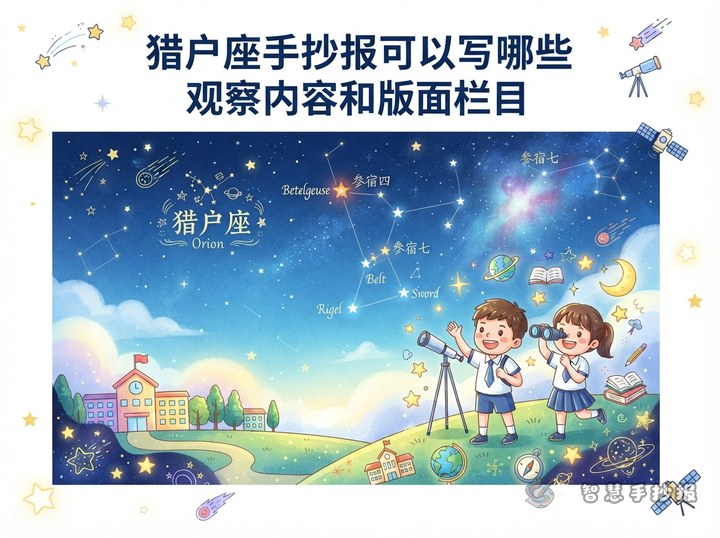
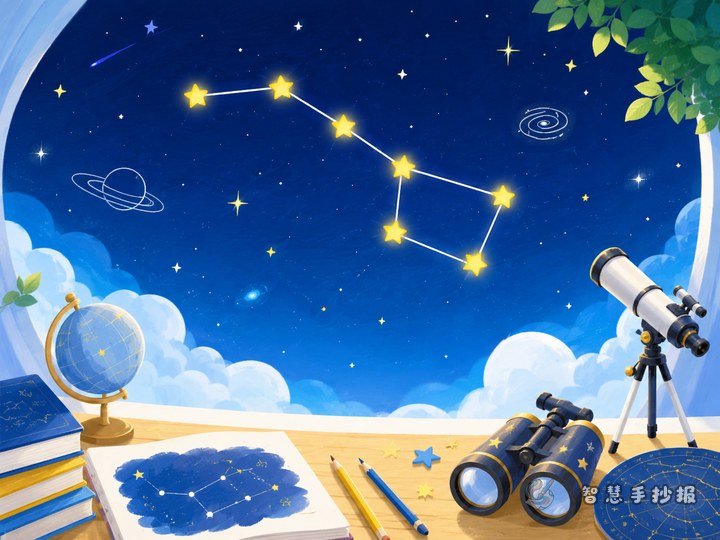
Place the title at the top and draw a simple directional sky map in the center, marking only a few objects. Put the observation card on one side, a science note on the other, and “My question and discovery” along the bottom. A dark border can make light-colored stars stand out, but keep the writing high-contrast and easy to read. Clear labels matter more than filling the page with stars.
Check the details before you finish
Choose a safe, open place and observe with an adult. Do not go onto roads, rooftops, or restricted areas to see the sky. Base the page on your own notes, and leave an object's name as a question until you have checked it. Once your text and sketch are ready, continue laying out the page in the WeChat mini program “智慧手抄报.”