Turn the theme into a real stargazing mission
A handwritten newspaper about a first meteor shower is a strong topic because it combines astronomy knowledge with personal observation. Instead of filling the page with random facts, treat the whole project like one stargazing experience: what a meteor shower is, why it appears, how to prepare, what you saw, and what you felt. This makes the work more complete and natural.
Helpful section ideas for the page
- Meteor Shower Basics: Explain that a meteor shower is not stars falling down, but small particles burning up in Earth’s atmosphere.
- Before Watching: Include weather checking, choosing a dark place, bringing warm clothes, and preparing a notebook.
- Observation Tips: Remind readers not to stay in dangerous places at night and not to keep looking at bright phone screens.
- My Meteor Shower Notes: Record the time, place, sky condition, and number of meteors seen.
- Did You Know?: Add one to three fun facts to make the page more lively.
Short text materials students can copy easily
Use simple and short sentences that are easy to write by hand. For example: A meteor shower happens when many meteors streak across the sky in a short period. It is easier to see meteors in a dark, open area. Your eyes need time to adjust to the darkness. Meteors appear quickly, so it is useful to record the direction and number you notice. These short lines fit nicely inside small text boxes.
Ready-to-use short sentences
- A meteor is not a falling star but a tiny object glowing in the atmosphere.
- The darker the sky is, the easier it is to see a meteor shower.
- Watching a meteor shower takes patience and attention to safety.
- One night of stargazing can become a small journey into space.
Create a night-sky feeling in the layout
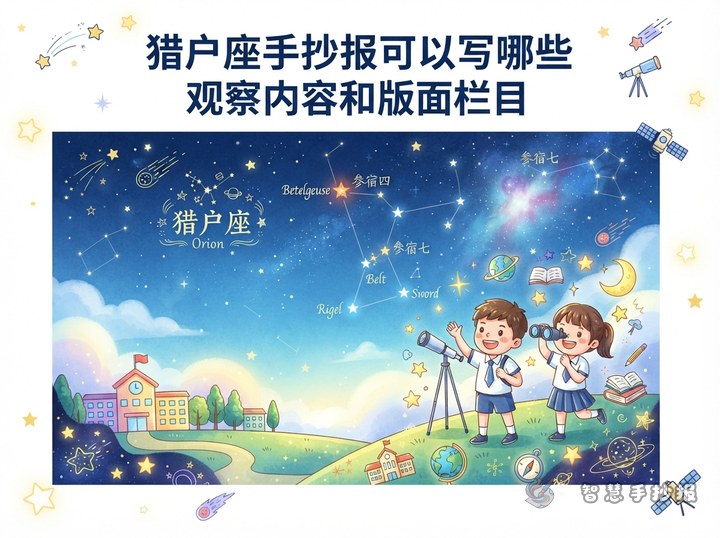
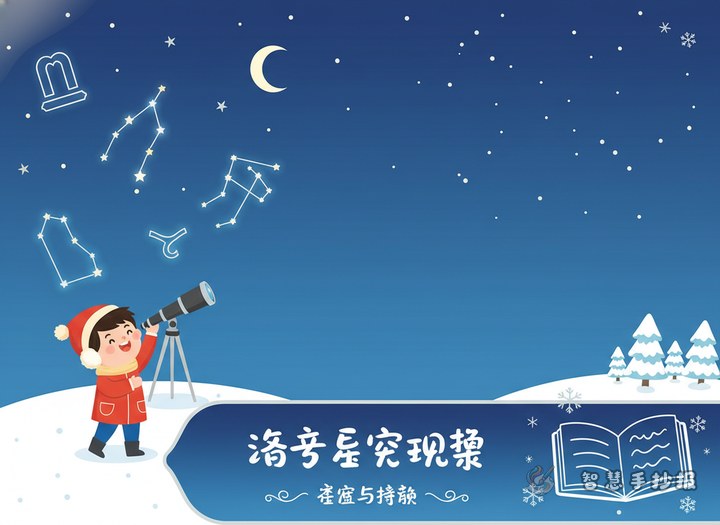
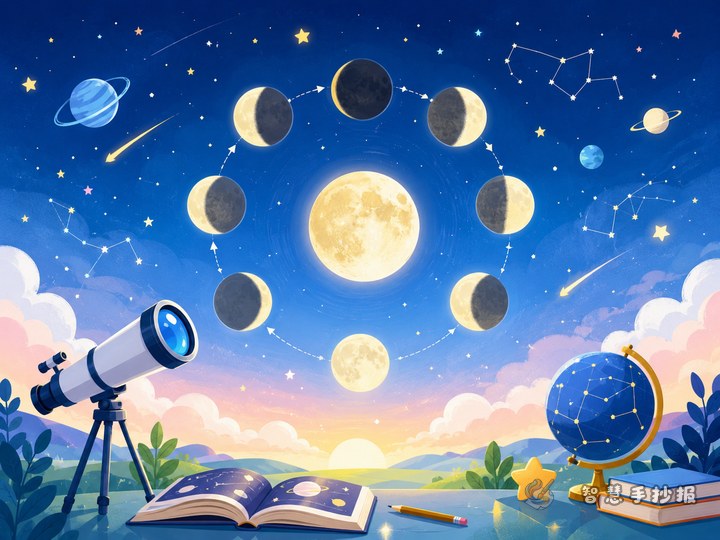
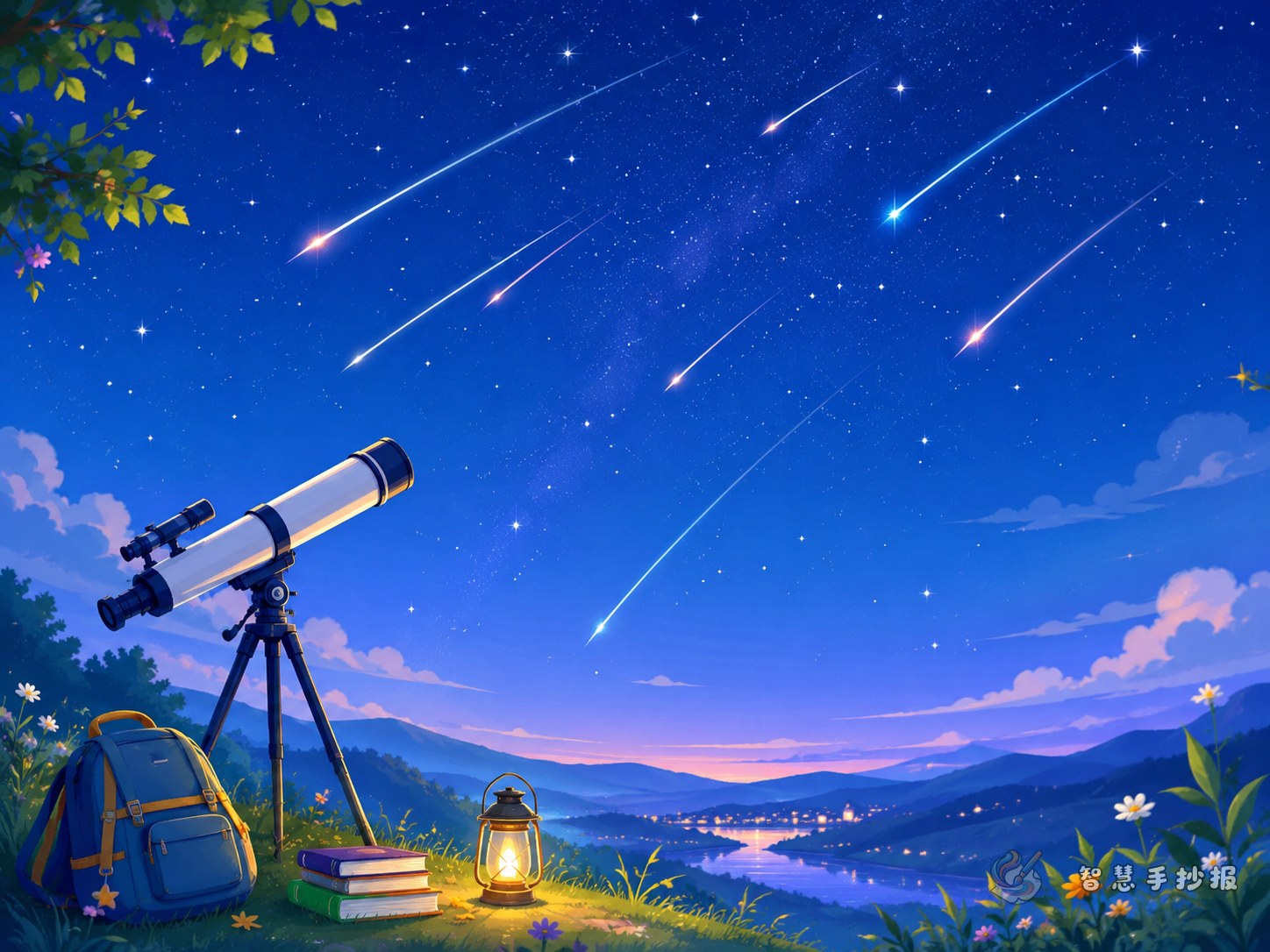
This theme looks best with a wide title area at the top and steady content blocks below. Put the title and star decorations across the upper part, place two or three fact sections in the middle, and leave space at the bottom for observation notes or feelings. If the page feels empty, add shooting stars, moon shapes, a telescope, tents, or mountain silhouettes. Try not to make every text box the same size, or the page may look stiff.
Add interactive details to make it feel personal
Besides facts, include a small observation checklist. For example: checked the weather, brought a flashlight, chose a dark place, avoided strong light, and wrote down the time. You can also add a box called “Questions I Still Have,” such as why some meteors are brighter or why some nights show very few. This gives the project more thinking value.
Final polishing tips
Write the main title first, then the section titles, and add decorations last. Keep each paragraph short, usually two to four lines, so the page stays clean. A dark background with light text boxes fits this topic well. If you already have your sections and text ready, you can continue arranging and improving the design in the Smart Handwritten Newspaper WeChat mini program.