Choose a clear theme before you start
A good handwritten newspaper should not simply say that bean sprouts grow. It works better when the topic is more specific, such as Why Do Bean Sprouts Grow So Fast?, Bean Germination Observation Record, or The Growth Diary of a Bean. These titles feel natural, easy to understand, and suitable for school projects.
The key is not to fill the page with difficult biology terms. Instead, students should show what they saw, how the bean changed each day, and what conditions helped it grow. That gives the handwritten newspaper a true observation style.
Useful sections to include on the page
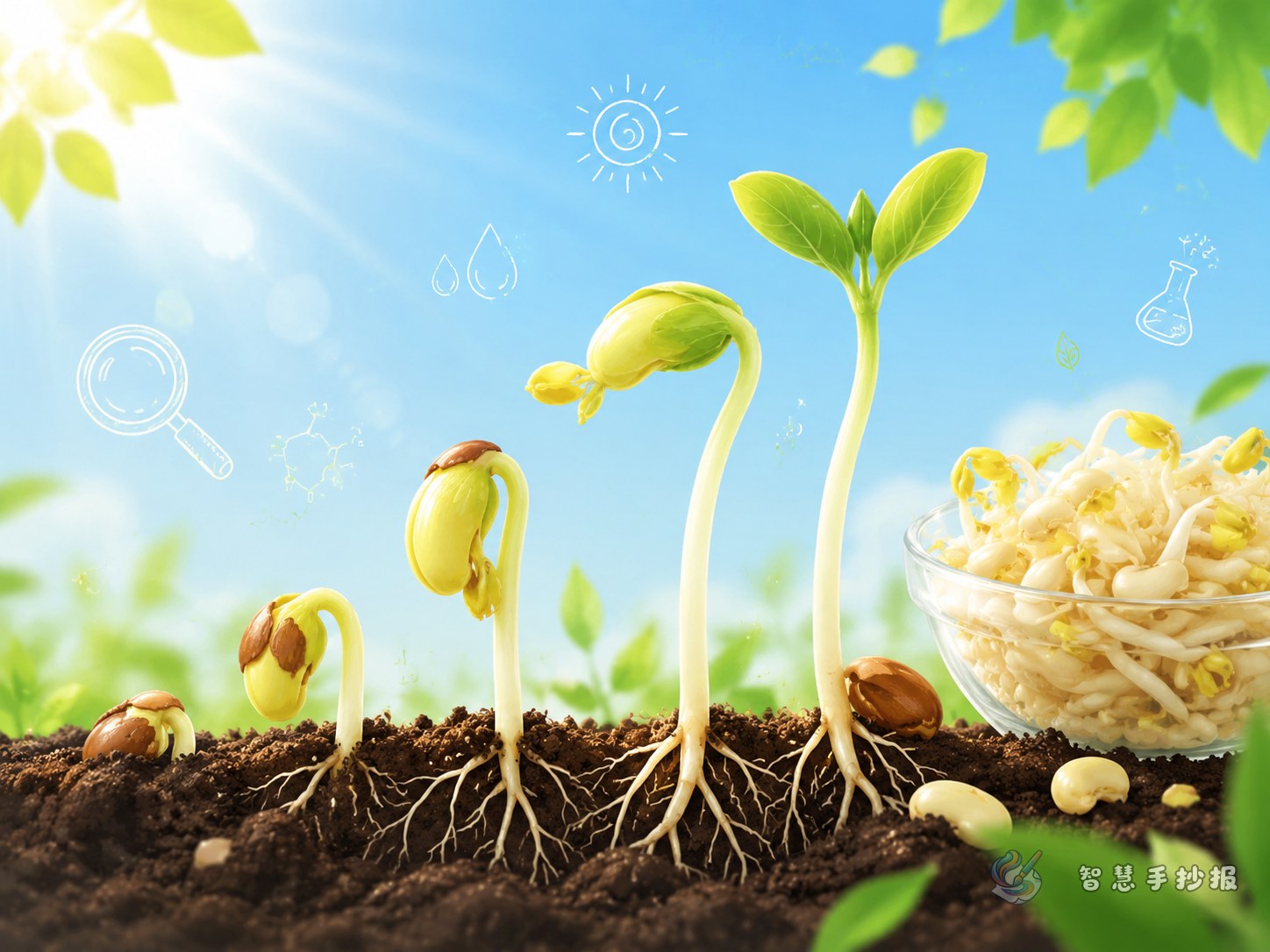
Section 1: Four simple steps of germination
- Choose healthy, full beans.
- Soak them in water so they can absorb moisture.
- The seed coat begins to split open.
- Roots and sprouts grow longer day by day.
Section 2: What bean sprouts need
- Water: Beans need moisture to begin growing.
- Warmth: A warm place helps them sprout more easily.
- Air: Germinating seeds also need to breathe.
- Time: Growth happens step by step, not all at once.
Section 3: My observation notes
Students can write short records such as: On day one the beans became larger. On day two the seed coat cracked. On day three tiny roots appeared. On day four the sprouts grew taller. Short and true sentences are perfect for an elementary school handwritten newspaper.
Ready-to-use writing materials
Sample 1: At first the beans looked small and hard, but after soaking in water they became rounder and fuller. Soon the seed coat opened, and a tiny white sprout appeared. It felt as if the bean was quietly starting a new life.
Sample 2: I found that bean sprouts grow very quickly when the conditions are right. In just a few days, I could see clear changes. Through this observation, I learned that plants need water, warmth, and air to grow.
Sample 3: Observing bean sprouts is interesting because it shows that growth is a process. By recording color, size, and shape every day, we can understand how a small bean slowly becomes a sprout.
A better layout: timeline plus observation boxes
This topic looks especially good with a timeline design. Students can place Day 1, Day 2, Day 3, and Day 4 in order across the page or from top to bottom. This makes the growth process easy to follow.
- Put the main title at the top in green or yellow.
- Use one side for germination steps and the other for growth conditions.
- Place personal observation notes in the center or lower part.
- Decorate with beans, leaves, water drops, or simple plant borders.
The page should feel fresh and organized rather than crowded. Small arrows, rounded text boxes, and leaf-shaped labels can make the layout more lively.
How to make it feel like real observation
Many students accidentally turn this topic into a general plant article. A better approach is to include real changes they noticed, such as the beans getting bigger, the color becoming lighter, roots appearing before the sprout, or some beans growing faster than others.
They can also add a small practical note: handle the beans gently, record dates carefully, and check for unusual smell or color changes. This adds both science knowledge and hands-on experience.
A simple ending for the handwritten newspaper
The closing part can be short and thoughtful: By observing bean sprouts, I learned that growth takes time and careful attention. Even a tiny bean can teach us many interesting science ideas.
If the topic and sections are ready, students and parents can continue organizing the page in the Zhihui Shouchaobao WeChat mini program to complete the handwritten newspaper more easily.