Begin with a Phrase That Sounds Like Home
A hometown dialect newspaper can open with a familiar greeting, family expression, or everyday phrase. Display the dialect term clearly, explain it in standard language, and describe when people usually say it. Choose polite, common expressions and avoid making fun of accents.
Collect Voices from Everyday Life
Words Heard at Home
Record phrases that family members use when calling everyone to dinner, welcoming guests, or reminding children to dress warmly. Present each entry with three parts: the dialect expression, its meaning, and the situation in which it is used.
Sounds from Streets and Markets
Include a market call, a neighborly greeting, or a festival blessing. Add two or three sentences explaining where the expression might be heard and what feeling it conveys. Ask a family member or teacher to check any pronunciation you are unsure about.
A Rhyme from Childhood
If your hometown has a familiar nursery rhyme, chant, or playground call, include a short and suitable excerpt with a simple explanation. Focus on the childhood activity connected with it instead of copying a long passage.
Short Text Ideas to Adapt
- Opening: Every place has its own voice, and hometown dialect lives in warm greetings, busy markets, and childhood games.
- Transition: Some local expressions have special sounds and tones that reflect the habits of the people who use them.
- Reflection: Understanding a hometown phrase means more than knowing its definition; it also reveals a piece of local memory.
- Closing: We can speak standard language well while learning about and respectfully preserving the dialect of our hometown.
Turn the Page into a Dialect Map
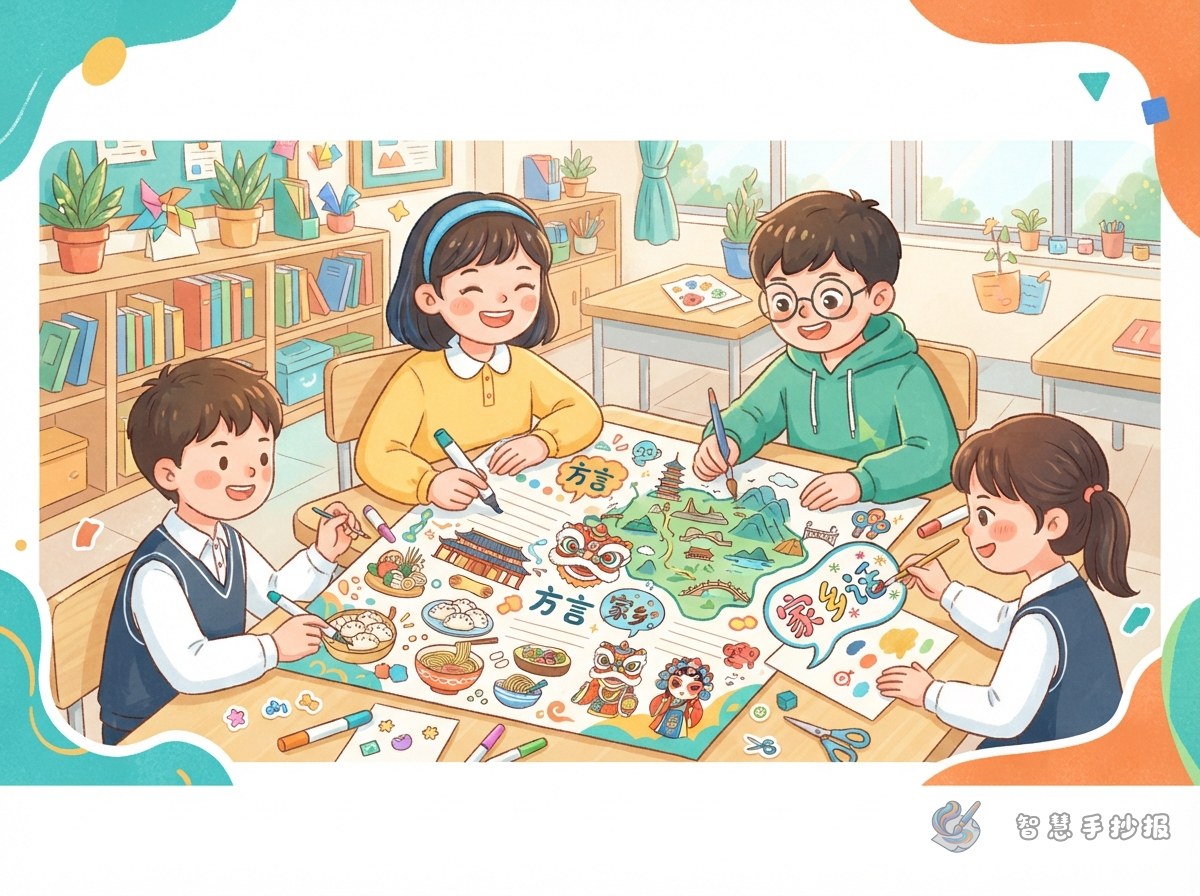
Place the title at the top and draw a simple hometown outline, old doorway, or street route in the center. Arrange sections such as “Mini Dialect Dictionary,” “Daily Conversations,” “Childhood Rhymes,” and “My Reflection” around it. Use arrows to connect expressions with people and places. Small drawings of a dinner table, market stall, teacup, toy, or speech bubble can support the text. Limit the palette to three or four colors so the words remain easy to read.
Check Every Expression Before Finishing
- Ask an older family member to confirm the pronunciation, meaning, and context.
- Add a standard-language explanation for unfamiliar words and do not invent spellings.
- Check that the title is clear, text blocks vary in length, and illustrations leave enough open space.
- To refine the sections and layout, continue making the newspaper in the Smart Handwritten Newspaper WeChat Mini Program.