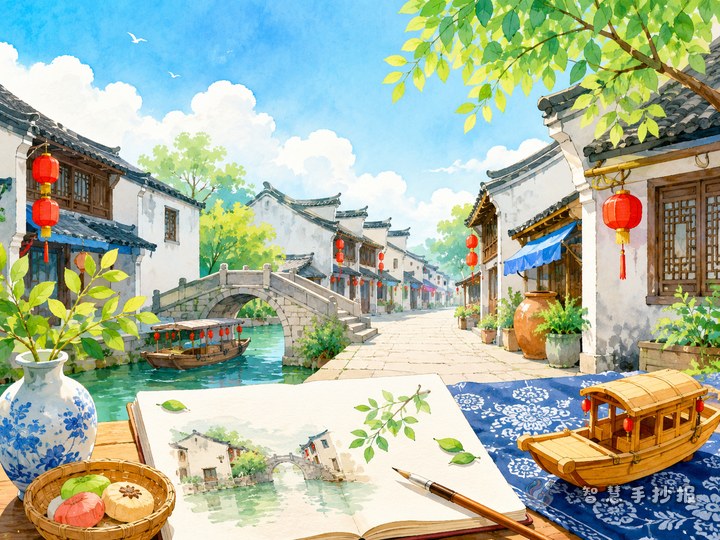
Start with one signature feature of your hometown
For this kind of hand-copied newspaper, you do not need to introduce every famous place in your hometown. It is better to focus on one memorable local feature, such as a river, hill, lake, old street, bridge, tea field, square, or an ancient tree in the village. A narrower topic makes the page easier to organize and helps the writing feel more vivid.
For younger students, a simple structure works well: what it looks like, what stories people tell about it, and why you like it. This keeps the content clear, personal, and suitable for school display.
Turn the layout into a hometown guide map
Instead of using a plain report style, you can design the page like a small guide map. Put the main title in the center and arrange several content boxes around it, so readers feel like they are exploring your hometown feature step by step.
- Main title area: use a title such as “A Special Feature of My Hometown” or the exact place name.
- Feature card: location, key traits, best season, and symbolic colors.
- Through the four seasons: describe how the place changes in spring, summer, autumn, and winter.
- A local story: add a folk tale, family memory, or something elders often mention.
- My feelings: write a few first-person sentences about why this place matters to you.
- Decorative corners: add small drawings of hills, water, leaves, roofs, or stone paths.
This kind of layout combines information, observation, and emotion, which fits a hometown culture theme very well.
Useful text ideas you can adapt directly
The writing should stay short and easy to read. Each part can be just two or three sentences. Here are some simple text ideas that can be rewritten for a student newspaper.
Brief introduction
There is a special local feature in my hometown that many people remember. It is not only beautiful, but also connected to daily life and local memory. It shows part of the cultural character of my hometown.
Scene description
In the morning, this place feels quiet and fresh. In the evening, the soft light gives it a warm color. In different seasons, it changes in different ways, making my hometown feel lively and full of charm.
Cultural meaning
A hometown feature is more than scenery. It is like a local symbol. It keeps old memories and reflects how people live, change, and stay connected to their hometown.
My own thoughts
I like this place because it feels close and familiar to me. Whenever I think of it, I remember the colors, sounds, and warm feelings of home.
Add small sections to make the page more interesting
If you want your newspaper to stand out, add a few creative mini-sections. They can show observation and expression, not just facts.
- One-sentence recommendation: If you visit my hometown, you should definitely see this place.
- Quick fact box: location, shape, best viewing time, and fitting decorations.
- Colors I see: green hills, blue water, orange sunset, gray old streets.
- Sounds of my hometown: wind, water, birds, market calls, or footsteps.
- Observation note: record one real scene you have seen with your own eyes.
These sections work especially well for classroom assignments and help students write in a lively way.
Use colors and handwriting that match local character
Choose a clean and warm color palette. For mountains and rivers, use green, blue, and light gray. For old streets or historic areas, try brown, beige, and brick red. For lakes or seaside places, light blue, white, and pale green work well. Make the title larger, keep section headings clear, and make the main text neat and readable.
Decorations do not need to be complicated. Small drawings such as roof lines, waves, branches, stone roads, or border patterns are enough. Leave some blank space so the page does not look crowded.
If you want to improve the layout, replace titles, or quickly turn your draft into a complete page, you can continue creating in the Zhihui Shouchaobao WeChat mini program.