Pick a Local Craft You Can Explain Clearly
A hometown culture handwritten newspaper does not need a huge topic. Paper cutting, bamboo weaving, straw weaving, clay figures, woodwork, embroidery, cloth shoes, or kite making can all be the main subject if people in your hometown make them and you have seen them. Think about three things: what it is called, what materials it uses, and how it is made. If you can answer these, your content will not feel empty.
If your hometown has several crafts, choose one as the main section and place the others in small corner cards called Local Craft Cards. This gives your page a clear focus and a richer look.
Divide the Page into a Display Area and Text Boxes
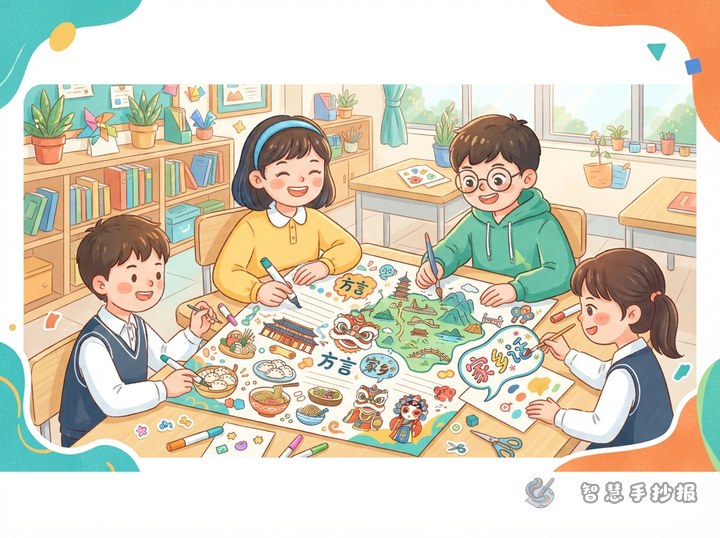
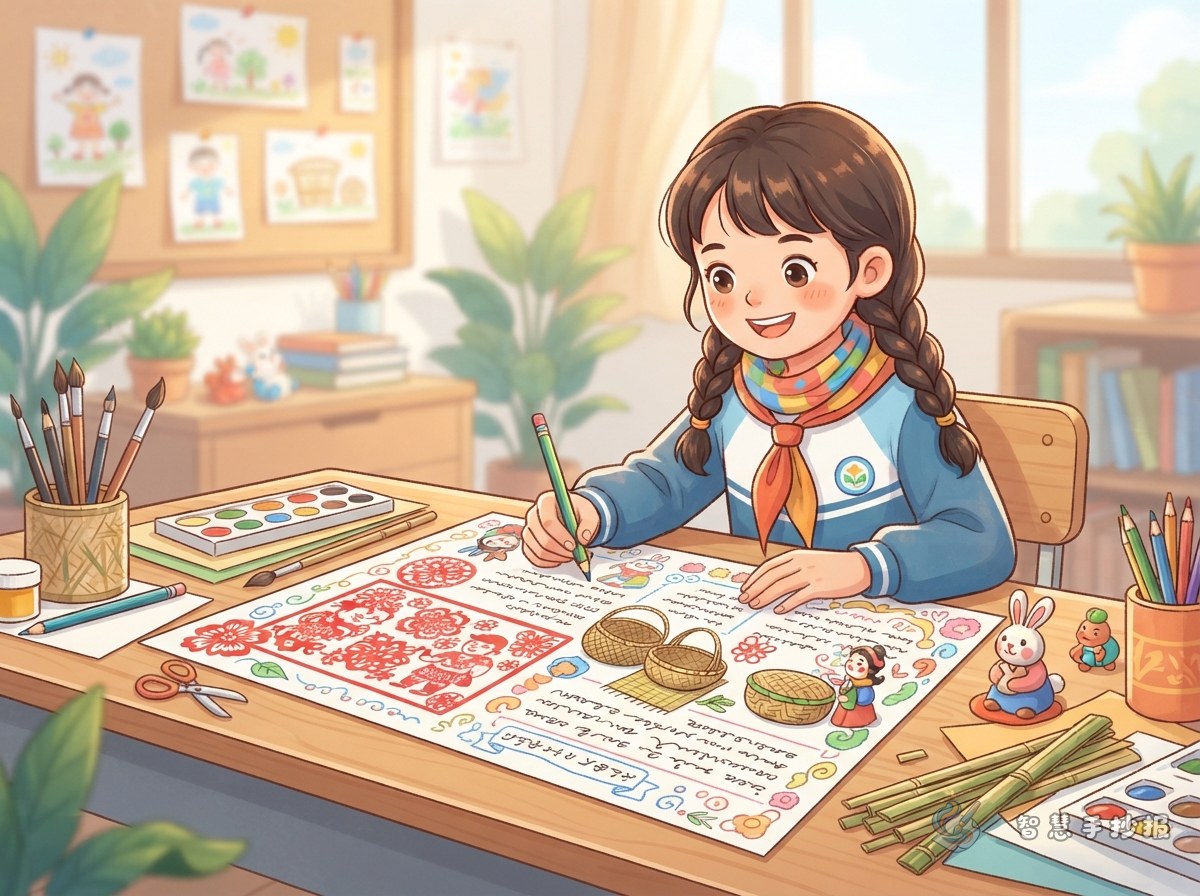
Keep the layout simple. Split the paper into left and right parts or top and bottom parts. Leave one side larger as the display area for drawing the craft or a making scene, and use the other side for text boxes.
- Display area: draw a paper-cut window flower, bamboo basket, clay figure, or kite. It can take one third to one half of the page.
- Text area: include small boxes such as Craft Card, Making Steps, My Discovery, and Small Craft, Great Wisdom.
- Title area: place it at the top or top left. Write a large title like Hometown Old Crafts or Skills at My Fingertips.
To make the page livelier, you can shape text boxes like baskets, scissors, clay balls, or leaves. Two or three special shapes are enough.
What to Write in Each Small Section
Craft Card
Write the name, local area, common materials, tools, and main uses. For example: Bamboo weaving uses thin strips split from moso bamboo to make baskets, winnowing trays, and summer mats. One clear sentence helps readers understand quickly.
Making Steps
Choose three or four steps and keep them short. You can use First, Second, Third, or draw small arrows. For paper cutting: fold the paper, draw the pattern, cut or carve, then unfold. For bamboo weaving: split the bamboo, scrape the strips, start the base, and finish the edge.
My Discovery
Write details you noticed: the movement of an elder's hands, the sound of tools, the smell of materials, or a problem you met when trying it yourself. A real small discovery is more touching than empty praise.
Small Craft, Great Wisdom
Write about the clever ideas inside the craft. Why is a bamboo weave pattern strong? Why is a paper-cut design symmetrical? Why do clay figures need a large shape before details?
Give the Layout a Local Feel with Titles, Colors, and Borders
Use brush-style letters, hand-drawn art words, or bold print for the title. Add a simple wheat ear, bamboo leaf, cloud pattern, or window flower border beside it. Do not use every color. Pick two or three main colors from earth yellow, vermilion, ink green, and indigo, then use light colors for the background. This gives the page a hometown feeling.
Borders can look like bamboo joints, vines, rope, gray bricks, or roof tiles. The pattern does not need to be complex. Repeated small elements often look neater. If drawing is hard, use a ruler to make a double-line border and add a small pattern at each corner.
Step-by-Step Making Order
- Lightly sketch the positions of the title, main picture, and text boxes in pencil.
- Copy your text onto draft paper first, count the words, and then decide the size of each box.
- Draw the main picture by outlining the large shape first, adding details, and coloring last.
- Write the text in black or dark blue. Keep it neat, and make important sentences bold or use a different color.
- Check for empty spaces at the end. Fill them with small patterns, short facts, or decorative borders.
If you want to make the layout more polished, open Smart Handwritten Newspaper in WeChat Mini Program, choose a hometown culture template, arrange your draft sections and text, and then copy the design onto paper.