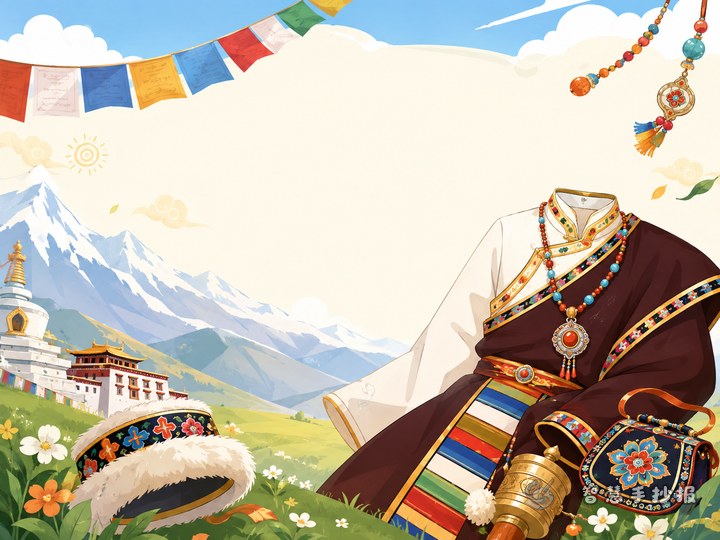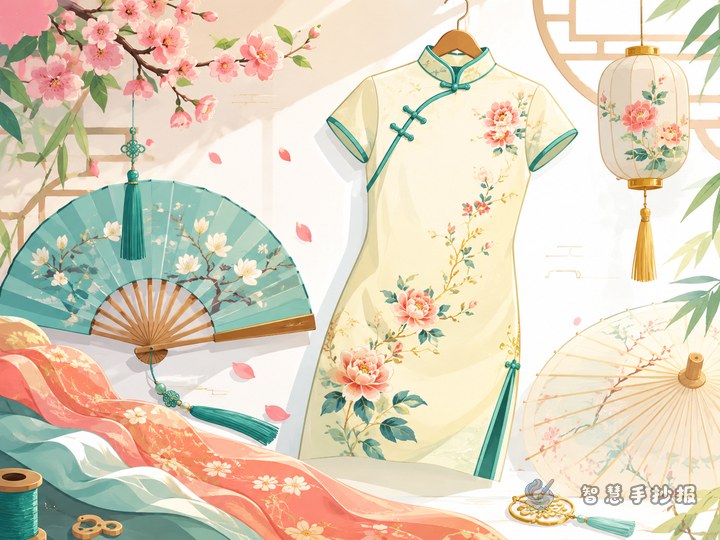
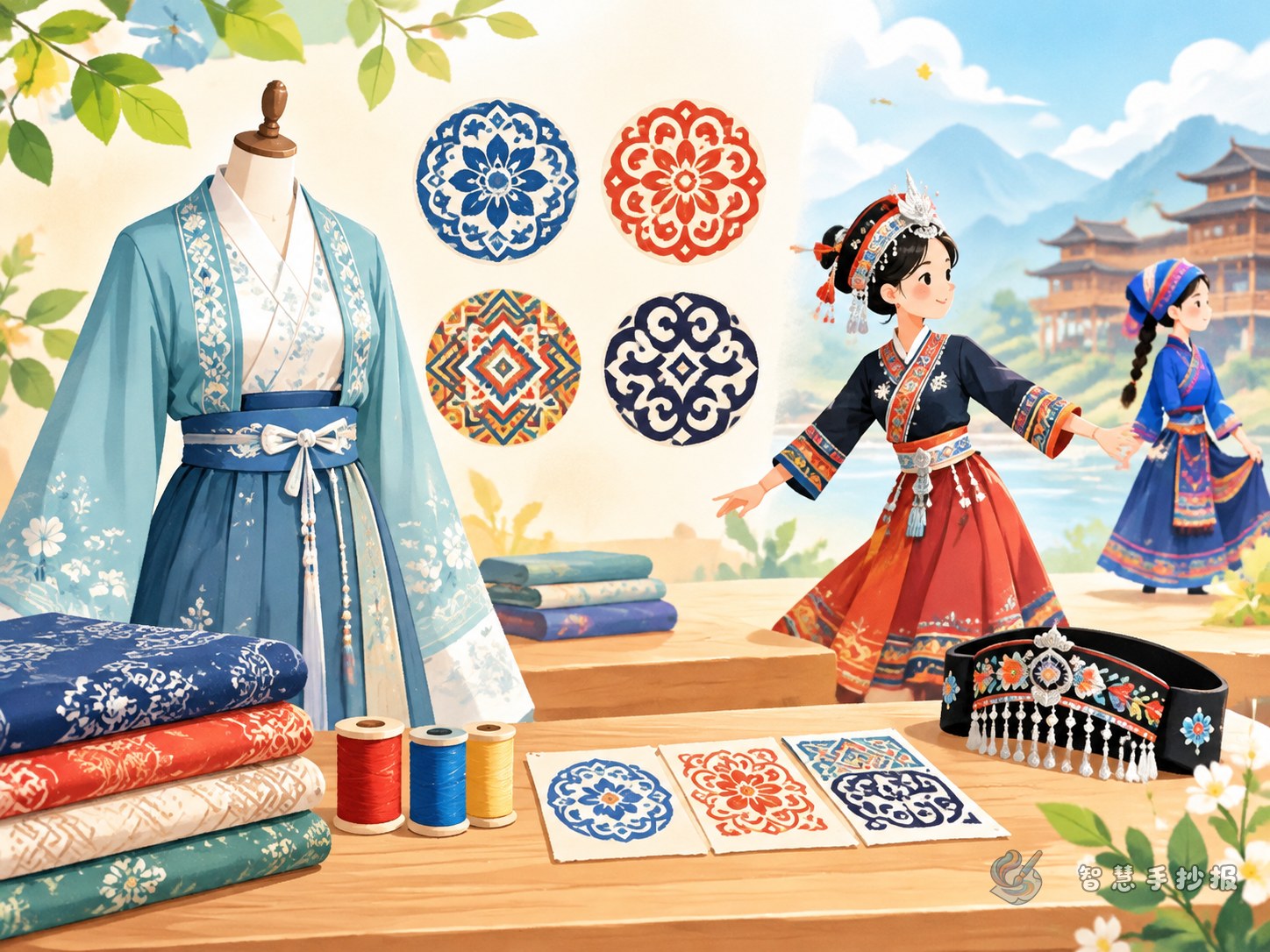
Follow one garment through its story
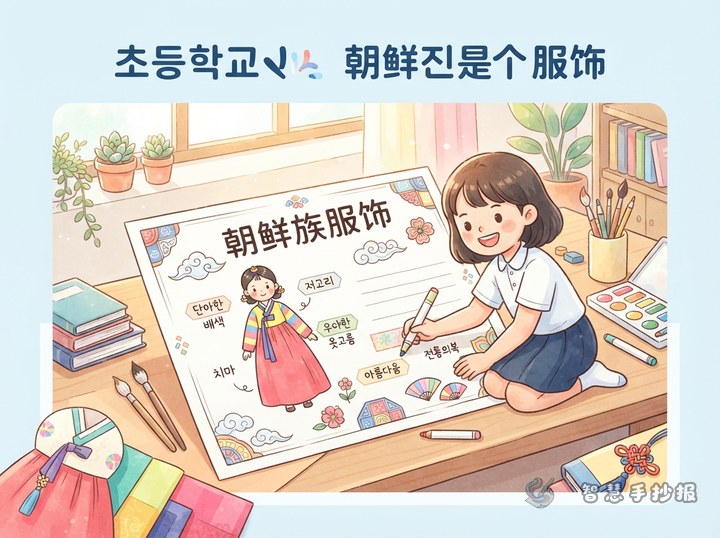
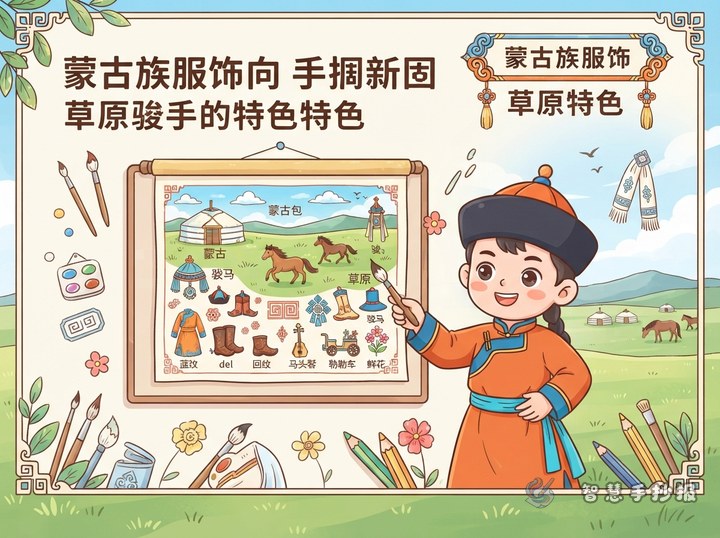
Build the poster around one traditional garment and how it is worn, rather than listing many clothing names. Introduce its main parts, colors, and occasions, then add small sections about materials and details. A focused subject gives the page a clear purpose and keeps it from becoming a vocabulary list.
Gather details from fabric, shape, and pattern
Look at the garment's parts, such as a jacket, skirt or trousers, sash, headwear, or shoes. Describe the fabric, cut, and decorative patterns in simple, observable terms. A “Look Closer” section can label a collar, cuff, or tie and briefly note embroidery, woven designs, or dye patterns. Check a textbook or teacher-provided source before stating a specific cultural meaning; avoid presenting interpretations as universal facts.
Turn observations into short sections
- Garment notes: Give the name, main parts, and overall colors.
- Detail study: Choose one pattern or accessory and describe its shape, placement, and workmanship.
- When it is worn: Note a daily, festive, or ceremonial setting only when your source supports it.
- My observation: Share one detail that caught your attention and what it made you wonder about.
Arrange the page around a visual guide
Place a drawing or outline of the garment in the center. Connect it with thin lines to four information areas: fabric, construction, pattern, and occasion. Leave room near the top for the title, and balance the amount of text on both sides. Repeat just one or two motifs instead of filling every corner with decoration. Draft short sentences first, then adjust lettering and spacing to fit each section.
Check facts and finish the page
- Check the garment name, part names, and occasions against your source.
- Make sure every drawing label matches an explanation in the text.
- Keep the title easy to spot, handwriting clear, and margins open.
To continue arranging the sections and artwork, use the WeChat Mini Program “智慧手抄报” (Smart Handwritten Newspaper) with your chosen garment as the theme.