Build the poster around two traveling characters
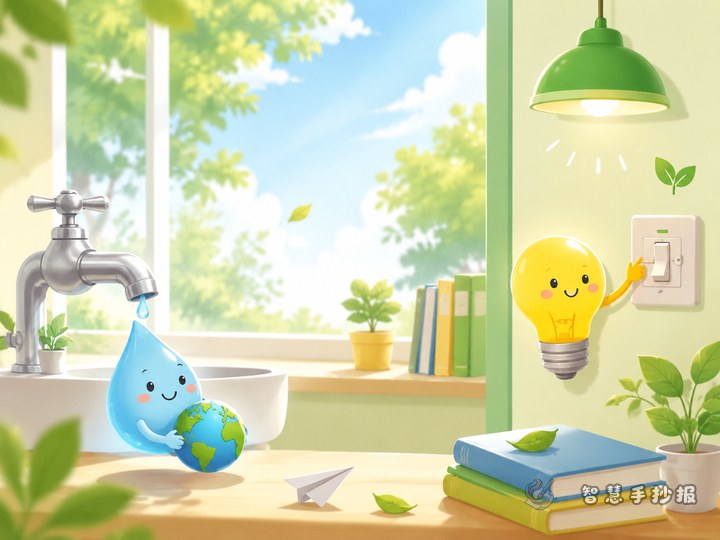
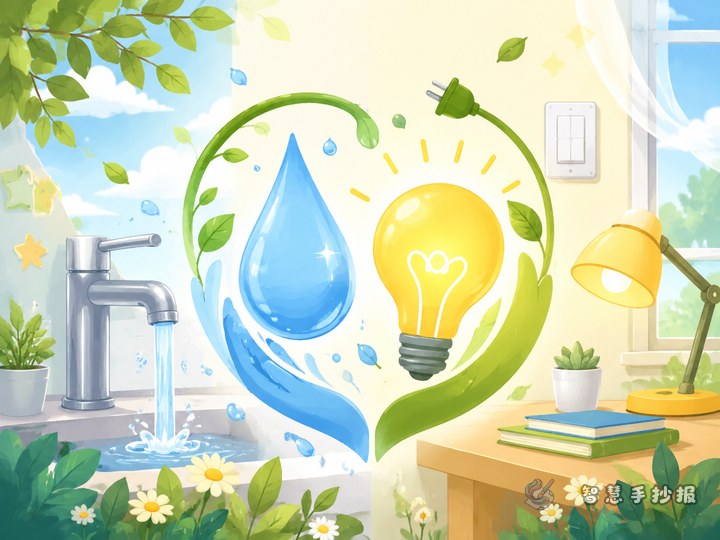
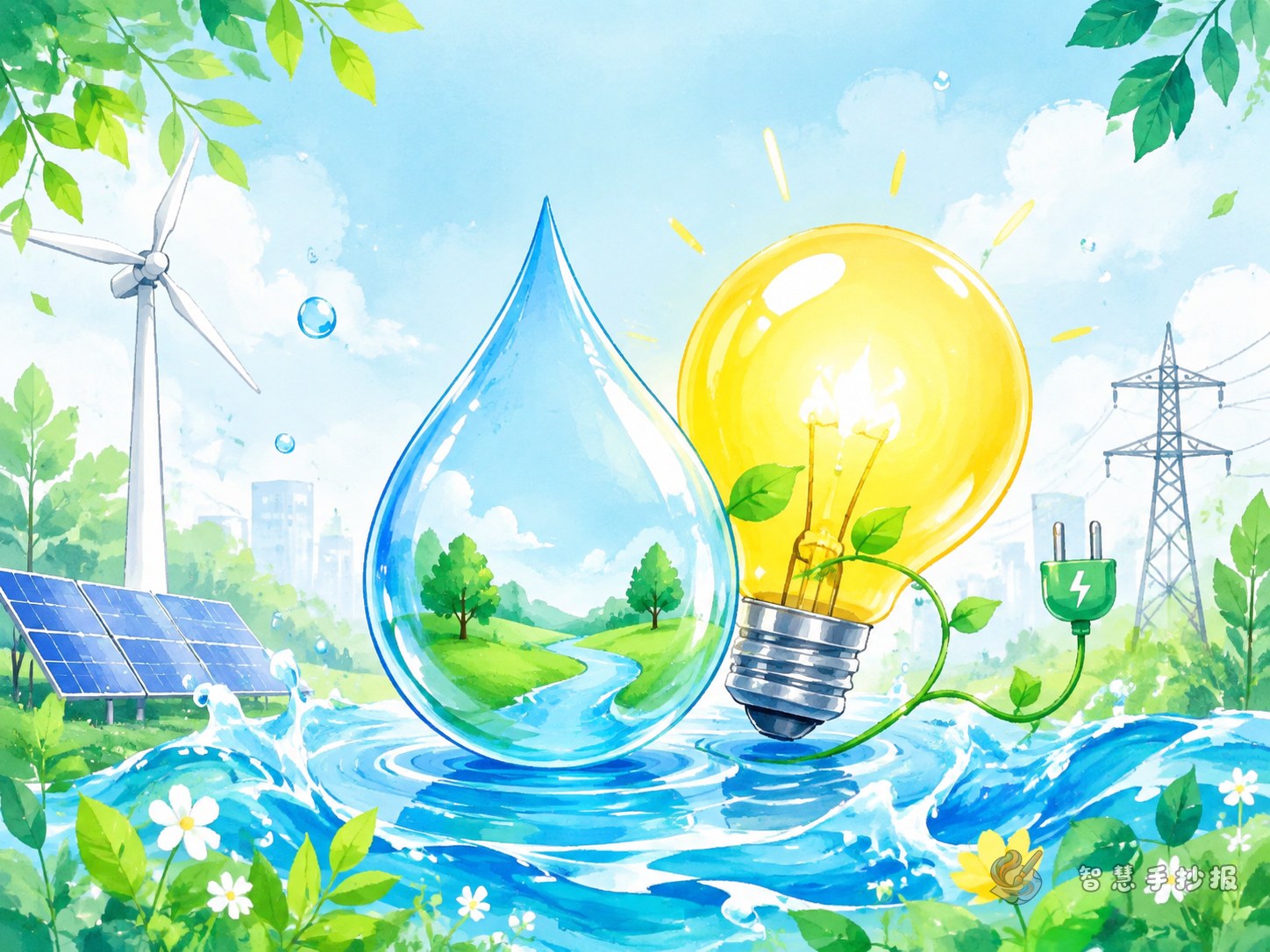
Instead of beginning with a long slogan, turn one drop of water and one unit of electricity into two little characters on a journey. The water drop starts at a water source, while the electricity travels along a line toward a lamp, fan, or computer. Both characters finally arrive at a green destination that represents valuing resources. This story structure makes the message easy to follow and gives the poster a lively theme.
- Water starting point: Draw clouds, a reservoir, pipes, or a clear stream with the message “Every drop is worth saving.”
- Electricity starting point: Add a lightning symbol, power lines, and a light bulb with the message “Use electricity where it is truly needed.”
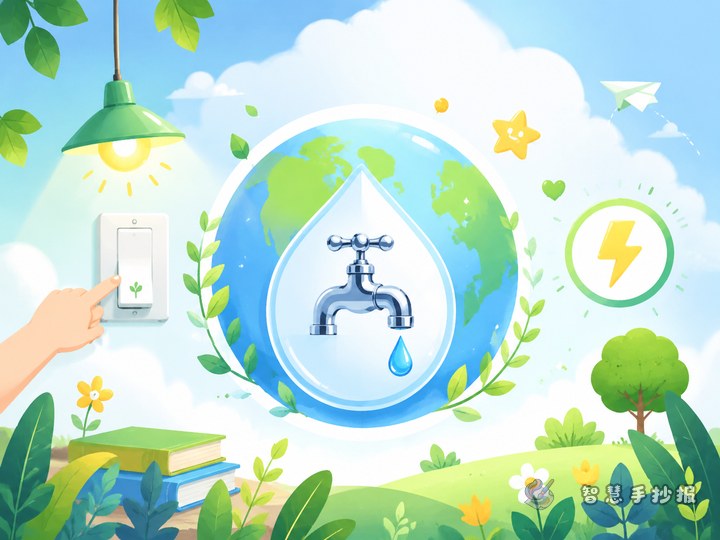
- Green destination: Finish with an Earth, an eco-friendly home, or a group of children taking action together.
Give each character a three-part journey
The road traveled by the water drop
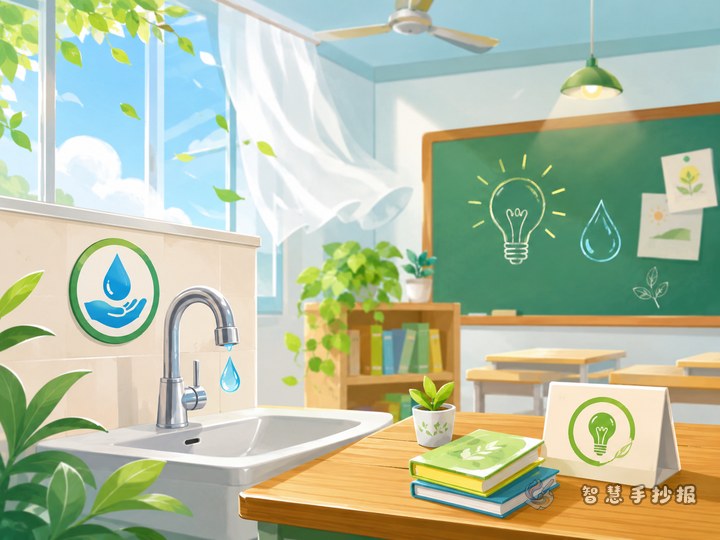
Write simple water-saving tips beside the blue route: turn the tap down while washing hands and close it tightly afterward; reuse suitable water when cleaning; and tell a parent or teacher when a leak is found. Keep each tip short and pair it with a small icon.
The places lit by electricity
Draw lamps, fans, and computers along the electricity route. Add tips such as “Turn things on only when needed,” “Use less lighting when daylight is enough,” and “Ask an adult to check switches when appliances are not in use.” Put the tips inside speech bubbles or signposts so the main ideas stand out.
Four sections for a complete, readable page
- Resource profile: Briefly explain how water and electricity support daily life. Water helps with drinking, cleaning, and growing plants, while electricity keeps many devices working.
- Travel diary: Use a personified voice for two or three lines: “I am a drop of water. Please do not let me run away for nothing.” “I am one unit of electricity. I hope every use has a purpose.”
- Action checklist: List small actions such as closing taps, using water wisely, switching off lights, and reducing standby use.
- Green message: End with a clear sentence such as “Let every drop serve a purpose, and let every unit of electricity be used where it matters.”
Use blue and warm yellow to draw the two routes
A landscape layout works well: place the title at the top, draw a winding travel route through the middle, connect the water sections on the left with blue, and connect the electricity sections on the right with yellow or orange. Let both routes meet at a green destination near the bottom. Arrows, footprints, signposts, and small flags can guide the reading order. Put longer text inside colored boxes or speech bubbles so the page does not become crowded.
Three finishing details that improve the result
- Divide before coloring: Sketch the title, routes, drawings, and text boxes in pencil first, then check the spacing before outlining.
- Match words with pictures: Place water-saving advice beside taps and electricity-saving advice beside bulbs or appliances.
- Make the slogan visible: Use larger lettering for the title and final message, while keeping the body text consistent and easy to read.
After sketching, you can use the WeChat mini program “智慧手抄报” to continue arranging the page and selecting suitable decorative elements, then add your own colors and handwriting.