Make the theme specific: focus on lunchtime at school
If you want your water and electricity conservation poster to feel practical instead of vague, choose a clear theme like “How to save water and electricity during school lunchtime”. This gives you real scenes to work with, such as classrooms, hallways, washrooms, and drinking areas. A poster built around everyday situations is easier to understand and more convincing.
Useful sections to place on the poster
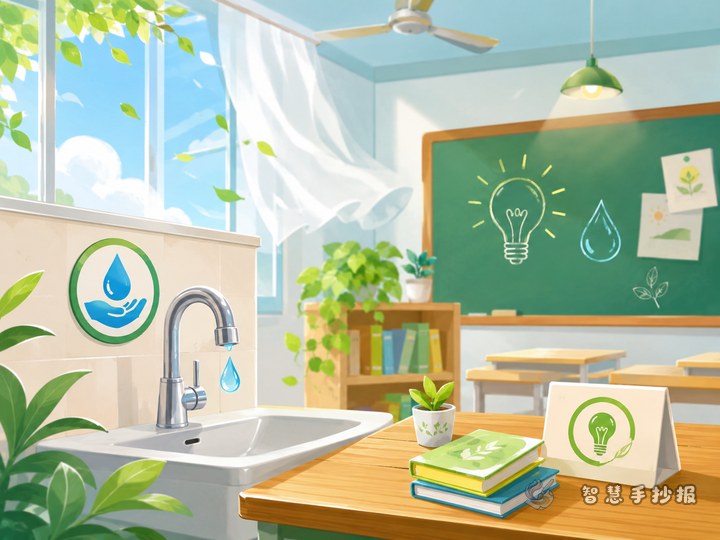
- What gets wasted at lunchtime: Mention common situations like lights left on in an empty classroom, fans running with nobody there, or taps not turned off tightly.
- Five actions I can do: For example, turn off lights before leaving, close the tap after washing hands, take only the water you need, and remind classmates kindly.
- Short saving slogans: These work well beside the title or around the border.
- Easy facts about saving water and electricity: Keep them short and child-friendly.
- Weekly action checklist: This makes the poster feel active and practical.
Ready-to-use writing materials
Opening paragraph
Lunchtime may be short, but it is often a time when small waste happens in school. A tap left dripping, a light left on, or an appliance running without use can waste resources little by little. Saving water and electricity is not only a slogan. It is a daily habit every student can practice.
Short slogan ideas
- Save a drop of water, protect a better future.
- Turn off the light, brighten good habits.
- No waste of water or power, a cleaner school for all.
- Save a little today, gain more tomorrow.
- Small habits can protect the environment.
Ending paragraph
Saving resources is not difficult. It starts with simple actions like turning off lights, stopping unused fans, and closing taps properly. When students begin with small habits during lunchtime, the whole school becomes cleaner, greener, and more responsible.
A layout idea that looks clear and lively
You can use a center title with four themed corners layout. Put the main title at the top or in the middle. One corner can show a classroom with lights and fans, another can show a tap and water drops, another can hold short facts, and the last one can be a checklist area. This keeps the page organized and easy to read.
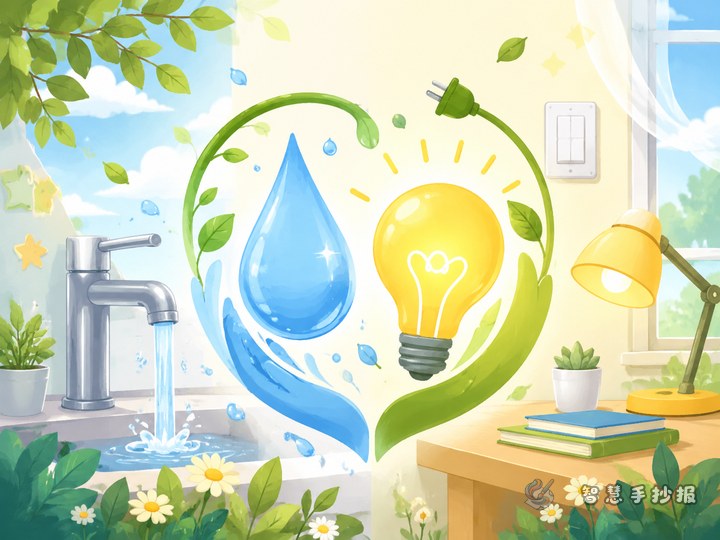
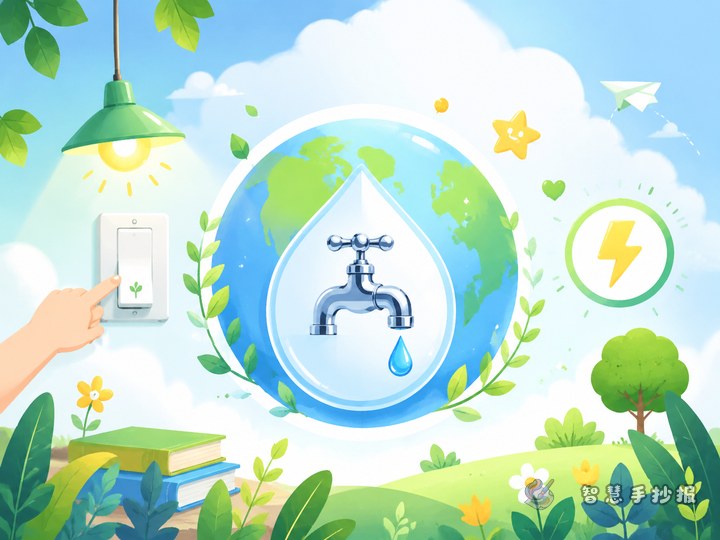
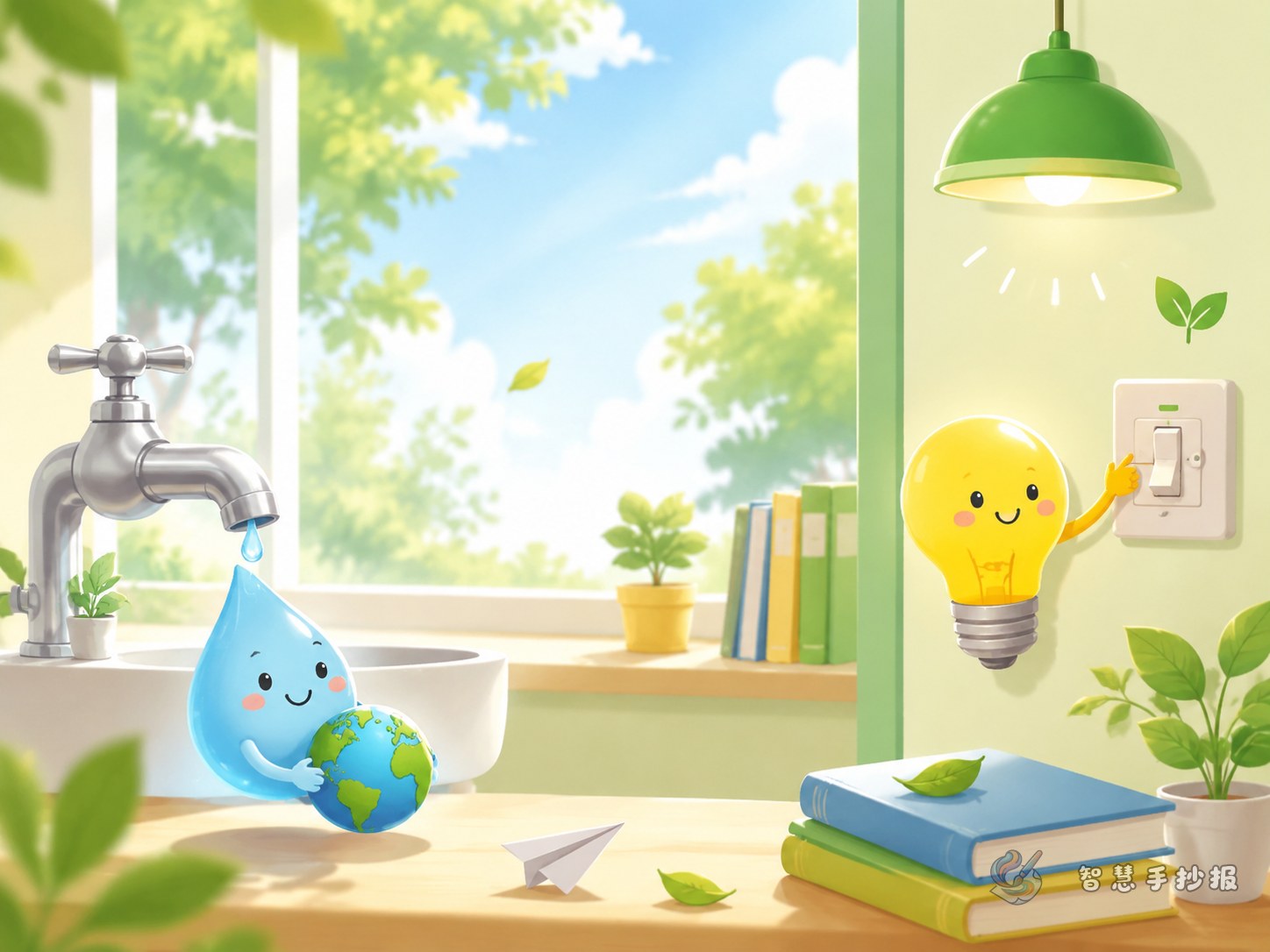
For colors, green, blue, and yellow work well together. Green suggests environmental care, blue matches the water theme, and yellow helps highlight electricity-saving points. Decorations like water drops, plugs, leaves, and light bulbs can make the page more fun without making it messy.
Small details that make the poster better
- Show a contrast between wasteful behavior and saving behavior.
- Add speech bubbles with friendly reminder sentences.
- Use numbered tips so younger students can read them easily.
- Leave some blank space so the poster does not look crowded.
Think about this before you start drawing
Before making the poster, decide whether you want to focus more on school scenes, daily habits, or awareness messages. Sketch the main areas first, then choose three to five key points to fill in. If you want to polish the layout further, you can continue organizing colors and sections in the Smart Handwritten Newspaper WeChat mini program.