Start with a clear idea: weather symbols are more than pictures
When children make a weather poster, they often focus only on drawing suns, clouds, and raindrops. A better approach is to explain what each symbol means, what kind of weather it shows, and how it affects daily life. With these three points, the poster becomes much richer and easier to present.
A title such as “Weather Symbols I Know” or “The Secret Signs in Weather Forecasts” works well for a school handwritten newspaper.
Useful weather symbols to include
- Sunny: a sun icon that means clear skies and strong sunlight.
- Cloudy: a sun with clouds, showing more clouds in the sky.
- Overcast: thick clouds, with weaker sunlight and a gray sky.
- Light rain: a cloud with a few raindrops, meaning mild rainfall.
- Heavy rain: many raindrops, showing stronger rainfall and slippery roads.
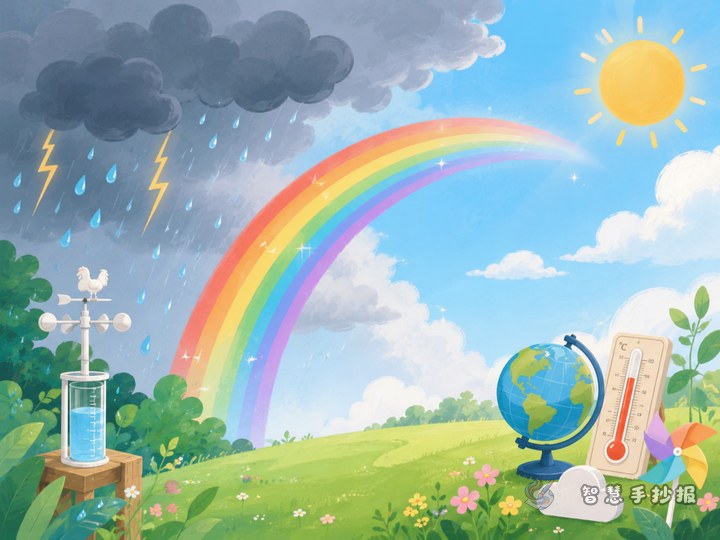
- Thunderstorm: a cloud with lightning, often bringing thunder and sudden rain.
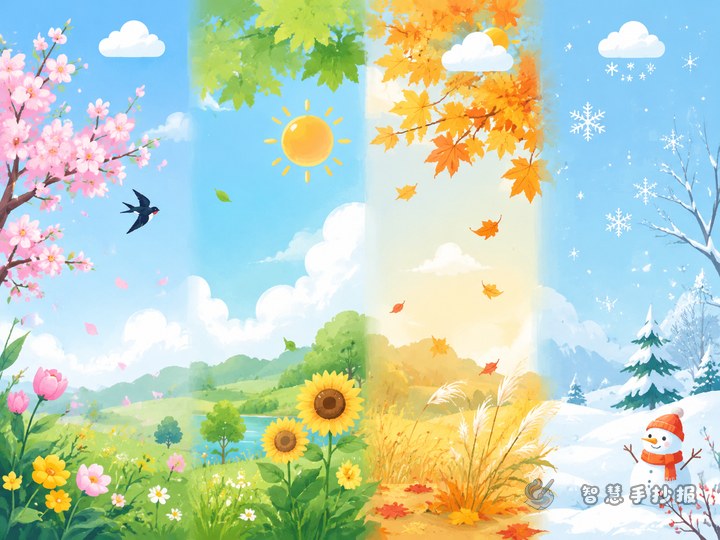
- Snow: snowflake symbols, meaning low temperatures and possible ice.
- Windy: wind lines or a wind symbol, showing strong air movement.
If there is enough space, you can also add fog or hail, but the most common symbols are usually the best choice for primary school students.
Turn symbols into strong poster sections
Section 1: Weather symbols I can read
This part can go near the top or center of the page. Put one symbol beside one simple sentence, such as “The sun means a sunny day” or “Clouds and raindrops mean rain.” It is easy to understand and great for younger students.
Section 2: What weather changes tell us
You can write that sunny days may have strong sunshine, overcast days have weaker light, rainy days make the air wetter, and windy days may need extra care. This helps the poster move from simple recognition to real understanding.
Section 3: Weather in everyday life
- Sunny weather is good for outdoor games and drying clothes.
- Rainy weather means taking an umbrella and walking carefully.
- Windy days mean staying away from loose objects outdoors.
- Snowy days mean dressing warmly and walking slowly.
This part connects science with real life, which makes the poster more practical.
Section 4: My weather observation corner
Students can record one week of weather, such as Monday sunny, Tuesday cloudy, and Wednesday rainy. Then add one short note like “The week became cooler after the rain.” This gives the poster a personal and active touch.
Try a weather-broadcast layout
This topic looks great in a weather forecast style. Divide the page into several card-like blocks. Each block can show one symbol, one short explanation, and one life tip.
- Place the main title at the top.
- Use the center for the largest weather symbols.
- Put daily-life tips and observations on the sides.
- Add safety reminders or quick facts at the bottom.
For colors, use yellow and light blue for sunny weather, blue and gray for rainy themes, and pale blue with white details for snow. A clean page often looks better than one with too many colors.
Short text materials you can use directly
- Weather symbols are picture signs that help us understand the weather quickly.
- Different symbols show different sky conditions and temperature changes.
- Learning weather symbols helps us plan clothes, travel, and activities.
- Rain, snow, and strong wind all remind us to prepare ahead.
- Weather forecasts make daily life easier and safer.
You can also end with a simple line: Understanding weather begins with reading small weather symbols.
Easy details not to forget
First, do not fill the page with icons only. Add short explanations so the poster has real content. Second, choose common weather types instead of writing too many difficult ones. Third, keep the title and section words clear so the page stays easy to read. When the draft is done, check whether it includes a topic, science points, daily-life connections, and one visual focus.
If you already have the idea but want to improve the layout, colors, and final arrangement, you can continue making your work in the Zhihui Shouchao Bao WeChat mini program.