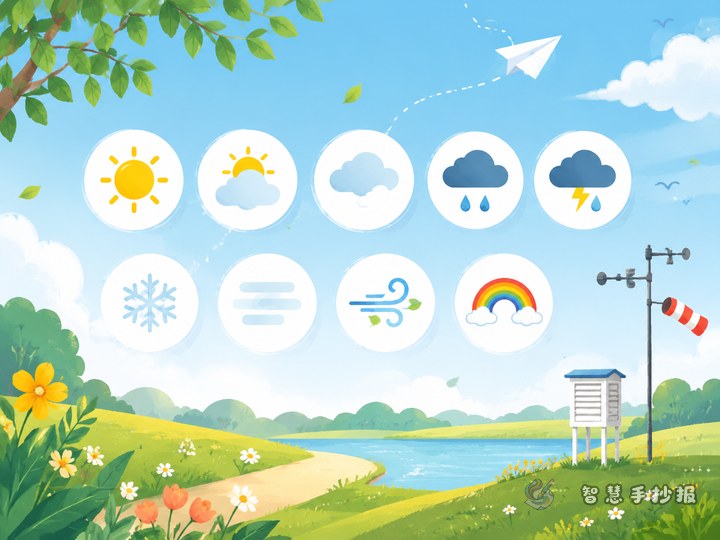
Why this topic works well for a poster
A Four Seasons Weather poster is easy to understand and rich in content. Children can compare spring, summer, autumn, and winter while learning basic weather science. It is also a friendly topic for school display because the page can be colorful, organized, and full of familiar daily examples.
A simple page plan children can follow
The easiest design is a four-part layout. Put spring, summer, autumn, and winter in four areas of the page. In the center, add the main title or a small weather facts box.
- Top left: Spring weather
- Top right: Summer weather
- Bottom left: Autumn weather
- Bottom right: Winter weather
- Center: Title, slogan, or mini science notes
What to write in each season
Spring
Spring is usually warmer than winter. The weather changes often, and windy days are common. Trees turn green and flowers begin to bloom.
Summer
Summer is hot, and many places have more rain. Thunderstorms may appear, so students can add short safety reminders.
Autumn
Autumn often feels cool and comfortable. The sky may look higher and clearer, and leaves gradually change color.
Winter
Winter is cold, and in some places it may snow or freeze. Students can write about keeping warm and staying safe on slippery roads.
Useful extra sections for the poster
- Clothing tips: what to wear in each season
- Nature watch: flowers, rain, leaves, frost, or snow
- Weather habits: carry an umbrella, drink water, keep warm
- Mini science facts: weather changes through the year
Design ideas that make the page look clear
Use soft green for spring, bright blue or orange for summer, golden yellow for autumn, and light blue for winter. Keep each section balanced. Do not fill every corner with text. Short paragraphs and neat borders will make the poster easier to read.
Finishing the poster
Before you finish, check whether each season has one weather feature, one natural scene, and one daily-life tip. This will make the content complete without becoming too crowded. If you want to improve titles, section styles, or overall layout, you can continue your poster in the WeChat mini program by Zhihui Shouchaobao.