Start with a clear idea: from what we see to why it happens
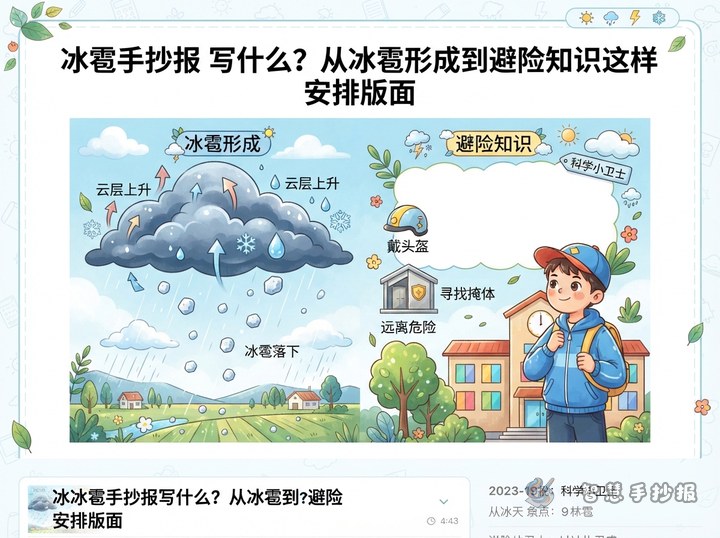
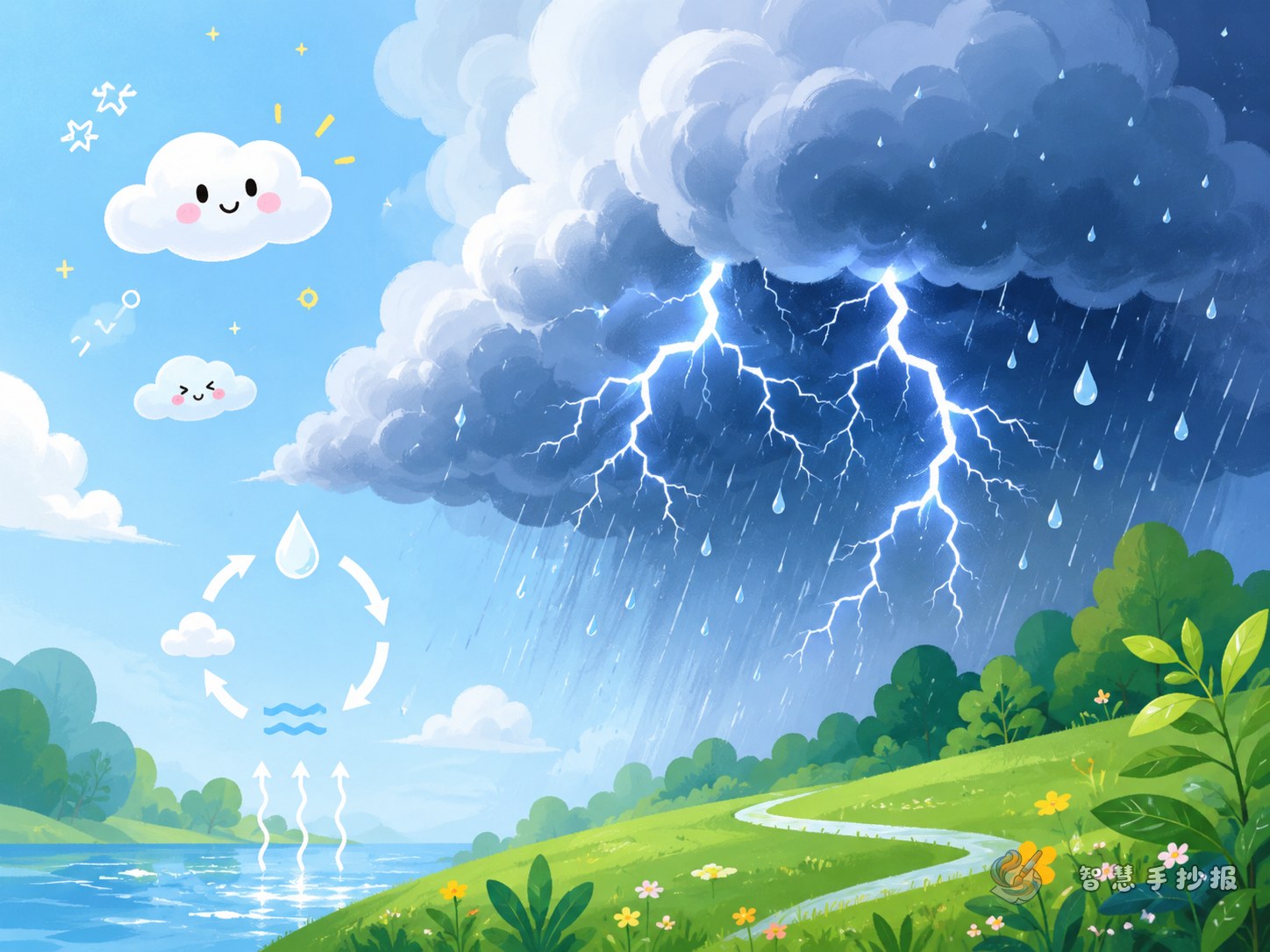
Many children know that thunder and rain mean stormy weather, but they may not know the reason behind it. A good handwritten newspaper can follow one simple line of thinking: water vapor rises into the air, cools down, forms clouds, and becomes rain when droplets get heavy; electrical charges in clouds create lightning, and thunder is the sound that follows.
This makes the topic scientific, practical, and easy to connect with daily life.
Easy writing materials students can use directly
A short topic introduction
Thunder and rain often happen during warm and humid weather. The sun heats the ground, water vapor rises, and clouds form when the air cools. As tiny drops gather inside the clouds, they become larger and fall as rain. When different electrical charges build up in clouds, lightning appears. The air heats and expands quickly, which creates thunder.
Quick science facts
- The sky often gets darker before heavy rain.
- We usually see lightning before we hear thunder.
- Summer afternoons often have sudden thunderstorms.
- Strong wind may come before a storm begins.
Observation sentences
- Before rain, the air may feel warm and stuffy.
- Dark clouds often mean the weather is becoming unstable.
- After a thunderstorm, the air can feel cooler and fresher.
Sections that make the page more interesting
Instead of filling the whole page with one block of text, divide it into small sections.
- Thunderstorm Science: explain why it rains and why thunder happens.
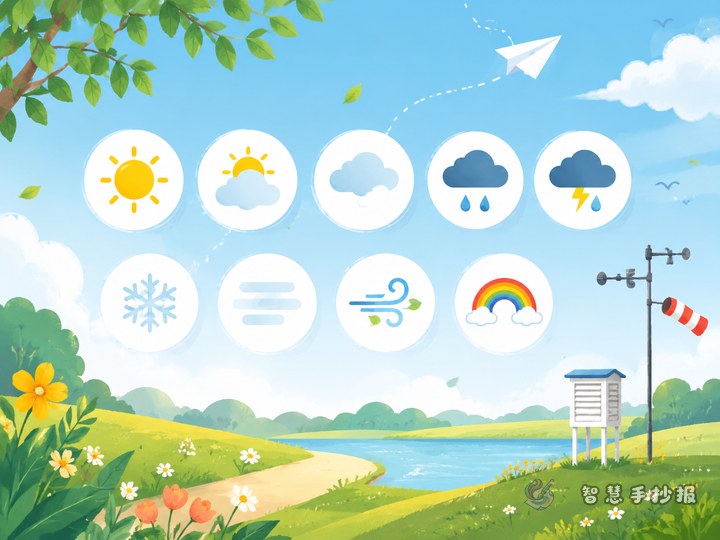
- Weather Watch: describe what changes before, during, and after the storm.
- Safety Corner: list important storm safety reminders.
- Fun Question Box: ask something like, “Why do we see lightning first?”
If there is enough space, students can also add a small section called “What I Notice on Rainy Days” to make the project more personal.
Safety tips should be a key part
A weather-themed handwritten newspaper should not only explain science but also help children stay safe. Keep this part short and easy to read:
- Stay indoors during a thunderstorm when possible.
- Do not stand under a tree to avoid the rain.
- Do not run outside holding metal objects.
- Avoid dangerous outdoor places during heavy rain.
- Be careful around deep water and slippery roads.
Short bullet points work well because they are clear and easy to notice.
How to arrange the page
This topic works well with a large title at the top, the main science facts in the center, and smaller sections around it. Put the safety tips on one side and the observation notes on the other. A fun question or conclusion can go at the bottom.
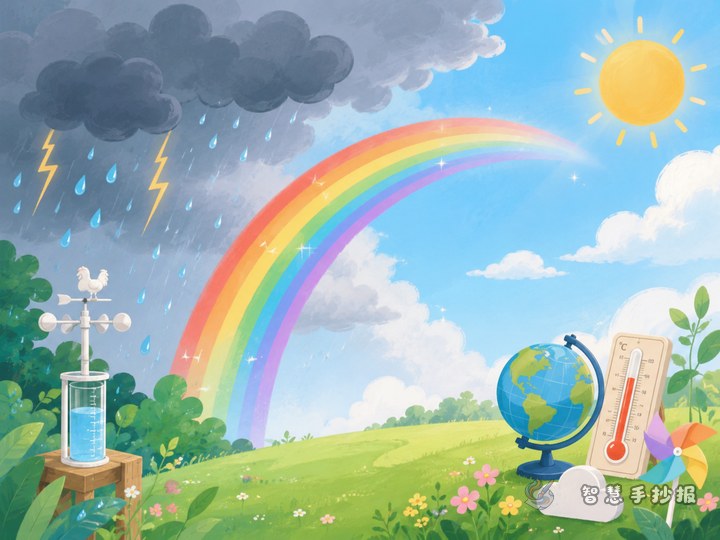
Good decorations include clouds, raindrops, lightning, umbrellas, and wind lines. Blue, gray, and light purple are useful main colors, and yellow can highlight lightning. Leave some blank space so the page looks neat rather than crowded.
A simple ending for the handwritten newspaper
You can finish with a short sentence such as: Weather changes teach us science, and careful observation helps us understand nature and protect ourselves.
If students want to continue improving the title, decorations, and layout, they can also use the Smart Handwritten Newspaper WeChat mini program to complete the design more easily.